


Bulgarian President Rumen Radev said on Monday he would resign from office, delivering a combative farewell address in which he blamed an entrenched “oligarchic” system for political instability, declining public trust and repeated waves of protest in the EU member state.
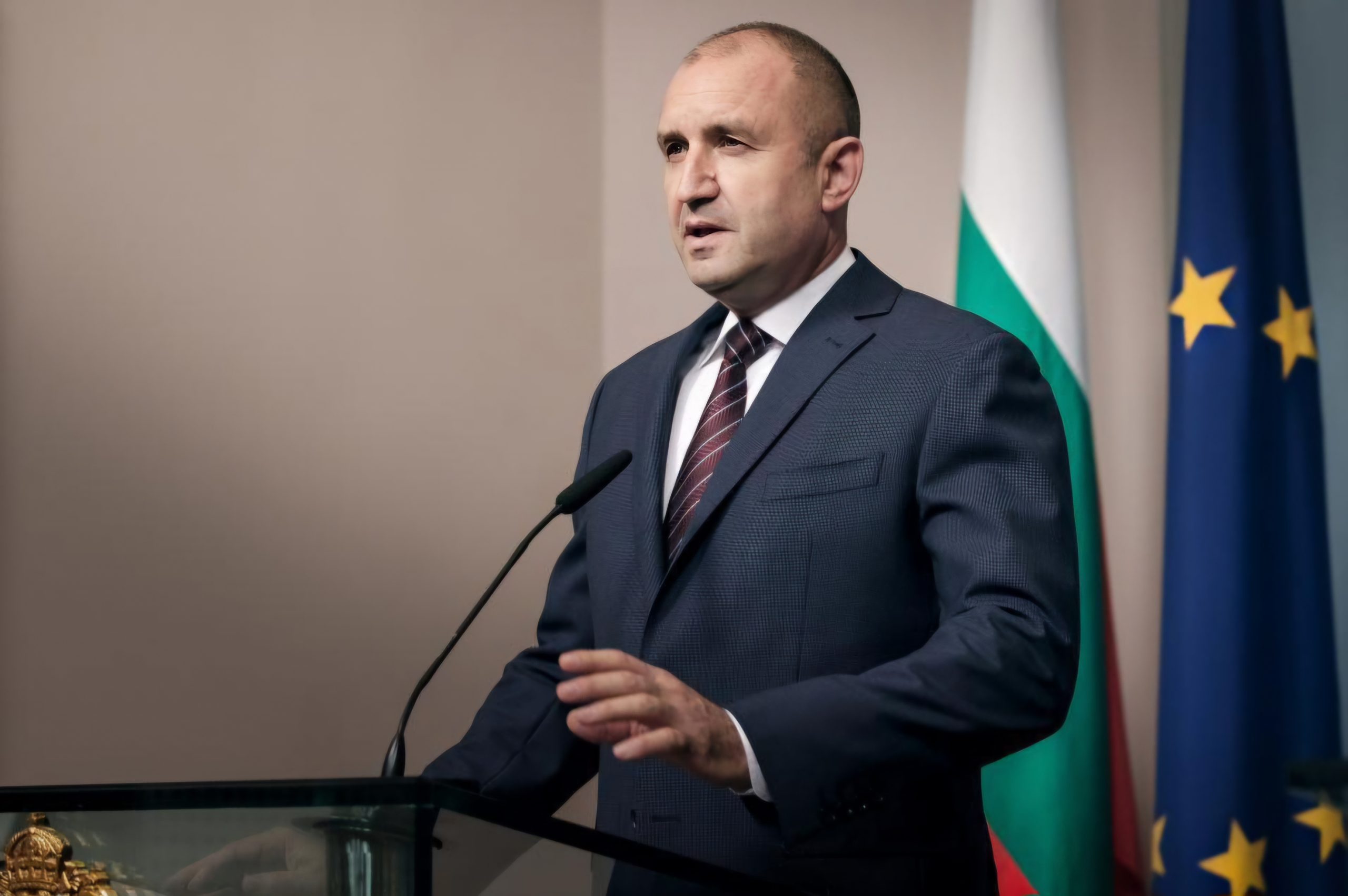
Speaking in a televised address from the presidency in Sofia, Radev said he would formally submit his resignation on Tuesday, bringing to an end his second five-year term that began in 2021. Under Bulgaria’s constitution, Vice President Iliana Yotova will assume the presidency for the remainder of the mandate, pending confirmation by the Constitutional Court.
“Today, for the last time, I address you as president of our Bulgaria,” Radev said. “I wish, first of all, to ask for forgiveness. Time has put your trust to the test.”
Radev, a former air force commander elected president in 2016 and re-elected in 2021, said his decision was driven by a belief that Bulgaria faced a deeper governance crisis that could not be resolved within the existing political framework.
Criticism of political system
In his address, Radev questioned why major national goals – including Bulgaria’s recent accession to the Schengen zone and the euro area – had failed to bring political stability or public confidence.
“Why did achieving these goals not bring stability and satisfaction? Why did Bulgarians stop voting? Why do people not trust the media and do not rely on justice?” he said, pointing to low voter turnout, mass protests and widespread economic insecurity.
Radev argued that the root cause lay in what he described as a distorted political model.
“The answer is in a vicious system of governance. It has the outward signs of democracy, but it functions through the mechanisms of oligarchy,” he said. “Politics happens outside institutions. The puppeteers do not hesitate to issue directives to parliament in front of the cameras.”
The president warned that some political actors were putting the country’s peaceful future at risk and called on citizens to reject what he described as resignation and apathy.
Record of caretaker governments
During his presidency, Bulgaria endured years of political fragmentation, repeated parliamentary elections and fragile coalition governments. Radev appointed seven caretaker governments amid prolonged deadlock in parliament, a record that made the presidency a central actor in day-to-day governance.
Supporters credit Radev with standing against corruption and entrenched interests, while critics accuse him of overstepping constitutional boundaries and using the presidency as a political platform.
In his speech, Radev defended his actions as necessary to protect state and public interests during periods of crisis.
“Together we lived through multiple crises – attacks by oligarchic interests against democracy and mass protests,” he said.
Constitutional procedure
According to Article 97 of Bulgaria’s constitution, the president’s powers are terminated after the Constitutional Court establishes the resignation. Upon confirmation, the vice president assumes the office until the end of the term.
There has been no precedent of a Bulgarian president resigning mid-mandate since the democratic transition, although Vice President Blaga Dimitrova resigned in 1993, a move later confirmed by the Constitutional Court.
Political reactions
Radev’s announcement triggered swift reactions across Bulgaria’s deeply divided political landscape, though some parties initially remained silent.
The centre-right GERB-SDS alliance, the largest parliamentary force, offered no immediate official comment. Its leader, former prime minister Boyko Borissov, had earlier accused Radev of using the presidency to conduct an unofficial political campaign against the government.
The reformist coalition “We Continue the Change – Democratic Bulgaria” (PP-DB) said Radev’s move would not alter its priorities.
“Whether Rumen Radev enters party politics does not change our course,” said Nadezhda Yordanova, co-chair of the coalition’s parliamentary group. “We remain committed to dismantling the Borissov–Peevski model and keeping Bulgaria firmly at the heart of Europe.”
Nationalist party leader Kostadin Kostadinov of Vazrazhdane said parts of Radev’s speech echoed his party’s platform and said he looked forward to future election debates in which Radev would have to answer “questions he could previously avoid.”
Socialist Party (BSP) leader Atanas Zafirov welcomed Radev “to the parliamentary terrain,” saying his move could help refocus politics on the public interest. He added that BSP once again “has a president,” referring to Vice President Yotova’s assumption of office.
Slavi Trifonov, leader of the populist “There Is Such a People” party, also welcomed Radev’s entry into open political competition, while smaller anti-establishment parties described the resignation as expected and signalled openness to cooperation in a future political project.
The Movement for Rights and Freedoms (DPS) faction known as “New Beginning” and the Alliance for Rights and Freedoms declined to comment.
Looking ahead
Radev concluded his address by thanking his staff, supporters and his wife for their support over nine years in office, and by calling on citizens to remain engaged.
“A battle for the future of the fatherland lies ahead,” he said. “I believe we will fight it together – the dignified, the inspired and the uncompromising.”
As Bulgaria braces for another period of political uncertainty, Radev’s resignation adds a new variable to an already volatile landscape, raising questions about his next move and the balance of power in one of the European Union’s most politically fragmented states.