


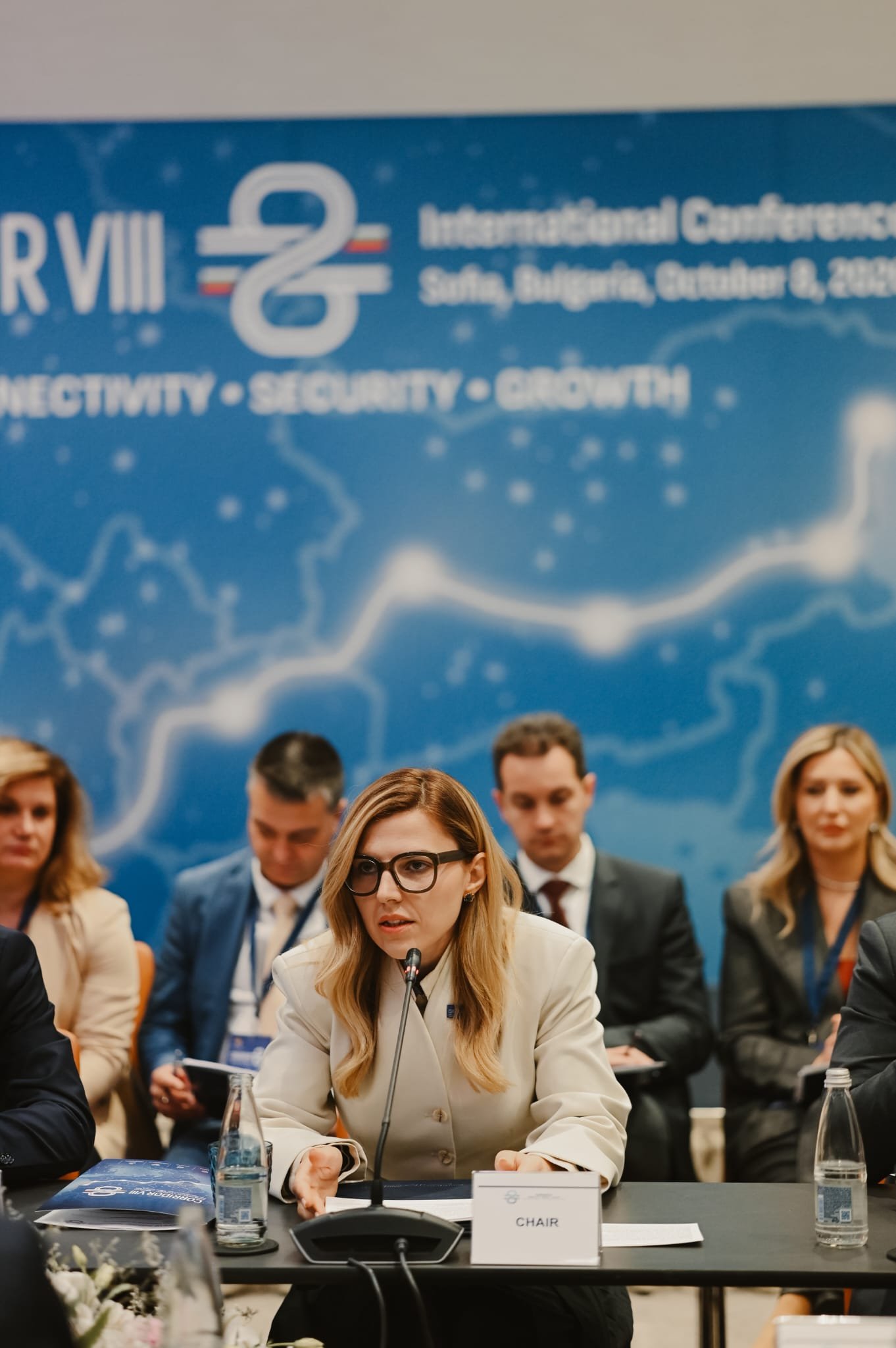
Bulgaria says it remains open to dialogue with North Macedonia but insists that Skopje must fulfil its existing commitments on the rights of the Bulgarian community. The warning comes as Sofia pursues a broader diplomatic agenda involving Black Sea security, Ukraine, Russian energy interests and a historic cultural agreement with Greece.
SOFIA, Oct. 12 (BalkanView) — Bulgaria has reiterated that progress in relations with North Macedonia depends on the implementation of previously agreed commitments, particularly guarantees for the rights of citizens identifying as Bulgarians, as Sofia outlined its foreign policy priorities amid growing security and energy challenges in the Black Sea region.
Bulgarian Foreign Minister Velislava Petrova said Sofia remained willing to engage in dialogue with Skopje but expected concrete steps to fulfil obligations already undertaken.
Speaking on Bulgarian National Television’s Govori Sega programme, Petrova identified equal rights for the Bulgarian community in North Macedonia as a central priority of Bulgarian policy.
Her remarks come amid a prolonged dispute over North Macedonia’s European Union accession process.
Under the negotiating framework agreed in 2022, North Macedonia is expected to amend its constitution to include Bulgarians among the communities explicitly recognised in the constitutional preamble before proceeding to the next stage of accession negotiations.
The government in Skopje has sought additional assurances that Bulgaria will not raise further bilateral demands during the accession process, while Sofia maintains that existing agreements must be implemented.
Sofia insists on commitments, Skopje seeks guarantees
The disagreement has become one of the principal obstacles to North Macedonia’s EU integration.
Bulgarian authorities argue that constitutional recognition and the protection of Bulgarian identity are essential components of the commitments accepted by Skopje.
North Macedonia’s government, meanwhile, has expressed concern that constitutional amendments could be followed by additional disputes involving history, language and national identity.
Petrova did not announce a new negotiating initiative or compromise proposal in her latest remarks.
Instead, she reaffirmed Bulgaria’s existing position that dialogue must be accompanied by implementation.
The Bulgarian foreign minister also said preparations were underway to send a medical team to examine Iva Mihaylova in either Kočani or Skopje.
The report did not provide further details about Mihaylova’s medical condition or the circumstances surrounding the proposed examination.
Black Sea security becomes a major concern
Beyond relations with North Macedonia, Petrova warned that expanding military activity in the Black Sea was creating additional security risks for Bulgaria.
She referred to attacks involving two vessels near Bulgarian territory, although she said the incidents had not directly targeted Bulgaria.
According to the minister, Sofia continues to maintain diplomatic and security contacts with its allies and expects NATO and European partners to treat Black Sea security as a shared priority.
Bulgaria, a member of both NATO and the European Union, occupies a strategically important position on the western Black Sea coast.
The country has faced growing security concerns as Russia’s war against Ukraine continues to affect maritime transport, regional energy infrastructure and trade routes.
Petrova said a lasting solution would require an end to military operations and the beginning of meaningful peace negotiations.
She also stated that Bulgaria had not received evidence from Ukrainian authorities establishing the circumstances surrounding the vessel incidents.
Bulgaria weighs the future of its Burgas refinery
Energy security featured prominently in the minister’s remarks.
Petrova said maintaining operations at the Burgas oil refinery was essential for Bulgaria’s economic interests and fuel supply.
The refinery, historically associated with Russian energy company Lukoil, has been a strategic asset for the Bulgarian economy.
According to Petrova, any potential transaction involving the facility would depend on the necessary Russian authorisation and the availability of a financially stable investor.
She stressed that Bulgaria had an interest in ensuring the refinery remained operational.
The issue reflects the wider challenge facing European countries seeking to reduce exposure to Russian energy while maintaining stable fuel supplies.
Gas supplies to Ukraine through Bulgaria
Petrova also discussed the possibility of supplying natural gas to Ukraine through a route involving Turkey and Bulgaria.
She said the project would depend on a commercial agreement between Bulgarian gas transmission operator Bulgartransgaz and Ukraine’s Naftogaz, as well as the availability of sufficient gas volumes and transmission capacity.
The proposal forms part of wider regional discussions about strengthening energy connections between Southeast Europe and Ukraine.
Bulgaria has become an important transit country in efforts to diversify regional gas supplies and improve access to alternative sources.
However, Petrova’s remarks indicated that the proposed deliveries remain conditional rather than an agreed supply arrangement.
Bulgaria plans major transport corridor summit
Sofia is preparing to host a high-level meeting on the Middle Corridor in spring 2027, Petrova announced.
The Middle Corridor, also known as the Trans-Caspian International Transport Route, connects Asia and Europe through Central Asia, the Caspian Sea, the South Caucasus and onward transport networks.
Bulgaria hopes the summit will produce concrete infrastructure and energy projects, attract investment and establish financing arrangements.
The government also wants to strengthen the country’s position as an entry point to European markets.
The initiative reflects the growing strategic importance of alternative transport routes connecting Europe and Asia.
Tsar Samuel agreement hailed as diplomatic success
Petrova also described Bulgaria’s agreement with Greece over the return of remains attributed to medieval ruler Tsar Samuel as a success for Bulgarian diplomacy.
The agreement involved Bulgaria returning 53 religious and historical artefacts to Greece, many of which had been removed from churches and monasteries during the First World War.
In exchange, Greece transferred remains attributed to Samuel, whose medieval state extended across large parts of the Balkans.
Samuel’s historical legacy remains sensitive, particularly in Bulgaria and North Macedonia, where competing interpretations of medieval history have influenced contemporary identity debates.
Petrova stressed that the agreement with Greece concerned cultural and historical heritage alone and was not connected to other bilateral issues.
Her clarification came amid wider discussion about whether historical diplomacy could influence political relations in the region.
Sofia’s diplomatic agenda spans several fronts
The foreign minister declined to disclose details of a meeting between Bulgarian Prime Minister Rumen Radev and Kyrylo Budanov, a representative of the Ukrainian president.
She said the Foreign Ministry had not participated in organising the meeting.
The comments underline the breadth of Bulgaria’s current diplomatic agenda, extending from NATO security and the war in Ukraine to energy diversification, transport connectivity and relations with neighbouring Balkan countries.
For North Macedonia, however, Petrova’s remarks offered no indication of a change in Bulgaria’s position on the accession dispute.
Sofia continues to link progress to the implementation of existing commitments, while Skopje seeks guarantees that its European integration will not remain vulnerable to further bilateral disagreements.
The unresolved question is whether the two governments can establish a framework that addresses Bulgaria’s minority-rights concerns while providing North Macedonia with sufficient confidence to advance the constitutional changes required for the next stage of EU negotiations.