


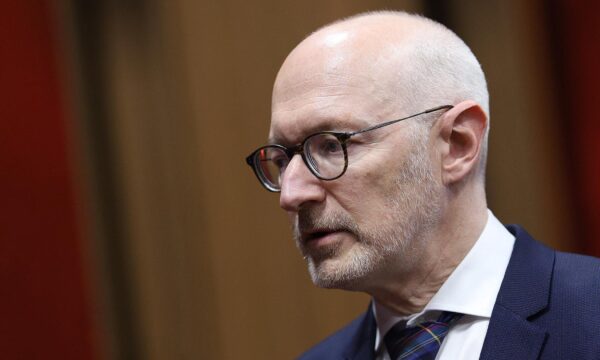

Bosnian Serb political leader Milorad Dodik on Monday announced plans to push for the return of powers to the Republika Srpska (RS) entity, calling it a precondition for any further talks on Bosnia and Herzegovina’s (BiH) political future. In a press conference following a meeting of his party, the Alliance of Independent Social Democrats (SNSD), Dodik outlined a series of proposals that would reverse competencies granted to the central BiH government under the 1995 Dayton Peace Agreement.
“This means returning control of the army and border police to Republika Srpska, abolishing the BiH Court and Prosecutor’s Office, restoring the intelligence service, and returning fiscal authority to the RS,” Dodik said. “I am not seeking anything beyond what is provided by Dayton.”
Dodik also reiterated longstanding rhetoric targeting Bosniaks in BiH, referring to them as “enemies of Republika Srpska” and accusing Sarajevo’s leadership of undermining the entity’s interests. “Republika Srpska has friends and enemies. Friends include Russia, the new U.S. administration, Hungary, Israel, Serbia, and other democratic countries. We know who our enemies are. The Muslims and Muslim-led Sarajevo are our enemies. They have demonstrated this wherever they could,” he said.
The SNSD leader, who has long championed RS autonomy and resisted central government oversight, emphasized the political goal of self-determination for the entity, framing it as a continuation of RS’s fight for independence. “We will use all our strength to be part of a victory called an independent Republika Srpska,” Dodik said, adding controversial claims regarding historical events in Srebrenica.
Dodik’s comments came amid heightened political tension following last year’s RS legislative actions, in which the entity’s authorities annulled laws implementing decisions by the High Representative for BiH and the BiH Constitutional Court. The moves were widely reported as conditions for the U.S. administration to lift sanctions against Dodik, his family, and close associates.
He also suggested the potential withdrawal of Serb officials from BiH’s joint institutions, promising that their salaries would be maintained, and urged opposition parties in RS to engage in what he called a “strategic dialogue” on new political processes.
Premiers and other officials, including RS Prime Minister Savo Minić, have signaled readiness to pursue legal action against BiH electoral authorities following SNSD candidate victories in repeat elections, framing it as protection of citizens’ will.
Dodik further dismissed the European Union as irrelevant to RS’s plans, asserting that 15 countries would recognize RS’s independence within 48 hours. He cited support from Russia and Israel as validation of his strategy, while reiterating threats of secession if central BiH authorities continue policies he deems hostile.
The comments are likely to exacerbate ethnic and political tensions in BiH, a country still navigating the complex governance structures established under the Dayton Peace Accords. Analysts warn that such rhetoric may further destabilize the region and complicate international mediation efforts.