


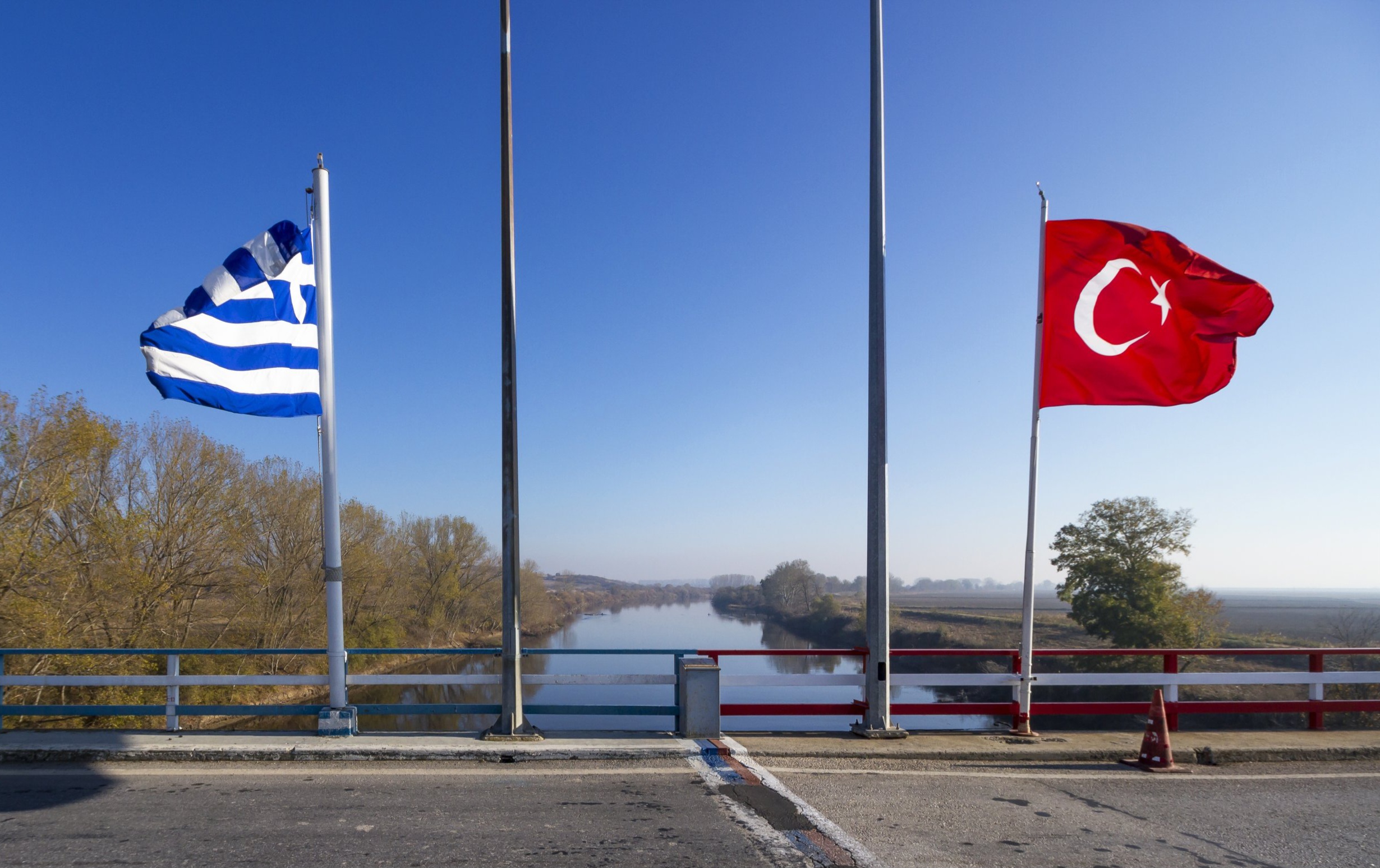
There’s a Turkish saying, “When you come upon a bear on a bridge, call it ‘uncle; until you get to the other side.” Analysts in our neighboring country have been mentioning it lately. The big bear, of course, is Donald Trump, and Recep Tayyip Erdogan is showing him all necessary respect, as he knows that his “friend” in the White House can fulfil his wildest dreams but can also destroy him. Erdogan’s reaching safety will depend on the outcome of Turkey’s involvement in an ever-more complicated matrix of conflict and alliances. Greece and Cyprus, too, have a lot hanging on how Turkey’s relations with “uncle” play out, and how the Turkish president will act when he feels comfortable with the “bear.”
Maduro’s capture and the uncertainty in Venezuela, the Iranian uprising, the Kurdish issue, the bloodshed in Syria, the increasing rivalry with Israel, are complicating an already difficult situation for Turkey. Its foreign minister’s claim that Israel is behind the Iranian rebellion shows Ankara’s discomfort at the possibility of a change in the status quo. Perhaps that is why it is said to be considering a defense alliance with Saudi Arabia and (nuclear-armed) Pakistan. Clearly, Ankara is angered by the agreement between Greece, Cyprus and Israel, which has America’s tacit backing. However, an alliance with Saudi Arabia and Pakistan could overturn Turkish politics and diplomacy, because Turkey’s cohesion – much of its identity – depends on NATO membership.
Allying with Saudi Arabia and Pakistan could draw Turkey into conflicts that are not NATO’s business (perhaps even with the United Arab Emirates), thus testing Article 5 (in which an attack on one member is seen as an attack on all), or even questioning Turkey’s membership of the Western Alliance. No one knows whether Trump will move ahead with destroying NATO (with his obsession over Greenland), or whether he will try to use it for his own ends.
So, we cannot know what Turkey will do with regard to NATO (whether it remains in the alliance or leaves). More immediately, though, are the dangers it faces from the loss of gold, trade and influence because of developments in Venezuela and Iran. Israel’s intervention in the Horn of Africa (recognizing Somaliland) shows that even there Turkey does not have a free hand.
Source: Kathimerini