


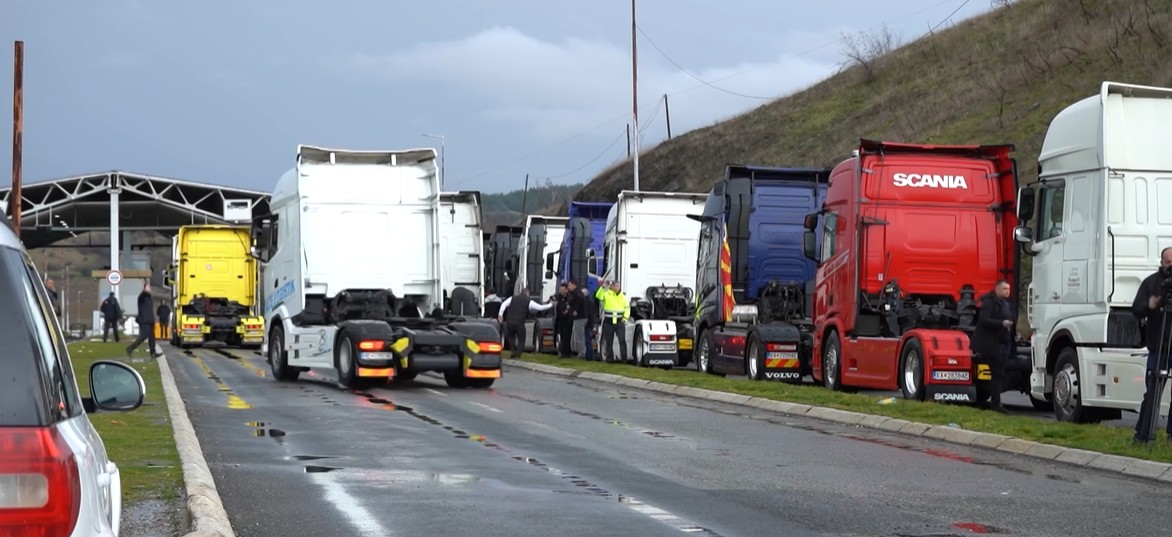
Truck drivers in several Balkan countries ended days-long border blockades after the European Union said it would review rules governing entry and exit from the Schengen area, easing concerns over stricter enforcement of stay limits.
Drivers in Montenegro and North Macedonia lifted their protests at the EU’s external borders on Thursday, while blockades in Serbia and Bosnia were called off a day later, freight forwarders’ associations said.
The protests were coordinated by haulage and logistics groups and targeted the EU’s Entry/Exit System (EES), a digital border control system for non-EU nationals that began rolling out in October. The system replaces passport stamping and centrally records travel data and biometric information across the Schengen zone, allowing authorities to more strictly enforce existing rules.
Under current regulations, non-EU citizens are limited to stays of 90 days within any 180-day period. While the rule is not new, transport associations say the EES has led to tighter controls and, in some cases, the detention of truck drivers accused of overstaying.
Serbia’s Chamber of Commerce said repeated incidents involving drivers had disrupted freight transport and supply chains in the region, prompting the protests.
On Thursday, the European Commission said it would “work closely with member states to find pragmatic solutions allowing for extended short stays for certain categories of third-country nationals,” a move expected to include professional truck drivers.
Hauliers’ associations across the Western Balkans welcomed the statement, saying it could help prevent future disruptions at key border crossings.
The European Union is the Western Balkans’ largest trading partner, accounting for more than 60% of the region’s total trade. Goods trade between the EU and the Western Balkans exceeded 83 billion euros ($90 billion) in 2024, according to EU data.