


Young people across the Western Balkans have developed a series of initiatives to counter disinformation, strengthen media literacy and address the growing influence of artificial intelligence on the digital information environment, the Regional Cooperation Council (RCC) said.
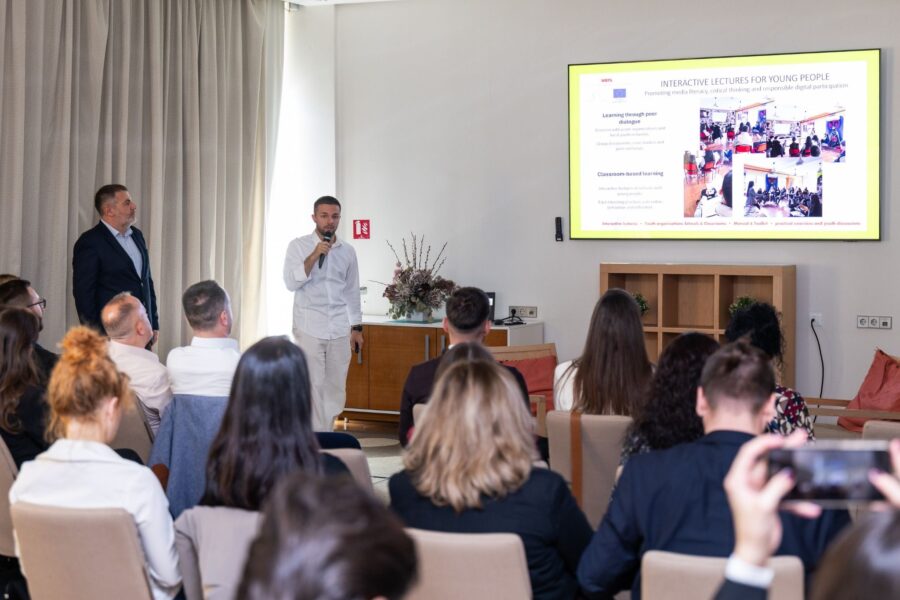
The initiatives were presented at the final conference of the Youth Policy Lab on Disinformation and Media Literacy in Dubrovnik, organised under the EU-funded Western Balkans Youth Lab Project 2 (WBYL2), implemented by the RCC.
The conference brought together young people, policymakers, institutional representatives and regional partners to present practical solutions developed through cooperation between youth representatives and public institutions.
The projects range from media literacy curricula for secondary schools and research into artificial intelligence use to guidelines for social media influencers and tools for addressing cyberbullying and hate speech.
Young people must help shape policies, RCC says
Ognjen Marković, WBYL2 Team Leader, said the initiative demonstrated that young people could make meaningful contributions to public policy when they were directly involved in developing solutions.
“Once again, the Youth Policy Lab has demonstrated that meaningful youth participation is not just a principle we advocate for, but a process that works and delivers tangible results. When young people are genuinely involved in shaping policies, their perspectives, knowledge and recommendations translate into more relevant, responsive and impactful solutions. Addressing disinformation and strengthening media literacy must be a priority, not only because of the challenges we face today, but because the information environment will become increasingly complex with the rapid development of artificial intelligence and digital technologies. Young people must be equipped to navigate this reality but also empowered to actively shape the responses to it,” Marković said in his opening remarks.
His remarks highlighted the need to prepare younger generations for an information environment increasingly influenced by AI-generated content, rapidly evolving digital platforms and online manipulation.
From research to practical solutions
Working groups from the six Western Balkan economies developed educational materials, research studies and policy recommendations designed to improve how young people understand and engage with digital information.
One initiative examined young people’s ability to use artificial intelligence tools and included a dedicated training bootcamp. It was accompanied by the development of a Code of Conduct for social media influencers.
Another produced a study titled Youth in the Media and Media Among Youth, followed by a promotional campaign aimed at increasing awareness of young people’s relationship with the media.
Participants also developed a Manual on Media Literacy and Disinformation for Youth, supported by a practical toolkit covering media literacy, cyberbullying and hate speech.
A separate research initiative examined how young people are represented in the media. Its findings were followed by workshops and the signing of a memorandum of understanding with media outlets.
The working groups also developed a media literacy curriculum intended as an elective course for secondary school students.
Another initiative focused on youth digital behaviour and the use of artificial intelligence, combining research with training sessions, workshops and a digital awareness campaign.
Together, the activities address different aspects of the digital information environment, from recognising misleading content to promoting responsible communication and improving young people’s representation in public debate.
Youth participation beyond consultation
The Youth Policy Lab uses a co-creation and co-management approach that brings young people together with policymakers, regulatory agencies and experts.
Rather than limiting youth involvement to consultations, the process enables participants to help identify problems, formulate recommendations and develop practical responses.
According to the RCC, this approach allows young people’s perspectives and experiences to influence the design of policies addressing issues that directly affect them.
The Dubrovnik conference provided an opportunity to present the results of this cooperation and discuss their relevance for future policy development across the Western Balkans.
Fourth regional Youth Policy Lab concludes
The conference marked the completion of the fourth Youth Policy Lab under the Western Balkans Youth Lab Project 2.
Previous labs addressed youth unemployment, mental health and the Green Agenda, reflecting an effort to involve younger generations in a broad range of economic, social and environmental policy challenges.
The latest initiative focused on disinformation and media literacy at a time when artificial intelligence and digital technologies are reshaping how information is produced, distributed and consumed.
The RCC said the results demonstrated the importance of sustained regional cooperation and meaningful youth participation in developing responses to increasingly complex challenges.
The next test will be how the research, curricula, educational resources and policy proposals developed through the initiative are taken forward by institutions, schools, media organisations and other stakeholders across the region.