



Washington redraws its Western Balkans strategy: less nation-building, more local responsibility and U.S. interests
WASHINGTON, Sept 15 (BalkanView) – The United States wants a stable and prosperous Western Balkans but expects the region’s leaders to take greater responsibility for resolving their own disputes, a senior State Department official is set to tell Congress on Tuesday, outlining an approach that puts security, energy and U.S. strategic interests at the centre of Washington’s regional policy.
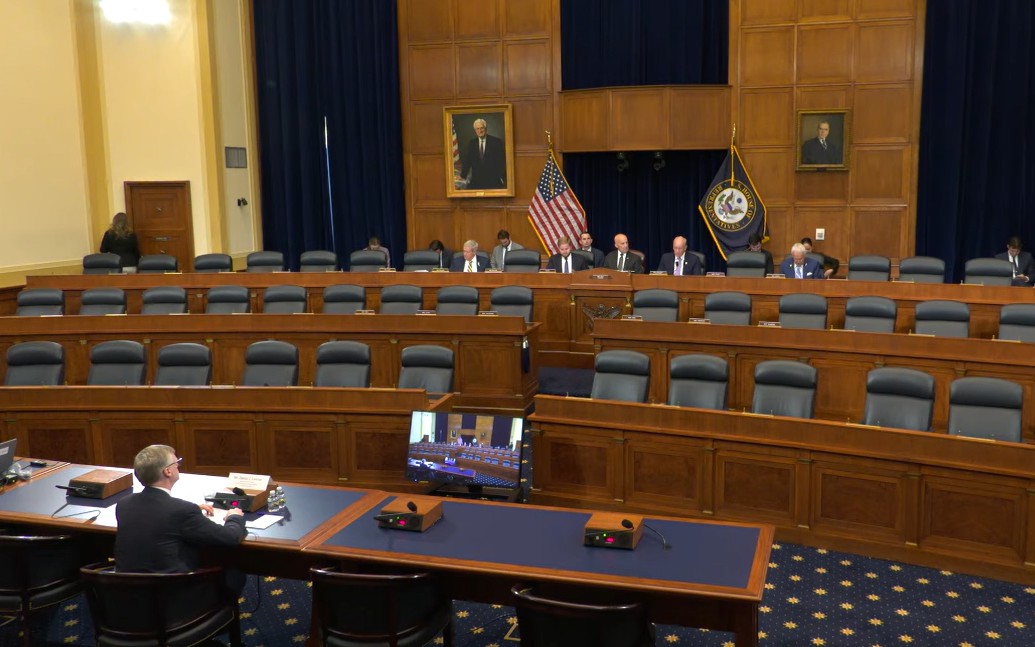
Daniel J. Lawton, deputy assistant secretary in the State Department’s Bureau of European and Eurasian Affairs, is appearing before the House Foreign Affairs Committee’s Europe Subcommittee at a hearing titled “U.S. Policy and Regional Security Challenges in the Western Balkans.”
His prepared testimony offers one of the clearest outlines yet of Washington’s evolving approach to a region where unresolved disputes, Russian and Chinese influence, energy dependence and political instability continue to test Euro-Atlantic integration.
“We call on local leaders to find local solutions to local problems,” Lawton says in his prepared remarks.
Washington wants Balkan leaders to move beyond reopening old disputes and focus instead on pragmatic initiatives that advance their countries, he says.
But Lawton makes clear that greater local responsibility does not mean American disengagement.
The United States, he says, remains prepared to work with leaders willing to look towards the future, while showing “little interest” in those who undermine stability for political gain or reopen grievances dating back decades.
That message runs through Washington’s policy towards Bosnia and Herzegovina, Kosovo and Serbia, while Albania, North Macedonia and Montenegro are increasingly framed as partners in security, infrastructure, energy and trade.
Bosnia: the era of externally imposed state-building is over
Perhaps the biggest conceptual shift concerns Bosnia and Herzegovina.
Lawton cites Deputy Secretary of State Christopher Landau’s message marking the 30th anniversary of the Dayton peace agreement that the era of externally imposed state-building had ended.
The United States remains committed to Bosnia’s sovereignty and territorial integrity and to the stability provided by the Dayton framework, Lawton says.
But Washington is signalling that Bosnia’s political leaders will be expected to assume more responsibility for making the state function rather than relying indefinitely on international intervention.
Lawton says U.S. diplomacy helped resolve a prolonged crisis last year by securing the withdrawal of legislation in Republika Srpska that Washington viewed as violating the Dayton settlement.
The reduction in tensions, he says, created space to advance another American priority: the Southern Gas Interconnection with Croatia.
The proposed pipeline would diversify Bosnia’s gas supplies, reduce energy vulnerabilities, support economic development and potentially create opportunities for U.S. companies.
Energy diversification is therefore emerging not merely as an economic issue but as an increasingly important component of American security policy in the Balkans.
The administration’s Bosnia policy, however, faces criticism from Democrats in Congress.
A report prepared by Democratic Representative William Keating, the ranking Democrat on the Europe Subcommittee, criticises the Trump administration’s removal of sanctions on Milorad Dodik, the former Republika Srpska president and long-time dominant Bosnian Serb politician.
The report argues that Washington surrendered leverage over Dodik by lifting the measures.
It also raises questions over U.S. advocacy surrounding the Southern Gas Interconnection and the potential role of an American company in the project.
The congressional hearing could therefore expose significant differences in Washington not over whether Bosnia matters, but over how aggressively the United States should intervene in its political system.
Kosovo: independence backed, but Washington raises concerns
Lawton is expected to reaffirm U.S. support for Kosovo’s independence and territorial integrity.
But his testimony also contains unusually direct criticism of developments inside Kosovo.
Repeated elections, a prolonged caretaker government and delays in establishing functioning institutions have complicated U.S.-Kosovo cooperation, according to Lawton.
Washington wants Kosovo’s leaders to complete institution-building in accordance with the constitution and court decisions.
More sensitive politically is Lawton’s concern over what he describes as excessive legal scrutiny and police action affecting Kosovo’s Serb population.
“All citizens of Kosovo should enjoy equal rights and protection under the law if stability is to be maintained,” he says.
The formulation indicates that Washington’s strong commitment to Kosovo’s statehood will coexist with greater pressure on Pristina over the treatment of the Serb minority and the use of state institutions in Serb-majority areas.
Serbia emerges as a ‘key country’ for regional balance
The tone towards Serbia is notably different.
Lawton describes engagement with Serbia as crucial to protecting U.S. interests and presents the bilateral relationship as strengthening.
Washington wants to become Serbia’s preferred partner in countering malign influence, he says.
The first U.S.-Serbia Strategic Dialogue, held in July, covered energy, defence, security and commercial cooperation – areas that indicate Washington is seeking a broader relationship with Belgrade despite longstanding disagreements.
Lawton describes Serbia as a “key country for regional balance.”
That language is likely to attract attention elsewhere in the Balkans, particularly in Kosovo and Bosnia, where closer U.S.-Serbian relations are often viewed through the prism of unresolved conflicts and Belgrade’s regional influence.
For Washington, however, Serbia’s size, location and political weight make engagement unavoidable.
The strategy appears to be aimed at drawing Belgrade closer to the United States while reducing space for competing external powers.
Kosovo-Serbia dialogue: Washington blames lack of will on both sides
Despite the warmer language towards Belgrade, Lawton identifies normalisation between Kosovo and Serbia as essential to regional stability.
The EU-mediated dialogue has stalled because of insufficient political will on both sides, he says.
Washington is urging Belgrade and Pristina to avoid provocations, implement commitments already undertaken and resume direct talks without preconditions.
The formulation suggests that the United States does not intend to replace the European Union as the formal mediator.
But it also indicates Washington wants to remain politically involved in preventing renewed confrontation.
The emphasis is increasingly on practical results rather than another open-ended diplomatic process.
North Macedonia gains strategic importance through NATO and energy
North Macedonia receives a markedly positive assessment.
Lawton describes North Macedonia and Montenegro as close NATO allies and security partners advancing projects important for regional connectivity.
North Macedonia is on track to meet NATO-related defence spending commitments while deepening defence cooperation with the United States, he says.
But Washington increasingly sees the country’s value as extending beyond military cooperation.
Its geography places North Macedonia on an emerging energy and transport axis connecting Greece with Serbia and Central Europe.
Lawton says the country should play a role in receiving and transporting liquefied natural gas flowing north from Greece towards Serbia.
That fits into a much broader effort to diversify southeastern Europe’s energy supplies and strengthen infrastructure linking the Aegean with the interior of the Balkans.
North Macedonia could therefore become an important transit link between Greek LNG infrastructure and markets farther north.
Transport infrastructure is another U.S. priority.
Together, those projects could give Skopje a strategic role disproportionate to the country’s relatively small economy – as a NATO ally, energy corridor and transport bridge between north and south.
Montenegro and the Adriatic-Ionian connection
Montenegro is also being positioned as a connectivity partner.
Lawton highlights a recently concluded intergovernmental agreement between Washington and Podgorica that establishes a framework for cooperation, including the Adriatic-Ionian Corridor.
The project forms part of a broader effort to improve north-south transport connections along the Adriatic coast and integrate Western Balkan economies more closely with European markets.
Taken together with the energy routes running north from Greece, the projects reveal an increasingly visible U.S. strategy based on infrastructure.
Rather than treating the six Western Balkan countries primarily as separate political problems, Washington appears increasingly interested in connecting them through energy, transport, security and commerce.
Albania: security cooperation meets American business interests
Albania remains one of Washington’s closest partners in the region.
Lawton says the United States is working closely with Tirana to dismantle transnational criminal organisations while expanding market opportunities for American companies.
The two priorities reflect another feature of the emerging policy: security cooperation is being linked more explicitly to economic diplomacy.
Organised crime, energy security, infrastructure and foreign investment are no longer treated as separate policy areas.
They are increasingly presented as elements of the same regional security architecture.
A more transactional American policy
The testimony points to a significant recalibration rather than an American withdrawal from the Balkans.
For three decades after the wars in Bosnia and Kosovo, U.S. engagement was often associated with peace agreements, institution-building, democratisation and direct diplomatic intervention.
The emerging approach places greater emphasis on what Balkan governments themselves are prepared to deliver.
Washington will continue to defend the sovereignty and territorial integrity of its partners and allies.
But it also expects regional leaders to resolve political disputes rather than perpetually internationalise them.
At the same time, U.S. economic interests are becoming more explicit.
Gas pipelines can reduce dependence on hostile or unreliable suppliers while opening opportunities for American LNG and companies.
Transport corridors can strengthen NATO mobility while increasing regional commerce.
Defence cooperation can reinforce the alliance while expanding bilateral security ties.
Under this approach, the Western Balkans is not merely a post-conflict region requiring management. It is part of a wider strategic space connecting the Adriatic, Central Europe, the Black Sea and the eastern Mediterranean.
Congress could challenge the administration’s assumptions
Tuesday’s hearing, chaired by Republican Representative Keith Self, is also likely to expose disagreements over how far Washington should take this shift.
The Democratic report on Bosnia provides an early indication of the debate.
Critics fear that reducing international pressure too quickly could empower nationalist leaders, weaken institutions created after the wars and sacrifice democratic reforms for short-term stability.
The administration’s emerging position is different: three decades after Dayton, permanent external management cannot substitute for political responsibility inside the region.
That leaves Washington facing a difficult balance.
It wants local ownership without disengagement, stronger relations with Serbia without weakening Kosovo, a functioning Bosnia without indefinite international state-building, and greater regional connectivity without allowing Russia, China or other competitors to dominate strategic infrastructure.
Lawton’s message to Congress nevertheless appears straightforward: the United States is staying in the Western Balkans, but the terms of its engagement are changing.
Washington wants fewer old grievances, more local responsibility – and regional solutions that increasingly coincide with American security, energy and commercial interests.