


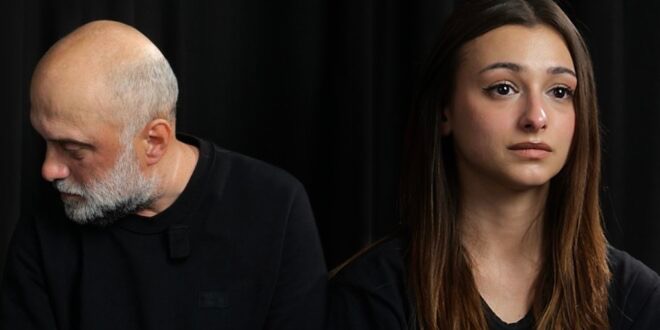
On August 16, 2026, Milcho Manchevski presented the world premiere of “Good People” in the competition programme of the Sarajevo Film Festival. But to understand the full weight of this screening, one has to look at two films and one legal battle – intertwined like chapters of the same story.
“Good People” was born out of the tragedy in Kočani. In March 2025, a fire caused by pyrotechnics at the Pulse nightclub killed 63 young people. Manchevski, winner of the Golden Lion at Venice in 1994 for “Before the Rain” and an Academy Award nominee, travelled to the site of the tragedy a month later – not to retell the disaster, but to listen.
The result is an austere documentary. Survivors and rescuers speak before a static camera, without a narrator. Manchevski describes the film as an “ascetic aesthetic experiment” with truth. He acknowledges a longstanding distrust of a genre that claims truth as its defining principle, but this time decided to enter precisely that territory while remaining discreetly in the background.
At almost the same time, Manchevski completed “Sister, Brother and the Manhole,” a black comedy set on the margins of post-communist Macedonia. Two orphaned brothers survive by stealing manhole covers and statues of national heroes to melt them down – symbols of a betrayed past reduced to raw material.
The director describes it as his most direct and emotional film since “Before the Rain.” Post-production took place in Italy at Augustus Color. The fact that he was making the two films simultaneously, Manchevski has said, amounted to a “small revenge” after years of pressure from his own government.
When Cinema Becomes a Political Battle
This is where the story of filmmaking turns into a story about politics.
In 2020 and 2022, Manchevski reported what he described as serious irregularities at North Macedonia’s Film Agency to the authorities, including rigged tenders, conflicts of interest and unlawful payments. According to the author, subsequent investigations largely confirmed his allegations.
Manchevski says retaliation followed: blocked funding, contracts that were never signed and pressure on his collaborators.
The case also attracted international attention. A public letter from Venice Film Festival director Alberto Barbera, ANAC and 100 Autori was followed by reactions from FIPRESCI, the Southeast Europe Coalition on Whistleblower Protection and an investigation by Transparency International. FIPRESCI described the case as political persecution.
Against that backdrop, according to the original account, “Good People” was filmed secretly with a minimal crew.
Two Kinds of Testimony
This is where the two seemingly different strands of the story come together.
One testimony comes from the survivors and rescuers of Kočani, who stand before Manchevski’s camera and speak about the tragedy.
The other is Manchevski’s own testimony before institutions about what he believed to be corruption and abuse.
The lesson the author draws reaches beyond North Macedonia and the Balkans: bearing witness remains one of the few acts that political or institutional power cannot entirely bring under its control.
Manchevski’s advice to young filmmakers who fear speaking out about corruption is simple: remain faithful to their art, but also be prepared to say what they think, even when the price is high.
In Sarajevo, that price found an international audience.
Author: Adriano Ercolani
Source: Progetto Italia News