


QUITO, Aug 11 (Balkan View) – Albanian organised crime groups did not travel to Latin America simply to buy cocaine. In Ecuador, they developed networks combining export companies, local connections and access to the ports of Guayaquil to secure cocaine supplies and move shipments towards lucrative European markets, according to an investigation by journalist Arturo Torres published by Diálogo Político.
Three conditions helped Albanian and other Balkan criminal networks expand in Ecuador: institutional weakness and corruption in state control agencies, a dollarised economy with limited anti-money-laundering controls, and a surge in both Latin American cocaine production and European demand.
Europe’s cocaine market has quadrupled over the past 15 years, while Latin America now produces more than twice as much cocaine as it did a decade ago, according to the investigation.
Coca cultivation in Colombia, the source of much of the world’s cocaine, has tripled and production has reached around 3,000 tonnes annually, according to U.N. figures cited by Torres.
It was into this rapidly expanding market that Albanian criminal groups moved.
From the ’Ndrangheta to Albanian networks
The first Albanians arrived in Ecuador around 2009, according to the investigation. Initially, they followed the direction of Italy’s Calabria-based ’Ndrangheta, which was seeking direct access to Colombian cocaine for distribution in Europe.
Guayaquil became the main testing ground.
The coastal city offered a crucial advantage: eight ports handling huge volumes of containerised exports, particularly bananas and other products destined for Europe and other international markets.
Criminal networks recognised that the scale of legitimate container traffic provided opportunities to conceal cocaine inside commercial shipments.
At the time, Ecuadorian authorities were focused largely on drugs moving from beaches and small ports in Manabí and Esmeraldas by speedboat towards Central America and the United States.
Mexico’s Sinaloa cartel dominated that route, while Ecuador’s Los Choneros gang handled domestic transport and logistics, according to Torres.
The Balkan groups were developing a different corridor – one aimed primarily at Europe.
Çekaj, Gjika and Rexhepi
Several Albanian figures appear in the investigation.
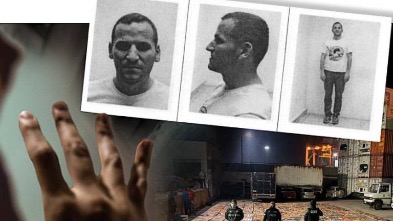
Arturo Torres writes that Arbër Çekaj arrived in Guayaquil and established a banana-exporting company that was used to conceal narcotics aboard cargo vessels, describing him as acting as a representative of the Italian ’Ndrangheta.
Around the same period, Dritan Gjika, described in the investigation as a prominent Albanian organised crime figure, arrived in Ecuador on a temporary visitor visa.
Dritan Rexhepi arrived in 2012 and is described by Torres as a pioneering boss of the transnational Albanian criminal organisation Compañía Bello in Ecuador.
The Albanian presence gradually became more permanent.
According to the investigation, members of the networks initially stayed for one or two months but some later settled permanently. Torres reports that they obtained false identity documents or paid for permanent-residence or investor visas, while some entered marriages with Ecuadorian women to secure their status.
Fruit exporters as a front
The model developed in Ecuador went far beyond buying cocaine and arranging its transportation.
Through local collaborators, the groups identified vulnerabilities in Ecuador’s corporate and banking systems and began buying or establishing dozens of fruit and seafood exporting companies, according to the investigation.
On paper, they appeared to be young entrepreneurs.
The companies gave them access to the legitimate export chain connecting Ecuadorian ports with Europe.
That strategy opened another door.
Members of the networks learned Spanish and developed contacts within Guayaquil’s business and social circles.
Torres says they built relationships with businesspeople, politicians, senior police and navy officers, judges and prosecutors.
The networks were evolving from foreign traffickers seeking cocaine close to its source into organisations seeking influence over parts of the economic and institutional infrastructure needed to move it.
Penetrating institutions
The next stage, according to the investigation, involved Balkan criminal structures quietly penetrating Ecuadorian institutions.
Their objective was to control crucial sections of the cocaine supply chain and increase shipments to Europe, where the annual cocaine market is estimated in the report at more than $12 billion.
The enormous profits also allowed the groups to diversify into other illicit businesses, including illegal gold mining.
Torres cites official estimates, also endorsed by Ecuadorian President Daniel Noboa, putting revenues generated by criminal economies at about $26 billion – equivalent to roughly 20% of Ecuador’s gross domestic product.
Cocaine boom fuels gang warfare
The growth of the criminal economy has coincided with a dramatic deterioration in Ecuador’s security.
Around 50 gangs currently operate in the country, according to the investigation. Many provide cocaine storage and transportation services to different international criminal organisations, including Balkan networks and the Sinaloa and Jalisco New Generation cartels.
Competition for territory and control of trafficking corridors has fuelled violence.
In January 2024, Ecuador’s government declared a state of war against criminal groups.
The scale of the deterioration is stark: the homicide rate increased from six to 50.9 violent deaths per 100,000 inhabitants between 2019 and 2025, according to figures cited in the investigation.
Within a few years, Ecuador had been transformed by violence associated with gang warfare and the cocaine economy.
U.S. and EU step up involvement
The United States and European Union have increased cooperation with Ecuadorian authorities as the security situation has deteriorated.
The European approach has focused on training, social programmes and intelligence sharing, while Washington has continued providing equipment, infrastructure and intelligence support to law enforcement agencies, according to Torres.
Despite those efforts, the investigation says Ecuador remains largely trapped in a cycle of police and military reaction and containment, without regaining effective control of territories increasingly dominated by criminal organisations.
What began around 2009 with the arrival of the first Albanian criminal figures in Ecuador therefore evolved far beyond the purchase and shipment of individual cocaine consignments.
The networks moved from cooperation with the ’Ndrangheta to banana-exporting companies, from Guayaquil’s ports to relationships with local actors, and from buying cocaine to seeking control over parts of the infrastructure needed to transport it.
Ecuador consequently emerged as an important operational base for Albanian and other Balkan criminal networks in Latin America – placing them close to cocaine supplies and to the ports connecting South America with Europe.
This article is based on the investigation “¿Cómo opera la mafia albanesa en Latinoamérica?” by Ecuadorian investigative journalist Arturo Torres, published by Diálogo Político in August 2026.