


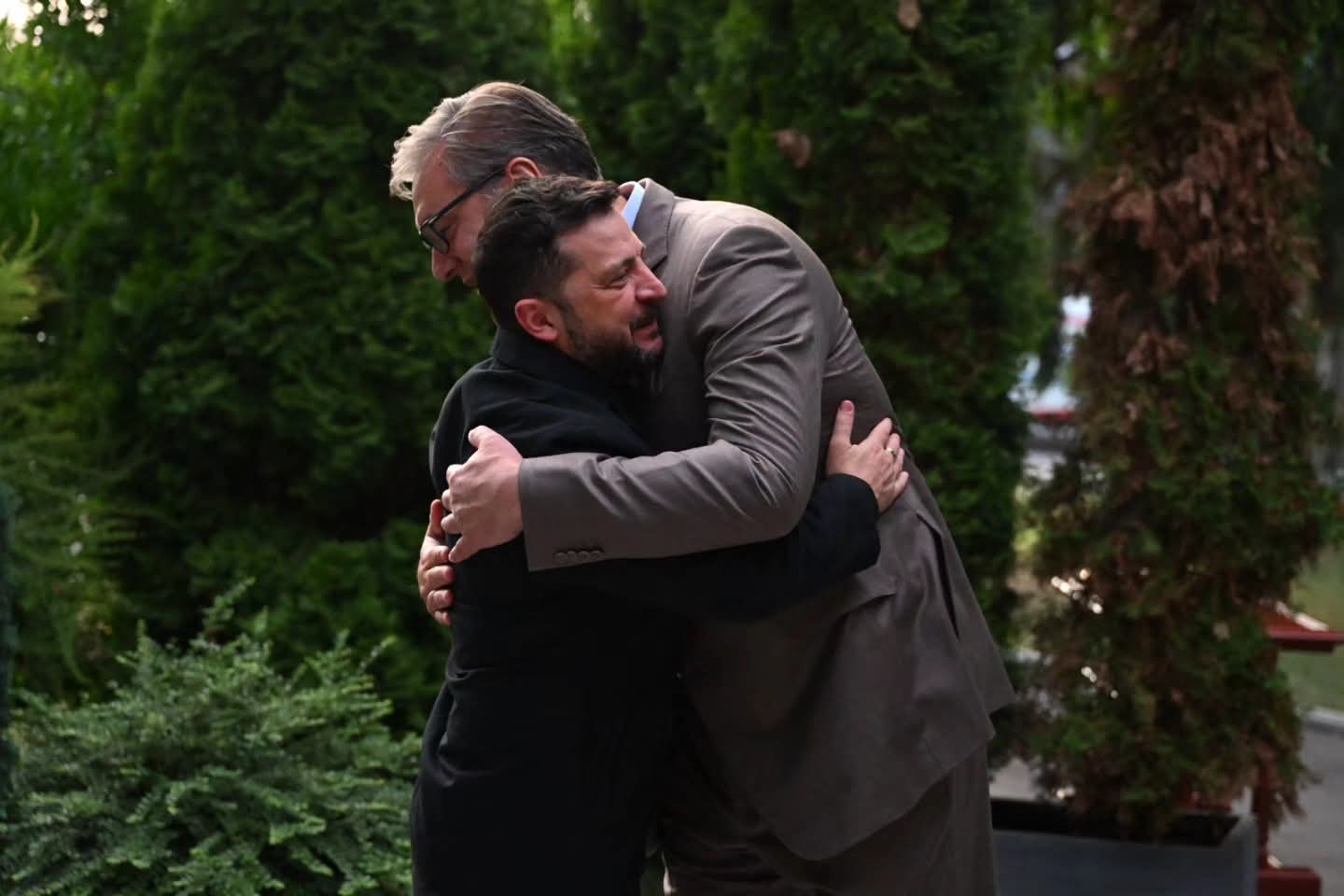
BELGRADE, Aug 8 (Balkan View) – Ukrainian President Volodymyr Zelensky arrived in Serbia on Friday for his first official visit to the country, opening talks that could test Belgrade’s delicate balancing act between its traditional relationship with Russia, support for Ukraine’s territorial integrity and ambitions to join the European Union.
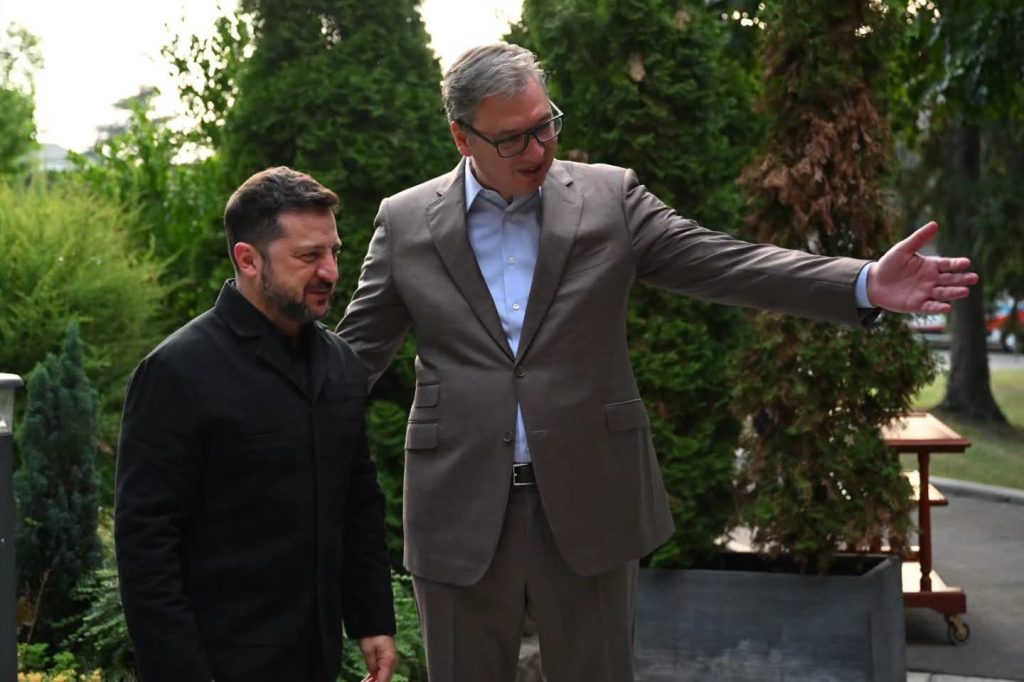
Serbian President Aleksandar Vučić hosted Zelensky for dinner after his arrival in Belgrade, ahead of formal talks scheduled for Saturday at the Palace of Serbia.
“I am pleased to have the opportunity to host the President of Ukraine, Volodymyr Zelensky, who is making his first official visit to Serbia,” Vučić said, expressing hope that the trip would strengthen bilateral relations and cooperation in areas of mutual interest.
Vučić said the two leaders had begun discussing issues that would dominate Saturday’s meetings, particularly the European paths of Serbia and Ukraine.
Zelensky said economic cooperation, EU relations and security would be among the main topics.
“Ukraine is always ready to work constructively, for mutual benefit and on the basis of mutual respect,” Zelensky said in a post after arriving in Serbia.
The Ukrainian leader is also scheduled to meet Serbian Prime Minister Đuro Macut.
A Symbolically Important Visit
The visit is politically significant for Serbia, which has maintained unusually close historical, cultural and energy ties with Russia while simultaneously pursuing EU membership.
Belgrade has repeatedly supported Ukraine’s territorial integrity in international forums but has resisted joining EU sanctions against Moscow, making Serbia one of the few European countries seeking EU membership that has not fully aligned its Russia policy with Brussels.
Vučić and Zelensky have met several times at international summits, but Zelensky’s arrival in Belgrade brings their relationship onto Serbian soil for the first time in an official capacity.
That gives the visit greater political symbolism at a time when Serbia faces continuing pressure to clarify its geopolitical direction.
Serbian media and analysts have consequently framed the visit as extending well beyond conventional bilateral diplomacy, raising questions about what message Vučić intends to send to Brussels, Moscow and his domestic electorate.
Arms and Drones in the Background
Security cooperation is likely to attract particular attention.
Serbia has a substantial defence industry and produces artillery ammunition and other military equipment. Reports that Serbian-made ammunition has reached Ukraine through third countries have repeatedly generated controversy and criticism from Moscow.
Media reports ahead of Zelensky’s arrival also raised the possibility that the two sides could discuss ammunition, drones or deeper defence-industrial cooperation.
However, neither Vučić nor Zelensky had publicly confirmed such agreements by Friday evening. The officially announced agenda refers more broadly to security issues alongside economic and European cooperation.
Any move towards direct defence cooperation with Kyiv would be politically sensitive for Vučić, particularly among Serbian voters who retain strong sympathies towards Russia.
Brussels Is Watching
The visit also has an important European dimension.
Both Serbia and Ukraine are candidates for EU membership, although their accession processes have developed under very different circumstances.
Vučić said before the visit that their respective European paths would be one of the central subjects of discussion.
For Belgrade, closer engagement with Kyiv could help demonstrate to EU partners that Serbia is capable of developing a pragmatic relationship with Ukraine despite its refusal to impose sanctions on Russia.
At the same time, Vučić must avoid presenting the visit domestically as a fundamental break with Moscow.
That balancing act has defined Serbian foreign policy for years: maintaining relations with Russia and China while seeking investment, trade and eventual membership in the EU.
Zelensky’s presence in Belgrade makes that balancing act considerably more visible.
Economic Cooperation on the Table
Saturday’s programme begins with an official welcoming ceremony at 10:30 a.m., followed by a one-on-one meeting between Vučić and Zelensky and talks between the Serbian and Ukrainian delegations.
The two countries are expected to sign a memorandum between Serbia’s Agriculture Ministry and Ukraine’s State Service for Food Safety and Consumer Protection covering cooperation on animal health and food safety.
The presidents are scheduled to address the media at 12:05 p.m.
While the announced agreement is technical, the political importance of the visit lies elsewhere.
For Zelensky, Belgrade represents an opportunity to strengthen relations with a country that has resisted Western sanctions against Russia but has not recognised Moscow’s territorial claims in Ukraine.
For Vučić, hosting Zelensky offers an opportunity to strengthen Serbia’s European credentials without formally abandoning the multi-vector foreign policy he has pursued for years.
The question is whether Saturday’s talks remain within that carefully managed diplomatic framework — or produce agreements that signal a more substantial shift in Serbia’s relationship with Ukraine.