



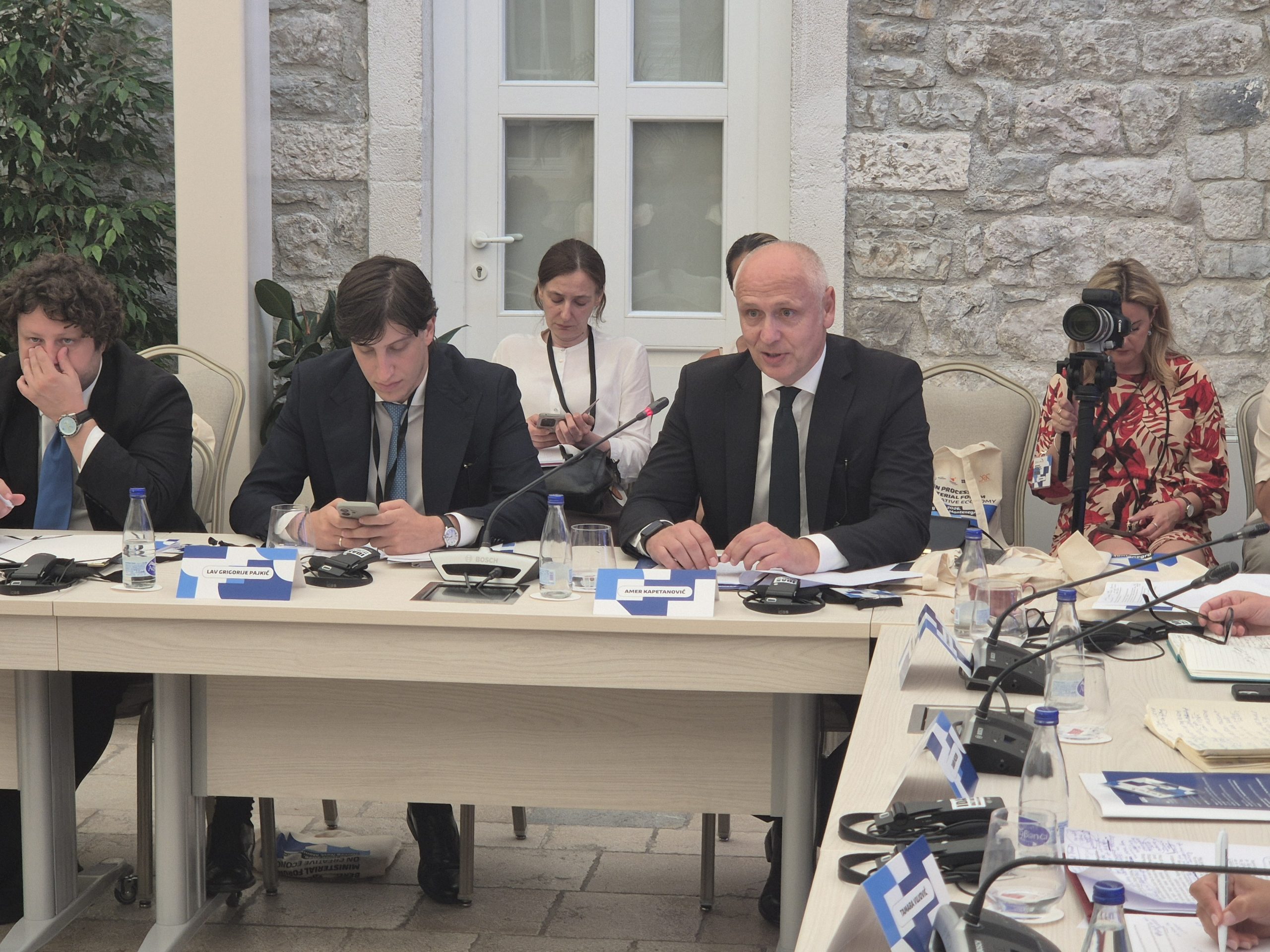
Western Balkans Must Compete on Creativity, Not Cheap Labour, RCC Chief Says
HERCEG NOVI, Montenegro, June 18 (BV) – The Western Balkans cannot compete globally on low labour costs alone and must instead build their future on creativity, innovation and cultural industries, Regional Cooperation Council (RCC) Secretary General Amer Kapetanović said on Thursday.
Speaking at the Berlin Process Ministerial Forum on the Creative Economy in the Montenegrin coastal town of Herceg Novi, Kapetanović said creative industries should become a central pillar of the region’s economic competitiveness and development strategy.
“The Western Balkans cannot compete globally on labour costs alone. We have to compete on ideas, authenticity, digital skills, culture, experience and identity,” Kapetanović told ministers and officials from across the region and Europe.
“Creative industries are not marginal cultural activities. They create jobs, generate exports, attract visitors, strengthen the region’s image and give young people a reason to stay and build their future here. Creativity is not decoration. Creativity is competitiveness.”
The forum, hosted by Montenegro under its chairmanship of the Berlin Process, brought together ministers responsible for culture and representatives from the Western Balkans and European institutions to discuss the role of creative industries in sustainable growth, youth employment and regional cooperation.
Kapetanović said the region possesses abundant creative talent but lacks the structures needed to transform ideas into sustainable economic value.
“We do not lack creativity; we lack an industry system. We do not lack talent; we lack scale. And we do not lack stories; we lack the platforms needed to transform those stories into sustainable economic value,” he said.
He argued that regional cooperation could help overcome the limitations of small domestic markets.
“Each Western Balkan economy is small on its own, but together we can build the regional scale that creative businesses need.”
The RCC chief called for creative industries to be integrated more closely into the Common Regional Market initiative, the European Union’s Growth Plan for the Western Balkans and broader regional competitiveness policies.
“The creative economy simultaneously encompasses services, exports, tourism, innovation, small-business development, skills, youth employment and regional branding,” Kapetanović said.
“It belongs at the heart of our competitiveness agenda, not on its margins.”
The forum continues discussions launched during the United Kingdom’s 2025 chairmanship of the Berlin Process and was organised by Montenegro’s Ministry of Culture and Media in cooperation with the British Council.
Participants included Montenegro’s Minister of Culture and Media Tamara Vujović, Kosovo’s Minister of Culture and Tourism Saranda Bogujevci, senior government officials from across the region and representatives of cultural and creative industries.