


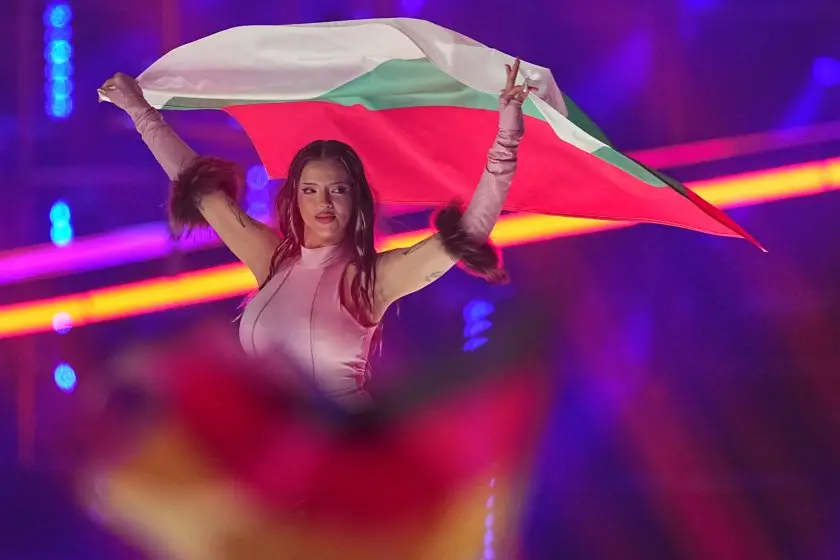
Preparations for have already begun in just hours after Bulgarian singer secured a historic victory at the 2026 contest in Vienna.
Officials from the country’s public broadcaster (BNT) and the Ministry of Culture said the government would move quickly to organize next year’s event, which is expected to become one of the largest international productions ever hosted by Bulgaria.
BNT Director General and Culture Minister held an initial coordination meeting on Monday, according to Bulgarian media reports.
Speaking on BNT, Miloshev said the Council of Ministers would establish an official organizational structure later this week to coordinate preparations for the contest, including venue selection, security, logistics, marketing and television production.
“We are talking about an organization connected with the contest itself, the choice of location, television realization, security, logistics, marketing and advertising,” Miloshev said. “I am convinced that Bulgaria’s hosting of Eurovision will be at the same level as Austria’s.”
The victory marks a symbolic moment for Bulgaria, transforming the country “from a spectator into a stage,” Miloshev added.
Bulgaria’s triumph at Eurovision has triggered widespread national celebrations and major media attention across Southeast Europe, with officials already describing the event as a unique opportunity to boost the country’s international visibility, tourism and cultural diplomacy.
Milotinova said organizing Eurovision would require “huge teams” and likely the involvement of international experts due to the scale of the production.
“The organization of such a contest is extremely labor-intensive,” she said. “But we know how to do it. We have experience and we will present ourselves in the best possible way.”
The European Broadcasting Union imposes strict technical and organizational standards on host countries, making Eurovision one of the most complex annual live television productions in Europe.
Bulgaria previously hosted the Junior Eurovision Song Contest in 2015, an experience officials say will help preparations for the much larger 2027 edition.
The contest is expected to draw tens of thousands of international visitors, journalists and music fans to Bulgaria, while also generating significant economic activity through tourism, hospitality and infrastructure investment.
Cities expected to compete for hosting rights include , although officials have not yet confirmed a venue.
DARA’s victory comes amid renewed international attention on the Balkans’ growing cultural and entertainment industries, with regional countries increasingly using large-scale international events to strengthen tourism branding and soft power.