


Bulgarian MEP Petar Volgin has praised Bulgaria’s decision not to join an international tribunal targeting Russian President Vladimir Putin, calling it a rare display of political “backbone” amid growing divisions inside Europe over the war in Ukraine and relations with Moscow.
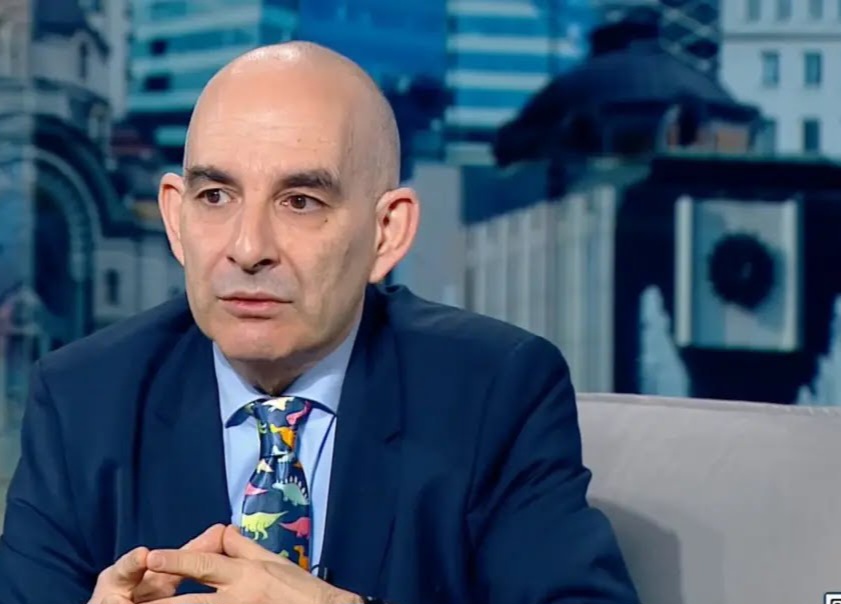
Speaking on Bulgarian National Television, Volgin defended the position of the new government led by Prime Minister Rumen Radev, arguing that Sofia should not automatically follow the dominant line within the European Union and NATO.
“Sometimes it is good not to be part of the majority,” Volgin said, referring to Bulgaria’s refusal to participate in what he described as a “political spectacle” aimed at prosecuting Putin.
The comments come at a sensitive moment for Bulgaria, a NATO and EU member state that has long been divided between strongly pro-Western political forces and parties advocating a more pragmatic or softer stance toward Russia.
The debate intensified after Bulgaria’s new government, formed around Radev’s “Progressive Bulgaria” movement, signaled a more independent foreign policy tone while still formally supporting EU sanctions against Moscow and maintaining Bulgaria’s Euro-Atlantic commitments.
Volgin, who is associated with the nationalist pro-Russian and Eurosceptic political camp, said many European leaders continue to pursue a confrontational strategy toward Russia without a realistic plan for ending the war in Ukraine.
“There are intelligent voices in the European Parliament who understand that if we want the war to end, Europe must speak with Russia,” he said.
He also criticized what he called the ideological convergence between Europe’s main political blocs, claiming there was little difference between the European People’s Party and the Socialists regarding support for Ukraine and sanctions on Russia.
During the interview, Volgin suggested that Radev’s movement was still ideologically undefined and could evolve into either a center-right or center-left political force. He described Radev’s election campaign as politically successful because it appealed to voters across ideological lines.
The Bulgarian MEP also drew controversial historical parallels, arguing that majorities are not always morally correct. Referring to the Holocaust, he said Bulgaria and Denmark had historically shown courage by resisting dominant European trends and protecting their Jewish populations during World War II.
His remarks are likely to deepen political debate in Bulgaria over the country’s future geopolitical orientation, particularly as the European Union seeks to maintain unity on Ukraine, sanctions policy and broader security issues linked to Russia.
Bulgaria has formally supported EU sanctions since Russia’s invasion of Ukraine in 2022, but public opinion in the country remains more divided than in many other Eastern European states, with strong pro-Russian sentiment still present among parts of the electorate.
The controversy also reflects broader tensions across Europe, where populist, nationalist and Eurosceptic parties have increasingly questioned continued military and financial support for Ukraine, while mainstream EU leaders insist that maintaining pressure on Moscow remains essential for European security.