


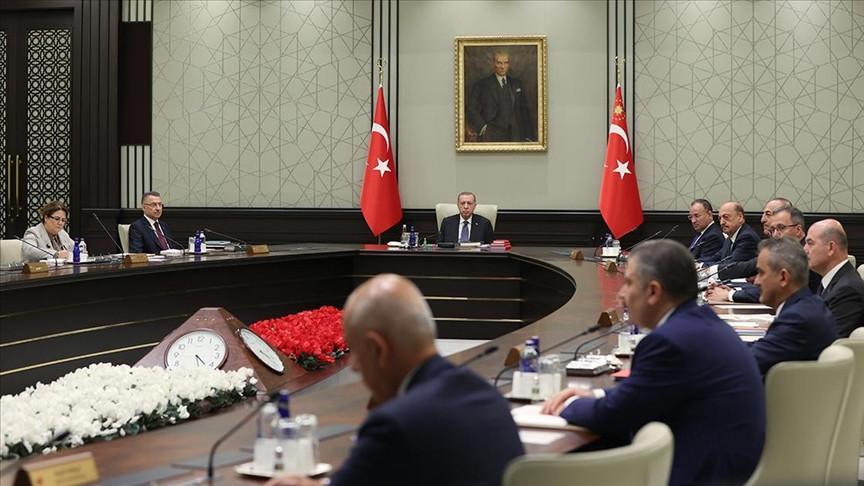
Türkiye has unveiled a comprehensive 10-year strategy aimed at reversing declining birth rates and strengthening family structures, with President warning that demographic trends pose a growing risk to the country’s future.
The government has designated the period between 2026 and 2035 as the “Family and Population Decade,” Erdoğan said, stressing that national strength depends on families, children and intergenerational values.
He pointed to declining fertility, rising divorce rates and delayed marriages as trends requiring urgent and coordinated policy action.
Official data shows Türkiye’s total fertility rate fell to 1.48 in 2024, remaining below the replacement level of 2.1 for eight consecutive years. Marriage rates declined over the past year, while divorce rates increased, reflecting broader social shifts such as later marriages, smaller households and a rise in single-person living.
The plan, outlined in a presidential circular published in the Official Gazette, places family protection and demographic sustainability at the center of public policy.
Under the framework, government strategies, research and institutional programs will be assessed based on their impact on family structures and demographic change. Public institutions are expected to adopt policies that promote family formation and higher birth rates.
Authorities aim to make marriage more accessible, particularly for younger adults, while promoting long-term marital stability. The plan also includes incentives for parenthood and childbirth, alongside policies emphasizing the social importance of motherhood and fatherhood and support for larger families.
Broader measures include expanding youth development initiatives, improving elderly care systems and strengthening social security through family-based support models.
The strategy also seeks to address regional imbalances by encouraging more balanced population distribution, promoting rural revitalization and redesigning urban spaces with a family-oriented approach.
Legal frameworks will be reviewed in line with these objectives, while academic research and data collection on demographic trends will be expanded under the coordination of the Family and Social Services Ministry.
The initiative further includes media regulations and awareness campaigns promoting “family-friendly” content, as well as the introduction of an annual “family week” to raise public awareness of demographic challenges.