


Rumen Radev’s landslide election victory in Bulgaria has raised cautious hopes in North Macedonia that a stable government in Sofia could revive stalled dialogue, but officials and analysts say expectations of a breakthrough remain limited.
Radev, whose Progressive Bulgaria secured around 45% of the vote, said after polls closed that the result marked “a victory of hope over distrust” and “a first step toward restoring public trust and the social contract.”
“We voted actively, we defeated apathy, but distrust in politics remains high. There is still a lot of work ahead,” he said.
For Skopje, the key question is whether that political reset in Sofia will translate into flexibility on the dispute that continues to block North Macedonia’s EU accession process.
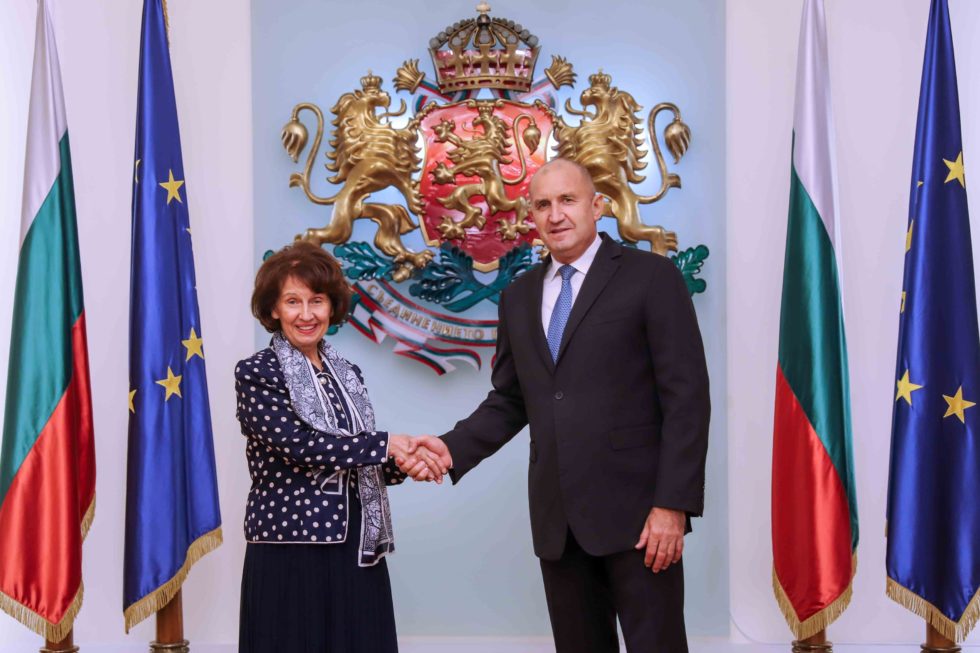
President Gordana Siljanovska-Davkova struck a cautious tone, saying she expected talks but not necessarily alignment.
“We do not agree on many things, but we know how to listen to each other with respect and to seek solutions,” she said, adding that she hoped the two sides would “meet with both flags and search for a new solution.”
Foreign Minister Timco Mucunski said the government would move quickly to engage with the new leadership in Sofia.
“We will immediately take steps to develop dialogue and we hope a fair solution can be found, one that confirms our European path while respecting our identity, language and history,” he said.
Parliament Speaker Afrim Gashi echoed that line, stressing the need for political guarantees before constitutional changes can proceed.
“Parliament is ready to act, but there must be an agreement that such identity-related issues will not be reopened in the future,” he said.
Despite the diplomatic messaging, analysts warn that Bulgaria’s position is unlikely to soften significantly under Radev.
Former ambassador Marjan Gjorchev said the core problem lies not with individual leaders but with a broader national consensus in Sofia.
“No Bulgarian politician can step outside the national doctrine on the Macedonian question,” he said, summarising the position as: “North Macedonia can enter the EU, but Macedonian identity issues remain contested.”
That suggests continuity rather than change, even as Bulgaria enters a new phase of political stability after years of repeated elections.
Radev himself signalled a pragmatic but firm European line, arguing that the EU must rethink its priorities.
“Europe must restore its competitiveness and stop deindustrialisation. Without energy resources, we cannot speak of economic strength,” he said, calling for “more pragmatism” in European policymaking.
For North Macedonia, however, the dispute remains anchored in concrete conditions. The next step in its EU accession process depends on constitutional amendments to include Bulgarians — a move the current government in Skopje says it will not undertake without guarantees.
Analysts say this dynamic leaves little room for quick progress. That creates a paradox: the stability Skopje has long demanded from Sofia may now strengthen Bulgaria’s negotiating position rather than ease it.
Radev’s strong mandate could, in theory, allow him to take political risks. But it could also reinforce a hard line backed by domestic legitimacy.
“The chances are fifty-fifty,” said analyst Xhelal Neziri. “He may either cement the existing positions or play a more constructive role — but that will depend on how he governs and with whom.”
For now, officials in Skopje are balancing optimism with caution.
“We expect a pro-European partner focused on good neighbourly relations,” Prime Minister Hristijan Mickoski said earlier, warning against turning EU integration into a bilateral dispute over “questions from the Middle Ages.”
Whether Radev’s victory opens a path toward compromise or simply consolidates the status quo will likely become clear only after a new Bulgarian government is formed — and the first serious talks with Skopje begin.