


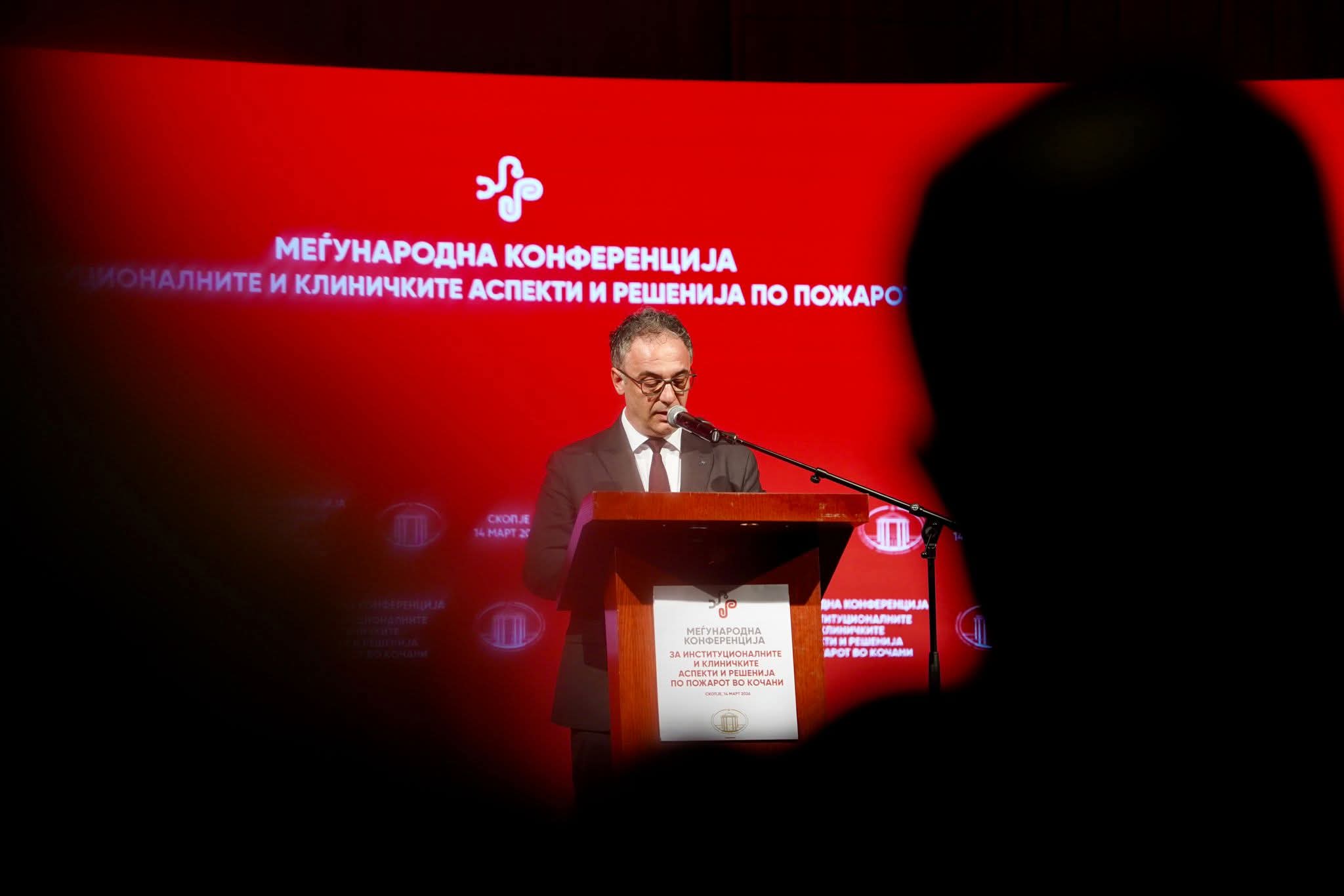
Health Minister Azir Aliu has announced a series of structural reforms aimed at reducing inequalities in the healthcare system and improving access to services, including through decentralisation, digitalisation and tighter oversight of doctors’ work.
In an interview with Lokalno, Aliu said the ultimate goal was for every patient to be able to receive the healthcare service they need where they live, instead of being referred to the capital, a practice he said adds costs and puts extra strain on the system.
“That is cheaper for the system, fairer for the citizen and more sustainable for healthcare as a whole,” the minister said.
PAY GAPS AND SYSTEM OVERSIGHT
Aliu said reports of large disparities in doctors’ earnings had raised questions about whether the system was functioning fairly.
“When the public hears that a doctor in public healthcare earned 700,000 denars in a single month, while there are major differences in workload, number of procedures and level of engagement among colleagues in the same or similar specialties, that cannot be described as a normal situation,” he said.
The minister stressed that additional work by doctors remains a legal option, but said new monitoring and record-keeping mechanisms would be introduced to ensure rules are applied equally and abuses prevented.
“This is not about punishment. It is about establishing order and transparency,” he said.
VIOLENCE AGAINST HEALTH WORKERS
On rising violence against medical staff, Aliu said the government was considering technological and institutional measures, including installing so-called panic buttons in healthcare facilities.
“Zero tolerance for violence is a basic principle, but we also have to reduce the causes that create frustration among patients,” he said, adding that dysfunction in the system often fuels tensions.
DECENTRALISATION AND TELEMEDICINE
Aliu said excessive centralisation was one of the biggest structural weaknesses in North Macedonia’s healthcare system, noting that around 70% of patients coming to the Clinical Centre in Skopje could be treated at the secondary level of care.
As part of the reform plans, the ministry aims to strengthen regional healthcare capacities and expand telemedicine. Pilot projects are already being tested, allowing patients to receive diagnosis remotely instead of travelling to Skopje.
At the same time, the government is working on a centralised electronic health record system to improve coordination of services.
KEEPING YOUNG DOCTORS IN THE COUNTRY
Aliu acknowledged that the outflow of medical staff remains a serious challenge and said the solution lies not only in employment, but in creating prospects for professional growth.
“Young people stay where they see a future – good equipment, mentoring, fair conditions and a clear career path,” he said.
The ministry is preparing legal amendments for a fairer recruitment and specialisation system, as well as regional workforce planning.
EMERGENCY MEDICAL SERVICES REFORM
On emergency care, Aliu announced plans to introduce a new paramedic profile and license EMT Type 1 teams in line with international standards.
The government plans to procure 100 new emergency vehicles worth about 7.5 million euros and set up a central dispatch system with GPS tracking.
“In real time, we will know where every vehicle is and we will be able to respond faster,” he said.
MEDICINE SHORTAGES AND GLOBAL FACTORS
Aliu said medicine shortages were not solely a domestic problem, but part of broader disruptions in global supply chains.
He referred to European Union efforts to improve the availability of critical medicines, but said international factors should not serve as an excuse for domestic weaknesses.
The ministry is preparing a new law on medicines aimed at faster approval procedures and better supply monitoring.
RARE DISEASES AND BUDGET STABILITY
On patients with rare diseases, Aliu said the government would move from annual to three-year public procurement contracts to ensure continuity of treatment.
“The state must act as a guarantor of therapy, not as an occasional purchaser,” he said.
According to him, the new model will provide greater stability, expand the list of medicines and improve spending predictability.
Aliu said the reforms were intended to shift the system from a reactive to a proactive model, focusing on anticipating problems and improving care for patients across the country.