


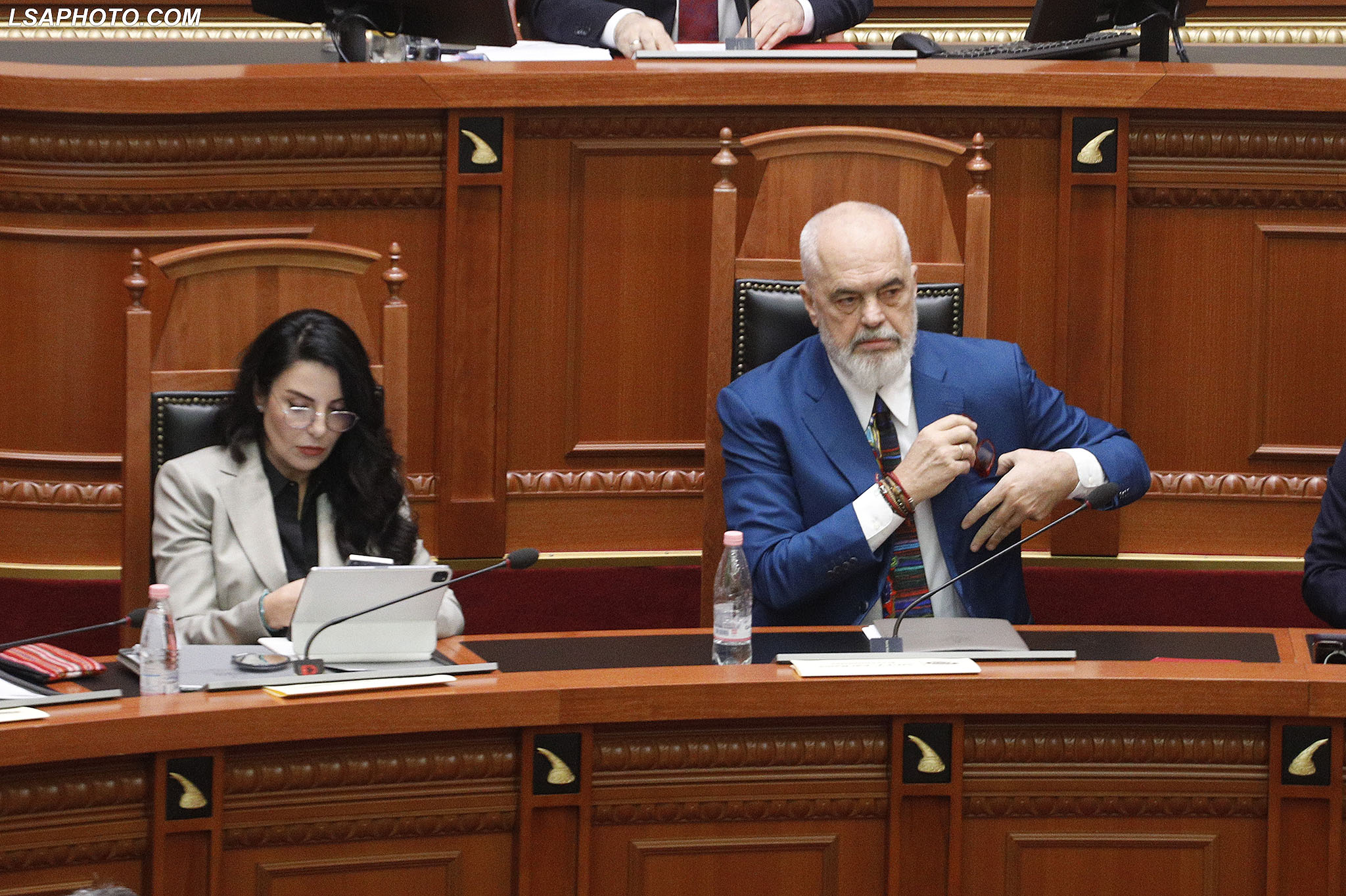
The European Union has urged Albania’s parliament to urgently review a request by prosecutors to lift the parliamentary immunity of Deputy Prime Minister and Infrastructure Minister Belinda Balluku, warning that any political interference in the judicial process could undermine the country’s bid to join the bloc.
In a statement issued on Monday, the European Commission said it expected Albania’s legislature to “address without delay” a request by the Special Anti-Corruption Structure (SPAK) to remove Balluku’s immunity, stressing that effective action against corruption remains a core condition for EU accession.
“The fight against corruption at all levels is of paramount importance for Albania’s progress towards EU membership and for meeting citizens’ expectations,” a Commission spokesperson said. “Any attempt to interfere with or exert undue pressure on the judicial system is a matter of serious concern.”
Balluku, one of Prime Minister Edi Rama’s closest allies, is under investigation by SPAK, Albania’s independent anti-corruption prosecution body. Prosecutors have requested the lifting of her immunity to proceed with legal measures, including restrictions related to her public office. Albania’s Constitutional Court has upheld the suspension of her functions, but parliament has yet to act on the immunity request.
The case has triggered a sharp political confrontation, with opposition figures accusing the government of attempting to shield senior officials from judicial scrutiny by proposing changes to legislation governing the suspension of public officeholders under investigation.
Prime Minister Rama said earlier on Monday that the government was considering legal amendments to ensure the “continuity of constitutional functions,” arguing that the suspension of senior executive officials could disrupt state operations. He also said there was “no urgency” for parliament to address SPAK’s request at this stage.
Opposition leaders rejected that argument, accusing Rama of undermining the separation of powers.
“When a prime minister seeks to change the law while his closest collaborator is under investigation, this is not about protecting constitutional principles, but about protecting power,” Gazment Bardhi, head of the parliamentary group of the opposition Democratic Party, said in a statement. “Rules cannot be rewritten in the middle of an active criminal investigation.”
Bardhi said the government and parliament were exerting coordinated pressure on the judiciary by challenging court decisions related to the case. “This is not a balance of powers,” he said. “It is organised pressure against justice.”
SPAK has said that suspension from office and arrest are separate legal measures, both provided for under Albania’s criminal procedure code and applicable to any public official, regardless of rank. Suspension, prosecutors argue, is intended to prevent interference with an investigation, while arrest is sought when there is a risk of witness intimidation or evidence tampering.
The European Commission said it would closely monitor developments and raise the issue during the upcoming EU–Albania Justice, Freedom and Security Subcommittee meeting scheduled for early March, as part of ongoing dialogue on judicial reform.
Albania formally opened EU accession negotiations in 2022, following years of sweeping judicial reforms backed by Brussels. Progress, however, remains closely tied to the independence of the judiciary and the handling of high-level corruption cases.
Political tensions are expected to intensify ahead of planned opposition protests, as critics warn that the Balluku case could become a key test of Albania’s commitment to the rule of law and its European path.