


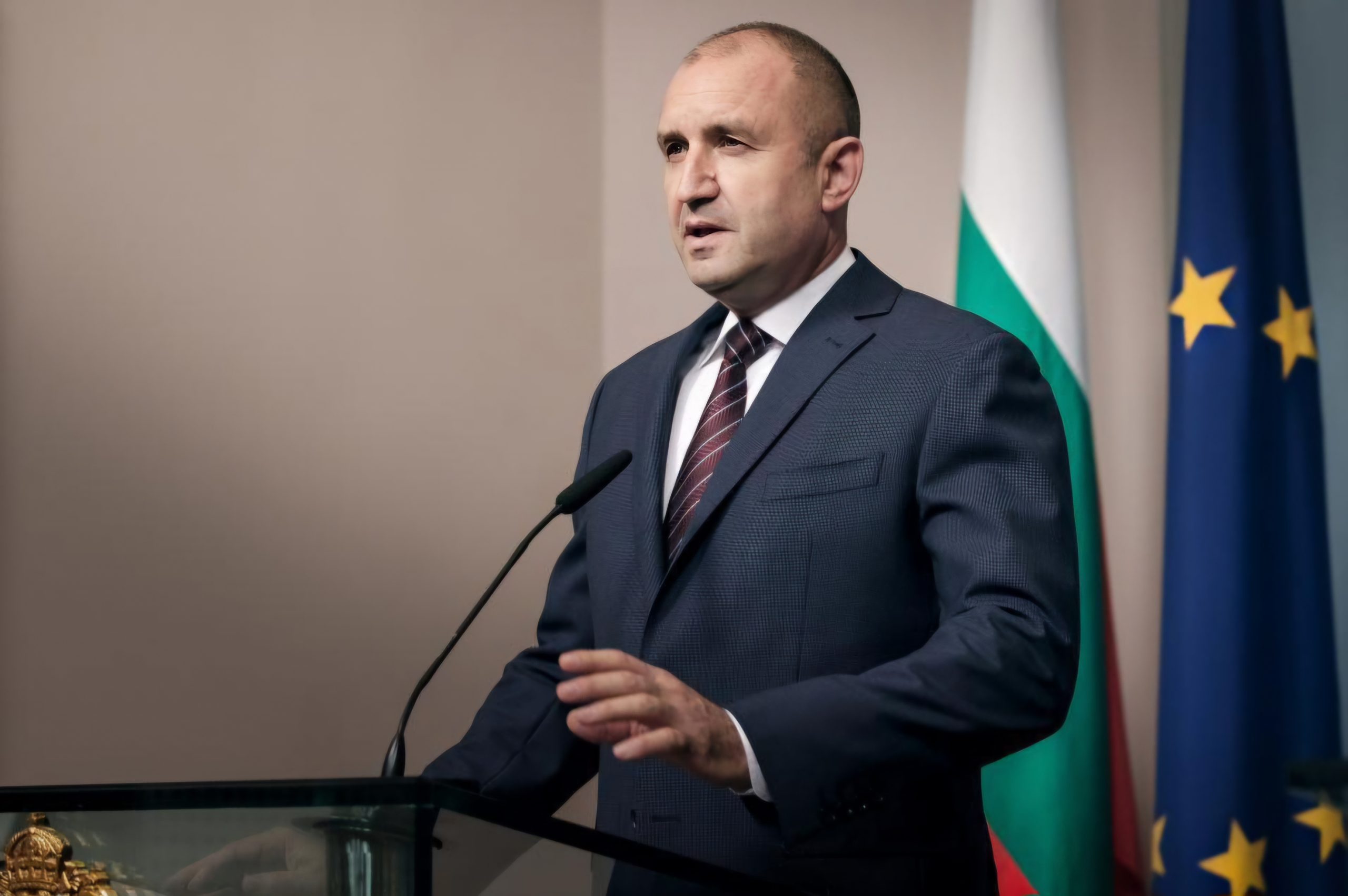
Former Bulgarian president Rumen Radev has stepped down from office ahead of schedule to launch a bid for the premiership, in a move that could reshape the political landscape of Bulgaria, an EU and NATO member navigating economic pressures and divisions over the war in Ukraine.
Radev, a former air force commander who served as head of state since 2017, resigned in January to enter parliamentary politics with a newly formed political list. The decision marked an unprecedented transition for a sitting Bulgarian president and signaled his intention to translate his popularity as a largely non-partisan figure into executive power.
Recent opinion surveys suggest Radev’s movement could emerge as a leading force if elections were held now, capitalizing on public frustration with political fragmentation, corruption allegations and a series of short-lived governments in recent years.
Shift from Presidency to Party Politics
In an interview with German daily Berliner Zeitung, Radev said his decision to enter parliamentary politics was a response to appeals from Bulgarian citizens and their expectations for the country to become “a democratic, modern and European state,” as well as to accelerate its European development.
He framed his political project as an effort to restore public trust in institutions and overcome what he has repeatedly described as systemic governance failures.
Ukraine War and Relations with Russia
Radev has drawn attention across Europe for advocating a more pragmatic approach toward Moscow, arguing that dialogue with Russia should remain open despite the ongoing conflict in Ukraine. While condemning the war, he has expressed skepticism about the effectiveness of prolonged military escalation and has urged diplomatic channels to remain active.
That stance places him at odds with some EU partners who favor stronger military backing for Kyiv, but resonates with segments of the Bulgarian electorate concerned about energy prices, inflation and the broader economic fallout of the conflict.
Economic Concerns at the Forefront
In interviews with European media, Radev has linked Bulgaria’s domestic challenges to wider industrial and economic strains across the continent, including Germany’s slowdown and competitiveness concerns in heavy industry and defense manufacturing.
He has also commented on Europe’s rearmament drive and the growing role of companies such as Rheinmetall, warning that the continent must balance security needs with long-term economic sustainability.
Position on North Macedonia and EU Enlargement
Radev also addressed the European path of North Macedonia and relations between Sofia and Skopje, reiterating Bulgaria’s stance tied to the EU-mediated compromise reached in July 2022, often referred to as the “French proposal.”
He said Skopje must amend its constitution to include Bulgarians on an equal footing with other listed communities in the preamble before EU accession negotiations can effectively proceed.
“This is a difficult but necessary process, and we would like to see the Republic of North Macedonia in the European Union as soon as possible,” he said, adding that Bulgaria’s objective was not to create divisions.
“We do not want borders and checkpoints, but want people on both sides of the border to be able to live, work and communicate together freely,” he said.
Uncertain Electoral Path
Bulgaria has experienced repeated elections and fragile coalitions since 2021, undermining investor confidence and delaying reforms tied to EU recovery funds. Radev’s entry into party politics could consolidate anti-establishment sentiment but may further complicate coalition-building in the Balkan country of nearly 7 million people.
Political observers say his success will depend on whether he can convert his presidential approval ratings into a durable party structure capable of governing in Bulgaria’s fragmented parliament.
No date has yet been set for the next national vote, but Radev has indicated he is preparing for an early electoral test, framing his campaign as an attempt to “reset” Bulgarian governance and restore stability after years of political deadlock.