


Explosive devices discovered near a major gas pipeline linking Serbia and Hungary have heightened security concerns in the region, as political tensions rise ahead of Hungarian elections and new claims emerge that warnings about a possible incident had circulated beforehand.
Serbian authorities said two backpacks containing around four kilograms of suspected plastic explosives, along with detonating equipment, were found near gas facilities in northern Serbia, close to the Hungarian border. Prosecutors classified the case as illegal possession of explosives combined with acts of sabotage.
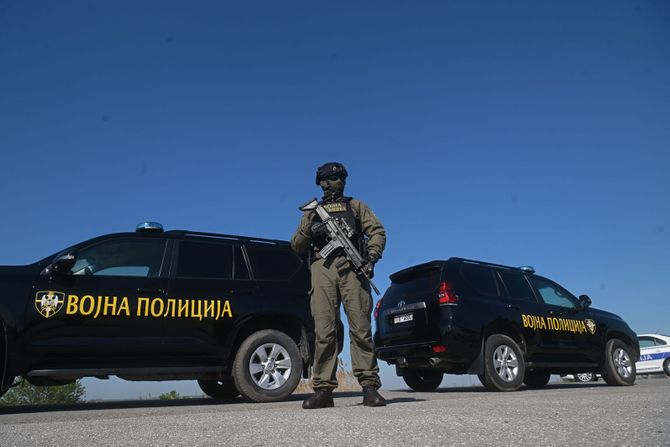
Security forces, including more than 140 police and military personnel, have been deployed to secure the area and continue searches across nearby villages.
Serbian President Aleksandar Vučić said the devices were located near critical infrastructure and warned that, had the attack succeeded, parts of northern Serbia and Hungary could have faced gas supply disruptions.
He said he had informed Hungarian Prime Minister Viktor Orbán, who subsequently convened an emergency meeting of Hungary’s defence council.
Orbán confirmed the call, saying Hungarian authorities had been alerted to “a powerful explosive device” near infrastructure linking the two countries and that an investigation was ongoing.
Hungary’s Foreign Minister Péter Szijjártó described the incident as a direct threat to national sovereignty, saying an attack on energy infrastructure “cannot be interpreted in any other way.”
The pipeline forms part of the TurkStream network, which transports Russian natural gas through the Balkans to central Europe and is considered a key energy route for Hungary and the wider region.
Opposition cites prior warnings
The incident comes less than a week before Hungary’s parliamentary elections, where Orbán faces one of his strongest challenges in years.
Hungary’s opposition figures said there had been earlier warnings about a possible incident involving gas infrastructure in Serbia around the Easter period, according to Serbian media reports.
Opposition-linked voices have suggested the timing of the discovery raises political questions, though no evidence has been presented to substantiate claims of wrongdoing.
Regional energy security concerns
The discovery adds to growing concerns about the vulnerability of Europe’s energy infrastructure, particularly routes carrying Russian gas through southeastern Europe.
Recent reports from Russian energy company Gazprom indicated that drone attacks targeting related gas facilities had been thwarted, underscoring the increasing risks to critical infrastructure.
There has been no claim of responsibility for the devices found near Kanjiza, and authorities in Serbia said investigations were ongoing.
Turkey, a key transit country in the TurkStream system, has not publicly commented on the incident.
Energy security has become a central geopolitical issue since Russia’s invasion of Ukraine, with pipelines and supply routes increasingly viewed as strategic assets vulnerable to sabotage, political pressure and hybrid threats.