


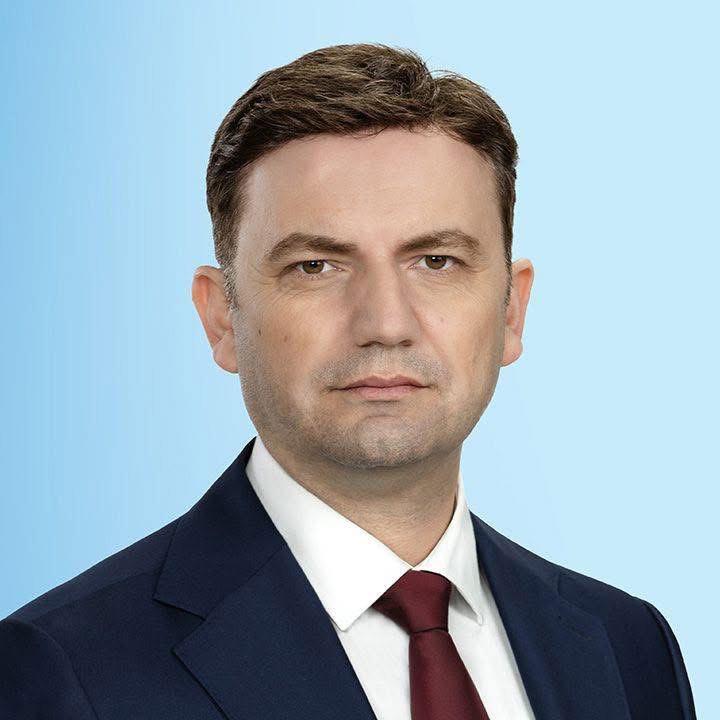
By Bujar Osmani
International orders do not collapse overnight. They decay.
They decay quietly, through complacency, free-riding, moral fatigue, and the slow erosion of the very reasons that once justified them. As decades pass, institutions continue to function mechanically, while publics grow frustrated, expectations rise, and leaders become risk-averse caretakers of a system they no longer fully believe in.
History suggests that world orders are cyclical. They are born out of rupture, stabilized through rules, legitimized by prosperity, and eventually weakened by inertia. When that inertia becomes dominant, change rarely comes through polite reform. It comes through shock.
This is the context in which President Trump’s recent behavior should be analyzed — not as an aberration of personality alone, but as a management technique operating in a late-cycle order.
Trump is not trying to preserve the existing international system as it is. Nor is he openly trying to destroy it. What he appears to be doing instead is something more unconventional: injecting controlled disruption to force adaptation before a catastrophic rupture becomes inevitable.
In a system where traditional diplomacy has become slow, ritualized, and ineffective, he chooses provocation over persuasion. He throws the bomb — rhetorically, politically — not to annihilate, but to force movement.
Take NATO. For years, the alliance suffered from a structural imbalance: American overcommitment paired with European underinvestment. This was widely acknowledged, endlessly discussed, and diplomatically avoided. Trump did not negotiate this problem through communiqués or carefully worded concern. He threatened the premise itself. He challenged the credibility of collective defense. He humiliated allies publicly.
The method was crude. The result, however, was movement. Defence spending surged. What had been politically “impossible” became unavoidable. Not because Trump persuaded leaders — but because he raised the cost of inertia.
The same logic applies to Greenland. The literal idea of territorial acquisition is almost beside the point. What matters is the effect: suddenly, the Arctic is no longer a marginal issue. Strategic corridors, military presence, and great-power competition in the High North are no longer abstract policy papers — they are urgent agenda items. Attention has been forced. Coordination has accelerated. Silence has ended.
This is not diplomacy as we know it. It is coercive agenda-setting.
Trump willingly sacrifices his image, breaks taboos, and absorbs reputational damage to generate system-wide reactions. He acts as a disruptor inside a system that no longer responds to incremental pressure. In doing so, he exposes a deeper truth: the existing order is no longer capable of reforming itself through its own rules.
That does not make the approach virtuous. It makes it diagnostic.
In periods of transition between world orders, conventional tools tend to fail because they were designed for stability, not transformation. Politeness preserves process, not outcomes. Trump’s approach, for better or worse, treats international politics less as etiquette and more as crisis management.
The danger is obvious. Disruption without discipline can spiral. Shock without institutional follow-through can exhaust allies and embolden adversaries. If the disruption is not converted into durable structures, it becomes spectacle.
But the uncomfortable question remains: what if the alternative is worse? What if waiting for consensus, while pretending the system still works, only guarantees a far more violent rupture later?
Trump may not be the architect of a new order. He may not even understand the theory behind his actions. But he may be performing an unintended function: forcing a stagnant system to confront realities it has spent years avoiding.
In that sense, Trump is less the cause of disorder than a symptom of an order that has run out of time — and a signal that transition, one way or another, has already begun.
The real question is not whether his method is elegant.
It is whether the world still has the luxury of elegance at all.
Bujar Osmani is a former foreign minister of North Macedonia and served as Chairperson-in-Office of the Organization for Security and Co-operation in Europe (OSCE) in 2023.