



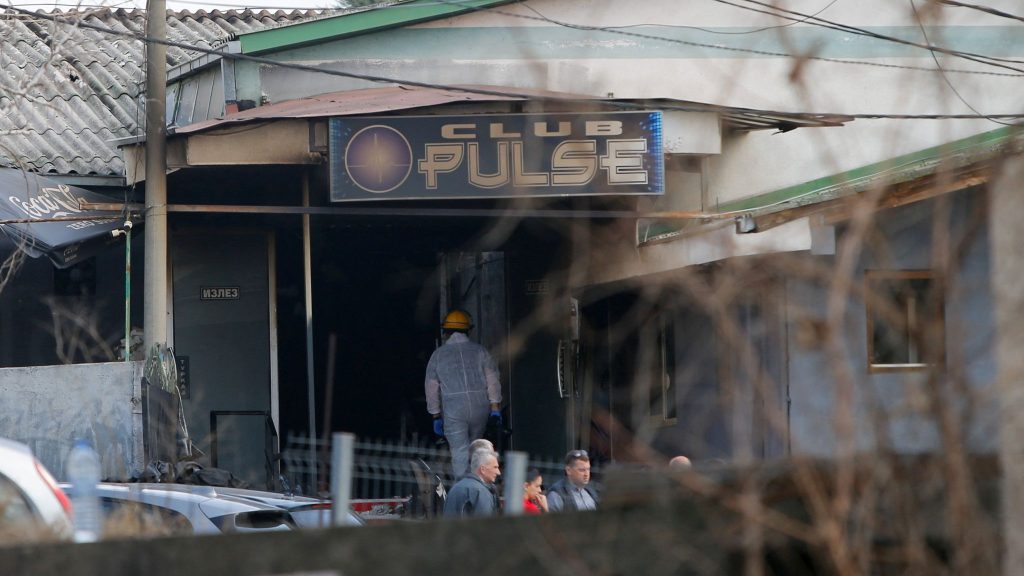
Seven months after a deadly blaze ripped through a nightclub in the eastern North Macedonian town of Kočani, killing 63 people, prosecutors say that entrenched corruption, lax oversight, and years of institutional neglect allowed the tragedy to happen.
The March 16 fire at the “Pulse” nightclub remains one of the worst disasters in the country’s recent history. According to Bulgarian National Television (BNT), investigators found that the club operated for more than a decade without proper safety inspections and that licenses had been issued illegally in exchange for bribes.
Ljupčo Kocevski, the state prosecutor leading the case, said that among the accused are both current and former public officials who allegedly ignored safety violations and took bribes from the club’s owners. “There are state employees among the defendants — some still in office, some no longer in service,” Kocevski told BNT. “Evidence shows that several licenses were obtained unlawfully and should never have been granted. Institutions responsible for supervision simply failed to act.”
Kocevski added that the Ministry of Economy, which was the last authority to issue operating permits for the club, is under particular scrutiny. “For more than ten years, there was no control of this establishment,” he said. “The prosecution found clear indications that part of the licenses were issued for personal or political interests.”
Investigators also allege that the owner of “Pulse” paid bribes to secure those documents. “From the evidence we have, yes — the owner bears responsibility for corruption in obtaining the licenses,” Kocevski said. “Corruption is not the only cause, but it played a major role, alongside institutional failures and negligence.”
Families still waiting for justice
For the families of the victims, the months since the tragedy have been marked by grief and anger. “We no longer live — our lives ended on March 16, when we lost our children,” said Irena, who lost her 16-year-old daughter Dragana in the fire. “Nothing is the same anymore, and it never will be.”
Maria Petrushova, whose 24-year-old son Andri perished in the blaze, told BNT that the pain deepens with time. “The more days go by, the more it hurts,” she said. “We went to a concert, and they came back to us in coffins. All we can hope for now is justice.”
Another parent, Aleksandar, whose sister was among the victims, voiced skepticism that the court will hold the powerful accountable. “I want to believe there will be justice,” he said, “but given our country’s history, I have my doubts. We’ve seen too many cases where those responsible walk free.”
Trial set to begin in Skopje
The first hearing in the Kočani nightclub case is scheduled for November 19 in Skopje. Prosecutors have filed charges against 35 individuals and three legal entities, including local officials and business owners. The indictment lists multiple counts of corruption, abuse of office, and negligence resulting in death.
“The families want the process to be fast and transparent,” Kocevski said. “We hope the court will handle this case with full independence.”
Maria, one of the mothers, said she fears the upcoming trial will reopen old wounds. “This will be another painful moment for us because we will relive everything,” she told BNT. “I only hope that the judges will be fair, not influenced by threats or pressure. We want this trial to show that justice is possible in North Macedonia.”
Corruption under scrutiny
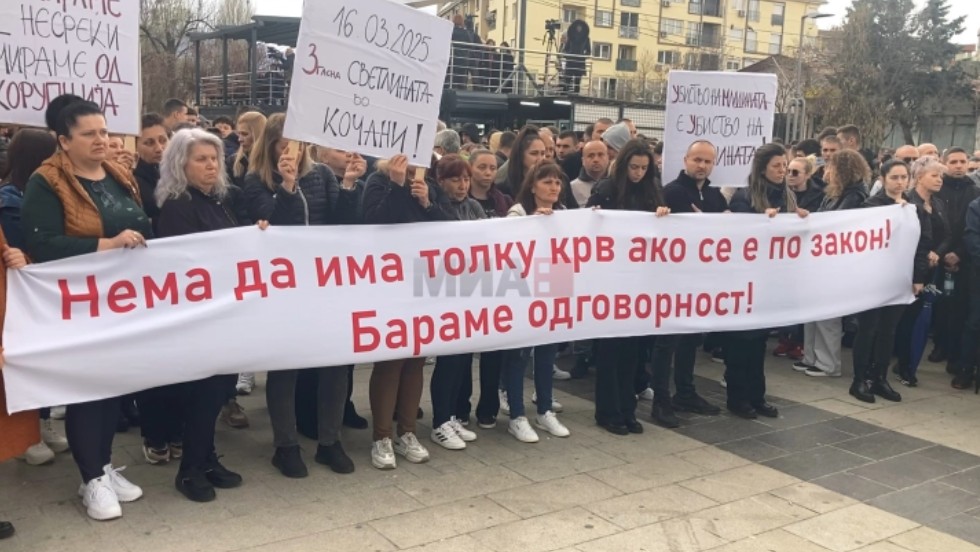
The Kočani fire has reignited public debate over systemic corruption in North Macedonia’s institutions — a problem that European Union officials have long identified as a major obstacle to the country’s EU accession process.
Analysts say the case highlights how poor enforcement of safety regulations and widespread bribery have eroded public trust. “This tragedy is a symptom of a much deeper disease — the impunity of officials and the normalization of corruption,” said one Skopje-based legal expert quoted by BNT.
The government has promised reforms and stricter oversight of public venues. However, critics argue that pledges often fade once public outrage subsides. “Every tragedy exposes the same pattern — negligence, corruption, and no accountability,” said another analyst. “Unless someone is truly punished, nothing will change.”
A nation still mourning
In Kočani, families continue to gather at makeshift memorials near the ruins of the “Pulse” nightclub, lighting candles and placing photos of their loved ones. Many say they still wake up at night to the sound of imagined sirens and screams.
“Every time I pass by the site, my heart breaks,” Irena said softly. “We sent our children out to celebrate, and they never came back.”
For them, the fire is no longer just a personal loss but a symbol of a state that failed its citizens. “We just want someone to take responsibility,” Maria said. “If the institutions had done their job, our children would still be alive.”
The court proceedings in Skopje are expected to last several months. For the victims’ families, it is a painful but necessary path toward closure — and a final test of whether North Macedonia’s justice system can deliver accountability where politics too often intervenes.