


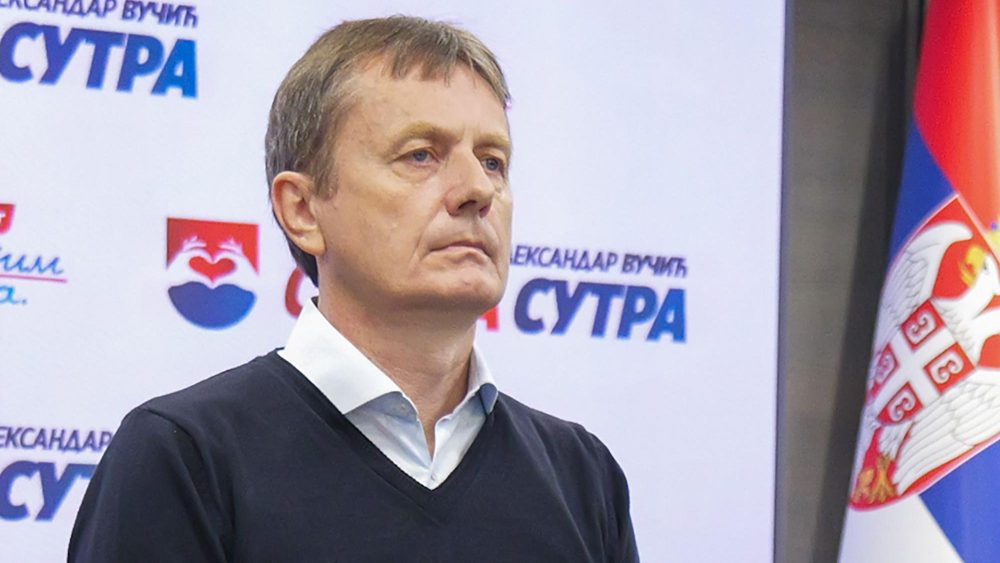
Serbia’s Minister for Public Investments, Darko Glišić, underwent emergency surgery early Tuesday at the Clinical Centre of Serbia after suffering multiple strokes, the health ministry confirmed. Doctors say his condition remains serious and the next 48 to 72 hours will be crucial in determining the extent of the damage to his brain.
According to Health Minister Zlatibor Lončar, Glišić was immediately placed on a ventilator following surgery. “The most important thing is that he arrived at the hospital within the so-called ‘golden hour.’ Everything was done flawlessly in that time window. Unfortunately, this kind of urgent care is rarely accessible to regular citizens,” Lončar said.
Doctors treating Glišić confirmed that he experienced both types of cerebrovascular insults – an ischemic stroke caused by thrombosis, and a hemorrhagic stroke caused by bleeding in the brain.
“He underwent a highly delicate operation with an uncertain outcome,” a neurosurgeon familiar with the case told Nova.rs on condition of anonymity. “Glišić had to be intubated during the procedure, which is why he remains on a respirator. While the primary event was thrombosis, there was also a rupture of a blood vessel, leading to a brain hemorrhage. His recovery will depend on many factors, including the exact brain region affected.”
Post-operative care for Glišić involves complex therapy. While doctors are hopeful due to the prompt intervention, they caution that he may face long-term consequences such as speech difficulties, impaired motor skills, or cognitive complications.
Risk of Recurrence Remains
Medical professionals also warn that the risk of further complications remains high. “There is a possibility of rebleeding or retrombosis. Treating thrombosis requires anticoagulants to thin the blood, but this increases the risk of further hemorrhaging,” the neurosurgeon explained. “His physicians will need to carefully balance his treatment plan.”
The precise extent of the brain damage will become clearer in the next several days. If vital areas controlling breathing or heart function are affected, recovery could be more difficult. However, if non-vital regions are involved, a full recovery may be possible.
“He is relatively young and otherwise healthy, which improves his chances,” the doctor said. “Patients with diabetes or other comorbidities often do not survive such complex vascular incidents.”
Collapse on Live TV
Glišić collapsed earlier Tuesday morning during a live broadcast on TV Pink. While responding to a question, he suddenly began stuttering and was unable to speak coherently. Hosts halted the program and called for medical assistance. Shortly after, the health ministry confirmed that Glišić had suffered a stroke and was rushed to the Clinical Centre of Serbia for surgery.
Doctors suspect the cause may have been severe stenosis or underlying cardiac arrhythmia, which can lead to sudden clot formation and blockage of cerebral arteries. “Sometimes patients feel irregular heartbeats and ignore them, but they can result in fatal outcomes within hours,” the doctor added. “Even temporary vision loss in one eye can be a warning sign of an impending stroke.”
Glišić’s condition continues to be monitored closely. Officials say further updates will be provided as more is known about his recovery trajectory.