


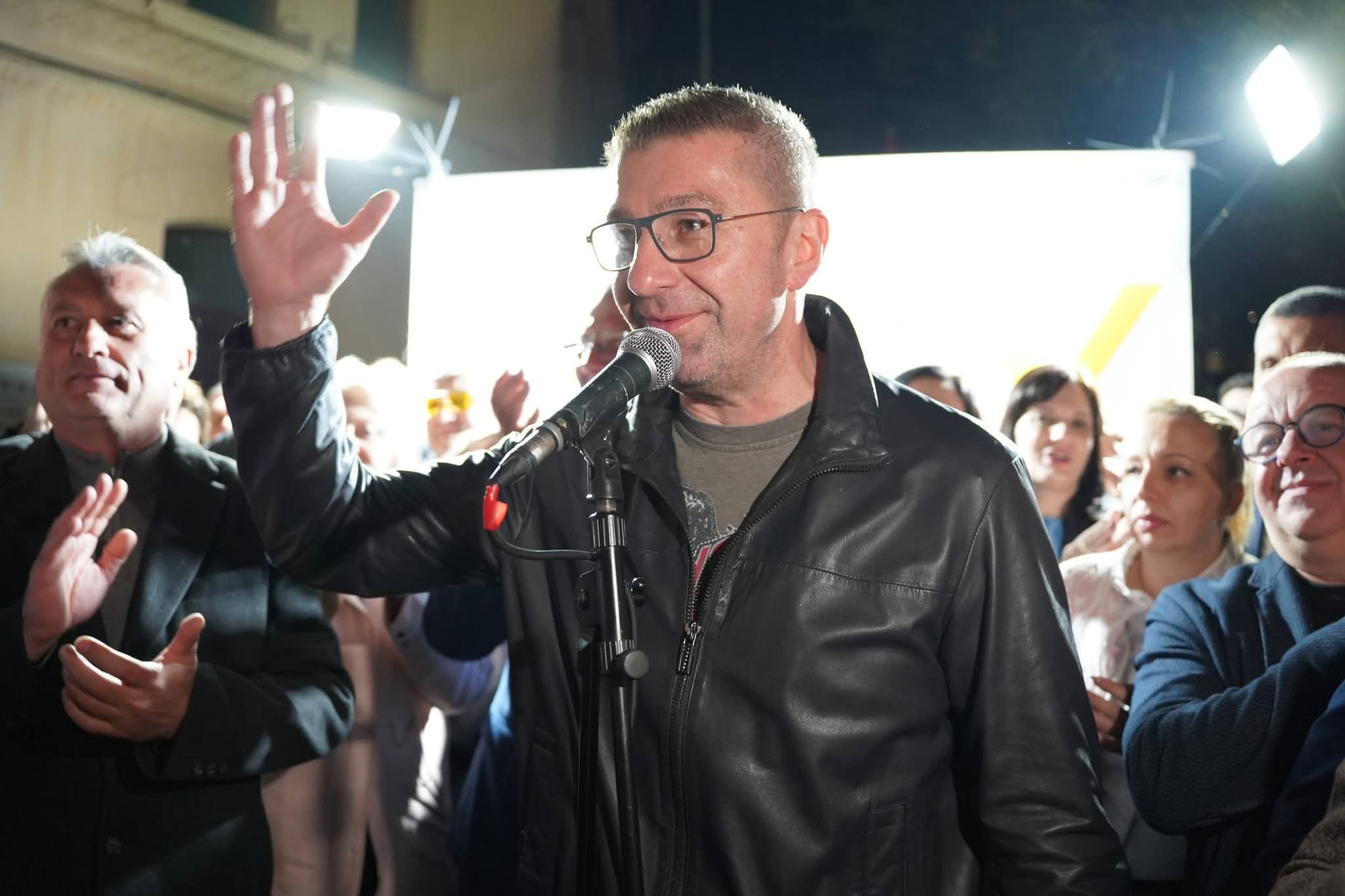
A proposal by Prime Minister Hristijan Mickoski to hold talks among party leaders on key reform laws has exposed widening political and ethnic fault lines in North Macedonia, raising doubts over the government’s reform agenda and the timing of the next parliamentary elections.
Venko Filipce, leader of the main opposition Social Democratic Union (SDSM), rejected the initiative outright, saying he would not meet with what he called “criminal structures” and insisting that the country’s technical government model – a caretaker arrangement designed to oversee elections – must remain in place.
Mickoski, who leads the nationalist VMRO-DPMNE party, said he plans to invite all parliamentary parties to a leaders’ meeting ahead of his trip to the World Economic Forum in Davos. He argues that several proposed laws related to judicial reform and EU integration have received positive assessments from the Venice Commission and the European Commission and should not be politically contentious.
However, the standoff between the two largest ethnic Macedonian parties is unfolding alongside complex negotiations among ethnic Albanian parties, which often play a decisive role in government formation in the EU candidate country.
The Democratic Union for Integration (DUI), the largest ethnic Albanian party and currently in opposition, has signalled that it will not support the removal of the technical government unless it is replaced by a new governing model that preserves Badinter voting – a constitutional mechanism requiring not only a parliamentary majority, but also a majority of lawmakers representing ethnic minority communities. For DUI, this is seen as a safeguard against marginalisation in state decision-making.
At the same time, the ethnic Albanian governing coalition VLEN is moving to consolidate internally, according to political sources. The bloc is under pressure to present a unified leadership structure, with Deputy Prime Minister Izet Mexhiti increasingly seen as the figure around whom the coalition could rally, particularly in anticipation of possible early elections.
Filipce has accused the government of following a pre-planned scenario aimed at triggering snap elections and opening the door to large-scale borrowing. He claimed, without citing specific sources, that the authorities were considering loans of up to 6 billion euros, potentially linked to migration-related arrangements – allegations the government has not directly addressed.
Mickoski has said he would not move to abolish the technical government without broad political consensus, warning that unilateral changes could further destabilise the country. The caretaker government model has long been controversial: the ruling coalition argues it hampers effective governance, while the opposition views it as essential to ensuring fair elections.
The political confrontation is also taking place against a backdrop of heightened international attention on the Western Balkans. Filipce has linked domestic developments to stronger U.S. and EU pressure on regional governments to tackle corruption and organised crime – pressure that analysts say is reshaping political calculations across the region.
With trust between the main political actors at a low point and ethnic power-sharing arrangements once again under scrutiny, analysts warn that North Macedonia risks slipping into prolonged political paralysis. Whether reform efforts move forward or are overtaken by electoral manoeuvring will depend on whether the country’s deeply divided political class can reach even a minimal consensus in the weeks ahead.