


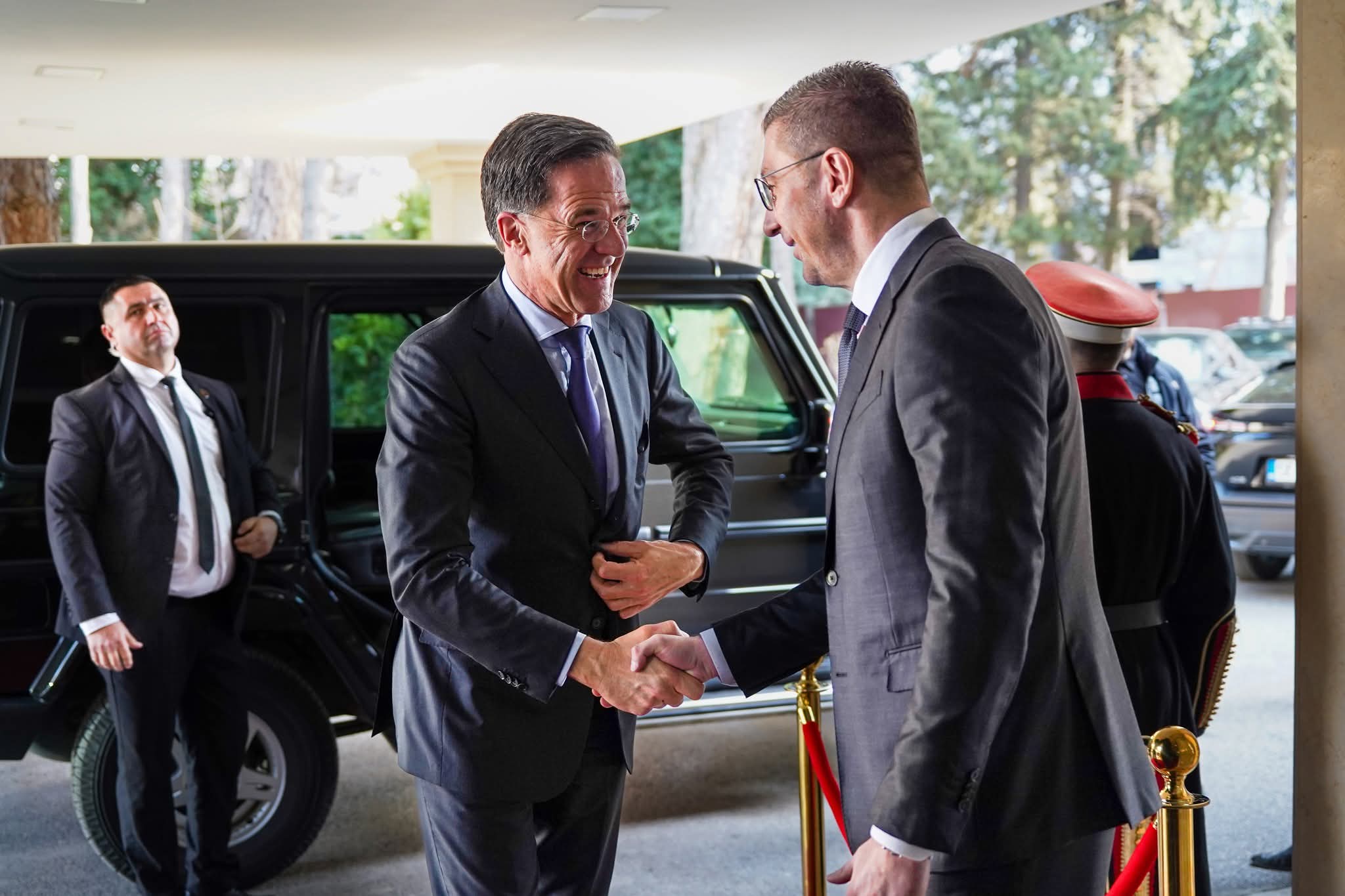
The visit of NATO Secretary-General Mark Rutte to North Macedonia sends a clear message that the alliance will not allow a security vacuum in the Western Balkans at a time of mounting global instability, former defence minister and geopolitical analyst Trajan Gocevski said in an interview with Balkanview.
Gocevski, the first defence minister of independent North Macedonia and a university professor specialising in geopolitics and international security, said the visit comes amid a period of unprecedented shifts in the global security order.
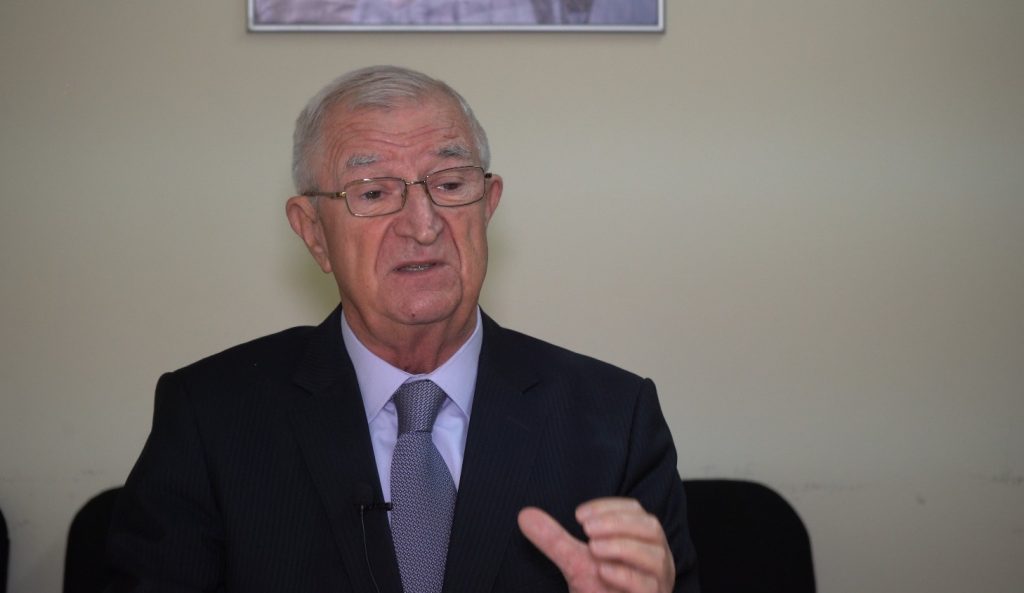
Balkanview: Professor Gocevski, NATO Secretary-General Mark Rutte has just concluded his visit to North Macedonia. How significant was the visit, and what message does it send?
TRAJAN GOCEVSKI: The visit took place at a time of unprecedented dynamics on the international stage, which inevitably affects our country as well. That makes the visit particularly important for the stability and security of North Macedonia, the wider region of Southeast Europe, and NATO’s southeastern flank, of which we are part.
During meetings with the country’s leadership and in his address to parliament, Rutte reaffirmed North Macedonia as a key security partner in the region. He reiterated the call for increased defence investments and sent clear signals about the value of NATO membership for our country.
The visit also reflects how North Macedonia is increasingly seen within the alliance — not just as a beneficiary of security guarantees, but as an active contributor to security. Rutte praised the continued participation of Macedonian forces in NATO missions, including on the alliance’s eastern flank, and stressed that the security of the Western Balkans remains a top priority.
NATO will not allow a security vacuum in the region. Stability here is closely linked to collective defence, which is particularly important at a time of rising hybrid threats and regional tensions.
At the global level, Rutte also used strong rhetoric toward countries he described as challenging the international order, including Russia, China, North Korea, and Iran, highlighting Iran as what he called an “exporter of chaos”. Iran’s nuclear ambitions, he said, represent a direct threat to Europe.
Balkanview: What is happening globally today in terms of security and geopolitics?
GOCEVSKI: The current global geopolitical and military-strategic environment has pushed the existing international security order into a serious crisis. At the Munich Security Conference, leading voices from the United States, NATO, and the European Union openly acknowledged that the old international order no longer exists.
The creation of a new world order is therefore becoming an imperative of our time.
Several developments are accelerating this process: the new approach in international relations from the U.S. administration, Russia’s war in Ukraine entering its fifth year, conflicts in the Middle East, tensions involving Iran, clashes between Pakistan and Afghanistan, the growing refugee crisis, and broader processes of deglobalisation.
All these factors are reshaping the global balance of power. The dynamics are changing almost daily, and the global and regional balance between major powers is shifting.
In short, the world is changing, and new equations are emerging in geopolitics, globalisation, regional alliances, and the regrouping of power on the international stage.
Balkanview: What are the key questions the new global geopolitical dynamics will have to resolve?
GOCEVSKI: Based on my analysis, there are at least ten major issues that will define the new global order.
First, what kind of international order will emerge — unipolar, bipolar, or multipolar — and how it will be achieved. At the moment, there is a growing view that the world is moving toward multipolarity, but the path to that outcome remains unclear.
Second, what ideological framework will shape the future global system — liberal democratic, authoritarian, or some form of hybrid model?
Third, how the global geo-economic system will evolve — whether it will remain liberal and globalised, become more regionalised, or take on a mixed form.
Other key issues include managing large-scale migration flows, the role of nuclear weapons in the future security architecture, the use of outer space, climate change, the rise of artificial intelligence, the role of international institutions in resolving conflicts, and the global energy transition, including access to rare minerals.
Balkanview: You mentioned nuclear powers and the growing importance of space. How do these factors influence the emerging global order?
GOCEVSKI: According to the Federation of American Scientists, at the beginning of 2025, the nine nuclear powers possessed about 12,241 nuclear warheads, with around 9,600 operationally deployed.
Russia and the United States together control roughly 87–90 percent of the world’s nuclear arsenal. China is estimated to have between 500 and 600 warheads, while France, Britain, India, Pakistan, Israel, and North Korea also maintain nuclear capabilities.
These nuclear powers will inevitably seek to secure a privileged position in any future global security architecture.
At the same time, outer space is becoming a new arena of strategic competition. The United States remains a leader, Russia seeks to maintain its position, while China is advancing rapidly in space technologies. The European Union is also investing, though progress has been slower.
Other countries such as Japan, India, France, and Germany are also expanding their space capabilities.
Balkanview: What strategic positioning should North Macedonia pursue in this changing global landscape?
GOCEVSKI: We are living in a period where traditional collective security systems are either being reshaped, redesigned or regrouped into new configurations.
At the same time, security risks and threats are increasing and becoming more complex.
For smaller countries like North Macedonia, the priority must be strengthening their own defence and security capacities while maintaining strong loyalty to strategic partners and alliances.
In the future, North Macedonia will be as stable and secure as its ability to build a resilient society capable of responding to new threats, develop a modern national security and defence system, and align itself effectively with the policies of the alliances it belongs to.
Maintaining strategic partnerships and respecting international commitments will remain essential for the country’s long-term security and stability.