


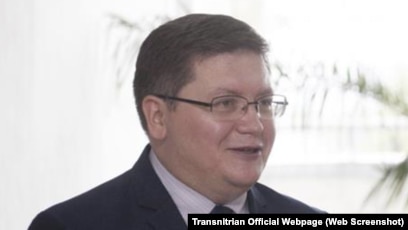
The name of Ilia Uvarov, the newly appointed head of Russia’s Liaison Office in Kosovo, appears in a database published by a Ukrainian organization that links individuals to Russian intelligence services, Radio Free Europe reported, although the claim could not be independently verified.
Uvarov was introduced in August 2025 in a brief notice by the United Nations Interim Administration Mission in Kosovo (UNMIK), which said the then special representative of the U.N. secretary-general had met him in Pristina for what was described as a “general and constructive discussion”.
Beyond that announcement, Uvarov has remained a largely unknown figure in Kosovo. He is not yet listed as head of the Russian office on the website of Kosovo’s Foreign Ministry, where his predecessor, Andrei Shugurov, is still named.
His appointment is, however, referenced in listings of foreign missions in Serbia, reflecting Belgrade’s stance that Kosovo remains part of its territory and the practice of countries that do not recognize Kosovo’s independence to manage diplomatic relations through Serbia.
The Ukrainian-based Molfar Intelligence Institute, which specialises in open-source analysis and, in some cases, leaked Russian documents, lists Uvarov as an officer in the “RT” department of Russia’s Foreign Intelligence Service (SVR), describing it as involved in intelligence operations conducted from Russian territory.
Molfar said its database was compiled from materials obtained from an internal source at a Moscow technology company and partially verified against state registries, while noting that confirming specific roles remains difficult.
Reuters could not independently verify the claims or reach Uvarov for comment. The Russian Liaison Office in Pristina and Russia’s embassy in Belgrade did not respond to requests for comment. Kosovo’s Foreign Ministry also did not reply to questions on whether it had information linking Uvarov to Russian intelligence.
Diplomatic career
Uvarov, believed to have started his diplomatic career around 2000, has held postings in several countries, including the United States and Moldova, according to official records.
In Moldova, he served as a consul at the Russian embassy and was involved in structures linked to the breakaway region of Transnistria. In 2017, he was appointed co-chair of the Joint Control Commission overseeing the security zone along the Dniester River, a role he held until 2019.
According to Radio Free Europe’s Moldovan service, Uvarov supported reopening a bridge over the Dniester in 2017 despite opposition from Transnistrian authorities. The bridge had been rebuilt with European Union funds.
Intelligence under diplomatic cover
Security experts say the use of diplomatic cover for intelligence activities is common globally, but particularly widespread in Russia’s case.
“Almost every embassy in the world has some intelligence role,” said Mark Galeotti, a British expert on Russian security issues at University College London, adding that extensive foreign postings can sometimes indicate intelligence links.
He said a mission such as the one in Kosovo could serve as a convenient base for intelligence officers operating across the region, given Kosovo’s ties with Western countries and NATO.
Keir Giles, another British expert on Russia, said many countries deploy intelligence officers under diplomatic cover, but that Russia stands out for the scale of the practice.
“In Russia’s case, a significant proportion of diplomats are in fact intelligence officers,” he said, adding that authorities often face a dilemma whether to expel such individuals or monitor them.
Limited oversight
Russia’s Liaison Office in Pristina operates under a unique diplomatic framework established in 2005 when Kosovo was under U.N. administration. It functions under UNMIK and is not directly overseen by Kosovo’s institutions.
Its staff enjoy immunity and freedom of movement, and the office is largely inaccessible to local authorities, making it one of the least transparent diplomatic presences in Kosovo.
In 2021, Kosovo declared two Russian diplomats linked to the office persona non grata, citing threats to national security and constitutional order.
Surveys in Kosovo consistently show Russia is widely viewed by the public as a security risk. A 2024 report by the Kosovo Centre for Security Studies said Moscow sees Kosovo as both a symbol of Western intervention and a geopolitical battleground tied to its support for Serbia.
A U.S. intelligence assessment published last week said Russia continues to fuel tensions between Serbia and Kosovo while also backing separatist tendencies in Bosnia’s Serb entity.
The United Nations declined to comment on the composition or activities of member states’ diplomatic missions.