


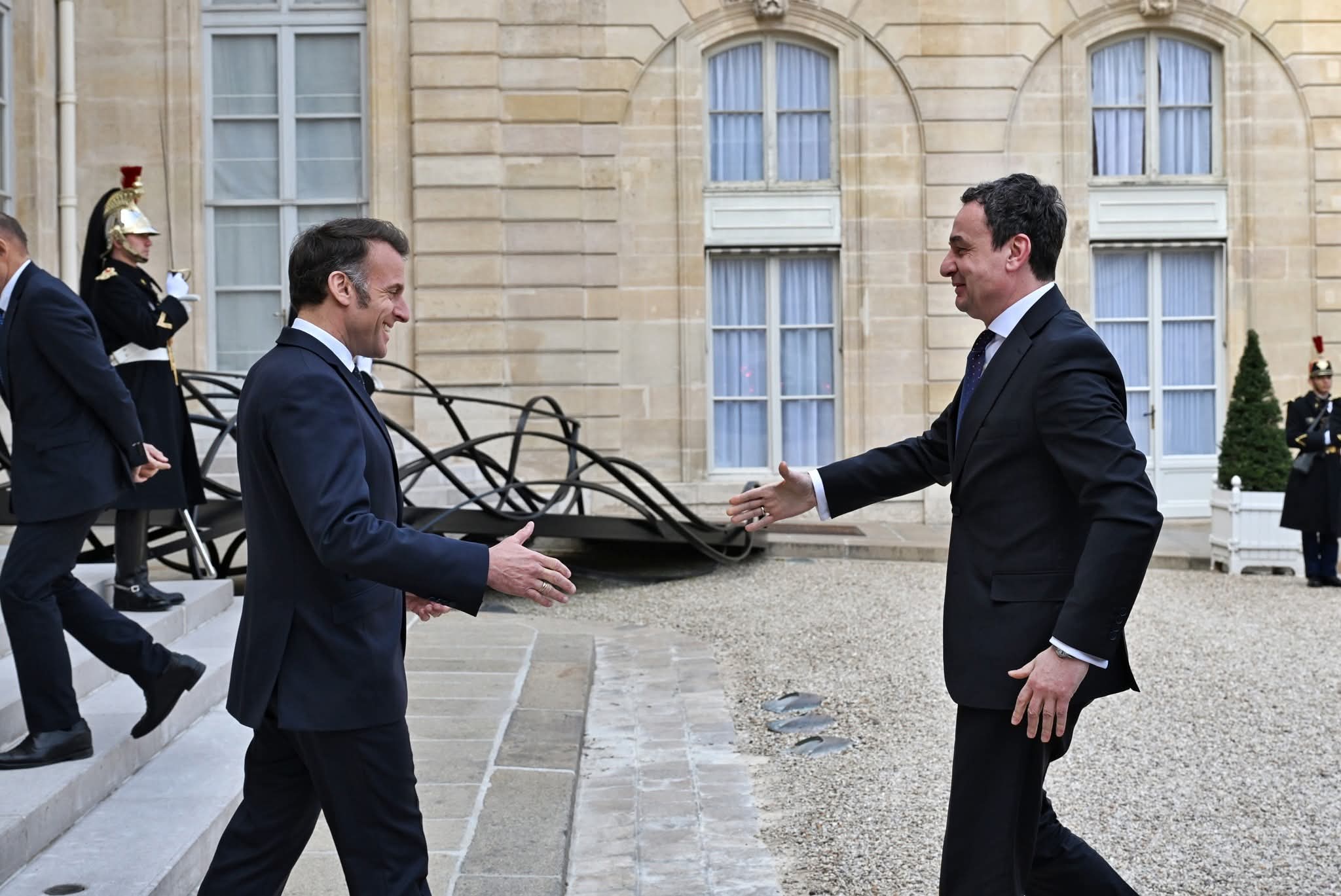
Albin Kurti met Emmanuel Macron in Paris on Friday to discuss the dialogue with Serbia, relations with the European Union and regional security, according to statements from Kurti’s office, while Serbian President Aleksandar Vučić warned against what he described as potentially destabilising proposals.
Kurti, prime minister of Kosovo’s government, held talks with Macron during a working visit to Paris, focusing on the EU-facilitated dialogue between Belgrade and Pristina and the implementation of agreements aimed at normalising relations.
In a statement, Kurti’s office said the meeting addressed European integration, regional security and cooperation with international partners, highlighting what it described as the continued positive role of NATO and its peacekeeping mission KFOR, as well as European Union missions in Kosovo.
Kurti reiterated that Kosovo remains aligned with EU foreign and security policy and requested France’s support for its European integration path and membership in international organisations.
He also outlined developments in domestic reforms, citing progress in most policy areas assessed by the EU, and discussed plans to strengthen local defence capacities, according to the statement.
The talks covered broader regional dynamics, including relations with Serbia within the Brussels dialogue framework and cooperation with NATO allies. Kurti also raised investment plans in education and proposed further business forums between Kosovo and France, following a previous event held in Pristina earlier this year.
Kosovo’s government said it had invited France to support preparations for the 2030 Mediterranean Games, which Pristina plans to host.
Vučić raises concerns over security proposals
Separately, Vučić said earlier this week that Kurti would present two requests during his visit to Paris, including one he described as “very dangerous,” urging international actors not to support such proposals.
Vučić said he believed Kurti could seek support for reducing the role of KFOR along the administrative boundary in northern Kosovo and allowing Kosovo’s security forces to take greater control, a move he said would pose risks to regional stability.
“I am sure that such a request will not be supported,” Vučić said, adding that any such step would threaten peace and security in the region.
He also claimed that Kurti might seek restrictions on Serbia’s use of its military capabilities, though no such proposals were confirmed by French or Kosovo authorities.
Analysts: statements aimed at domestic audiences
Political analysts in Belgrade said Vučić’s remarks were primarily directed at a domestic audience, noting that any change to KFOR’s mandate would require consensus within NATO.
Dragan Popović, a Serbian political analyst, said Macron remained one of Vučić’s key interlocutors in Europe, particularly given economic and defence cooperation between Serbia and France, including major procurement deals.
He added that heightened rhetoric could reflect concerns in Belgrade about shifting political dynamics and international engagement with Serbian opposition groups.
Igor Novaković, a security analyst, said discussions about altering KFOR’s role had not been formally raised in international forums and would be difficult to implement.
“Such messages are largely intended for domestic audiences,” Novaković said, adding that any decision on KFOR would depend on NATO consensus.
Diplomat Duško Lopandić said France had previously taken a firm stance on Kosovo-related issues, including blocking its membership in the Council of Europe over unmet commitments, and expressed expectation that Paris would maintain a cautious approach.
The meeting between Kurti and Macron comes amid renewed focus on the EU-mediated dialogue between Belgrade and Pristina, which remains central to stability in the Western Balkans.