


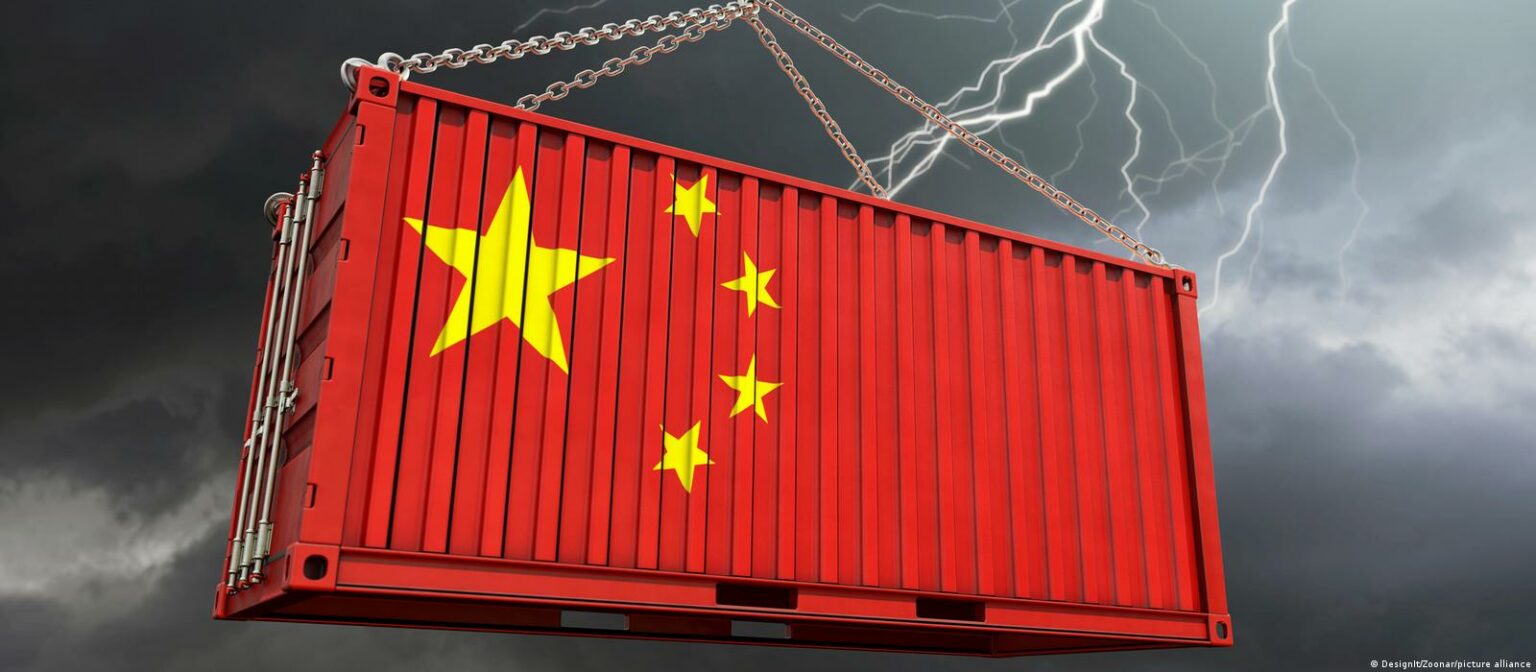
Kosovo is spending more than 2 million euros a day on goods imported from China, highlighting a sharp rise in Chinese products in its market and a growing trade imbalance with Beijing, despite the absence of diplomatic relations between the two sides, RFE/RL reported.
According to Kosovo Customs data, imports from China rose to 841 million euros in the first 11 months of 2025, up from 452 million euros in 2021. The figure has now surpassed Kosovo’s total imports from CEFTA member states – including Albania, Serbia, North Macedonia, Montenegro, Bosnia and Herzegovina and Moldova – traditionally among its main regional trading partners.
By contrast, Kosovo’s exports to China remain negligible, at less than 1 million euros annually, underscoring a widening trade deficit and an asymmetrical economic relationship.
China does not recognise Kosovo’s 2008 declaration of independence and supports Serbia’s claim over the territory. Beijing has no embassy in Pristina, maintaining only a liaison office under its embassy in Belgrade.
Economists say price competitiveness is the main driver behind the growing presence of Chinese goods, ranging from toys and household electronics to food and agricultural products. Low purchasing power among Kosovo consumers makes cheaper imports particularly attractive, said Gazmend Qorraj, a lecturer in international trade at the University of Pristina.
“Businesses are guided primarily by profit considerations, not by macroeconomic or strategic implications,” Qorraj said, adding that traders invest where returns are highest, regardless of origin.
Major importers confirm that price remains decisive. Ramiz Kelmendi, head of Elkos Group, said his company imports more than 12 million euros’ worth of goods from China annually, though the European Union and the United States remain its main sources. He noted that Kosovo’s lack of domestic industries in sectors such as textiles and electronics leaves importers little choice but to source cheaper products abroad.
Customs data show that last year alone Kosovo imported more than 14 million euros worth of electronic equipment from China, including televisions and cameras, as well as over 13 million euros in smartphones and other telecommunication devices.
However, the growing import of food and agricultural products from China has raised economic and public health concerns. Qorraj warned that such imports undermine local producers and pose risks linked to food safety, while discouraging domestic agriculture due to higher local production costs.
Businesses say the trend reflects the absence of a coherent industrial and trade policy. Kelmendi argued that while Kosovo does not produce tropical fruits, it does produce items such as garlic, and government support could help local farmers compete on price. Long shipping times from China, sometimes up to 120 days, also make such imports inefficient, he said.
Analysts note that China’s footprint in Kosovo differs markedly from its role elsewhere in the Western Balkans. Xhelal Neziri, an analyst at the Balkan Institute for Regional Cooperation (BIRC) in North Macedonia, said that unlike Kosovo and Albania, Serbia has become a “testing ground” for the expansion of China’s economic and political influence in the region.
“In Kosovo, Chinese influence remains largely commercial, without significant political or strategic weight,” Neziri said.
He added that Kosovo, like Albania, is fully aligned with Western policies, particularly those of the United States and the European Union, limiting Beijing’s ability to translate trade ties into broader geopolitical leverage.
A September report by the Kosovo Centre for Security Studies found that China’s economic footprint in the Western Balkans has expanded significantly over the past decade, often creating trade dependence through rising imports and minimal exports. In Kosovo’s case, the influence remains largely commercial rather than political, unlike in neighbouring Serbia, Montenegro or Bosnia and Herzegovina, where Chinese loans and infrastructure projects have increased Beijing’s leverage.
Kosovo has no debt to China and no recorded Chinese foreign direct investment. Total foreign direct investment reached 847 million euros last year, none of it from China.
The government has not commented on whether it plans protective measures for domestic producers. Prime Minister Albin Kurti has previously said that, despite rising imports from China, the EU remains Kosovo’s key trading partner, reflecting Pristina’s strategic alignment with the West.
For now, analysts say, Kosovo’s growing reliance on low-cost Chinese goods offers short-term consumer benefits but risks entrenching structural trade imbalances and weakening domestic production in the longer term.