


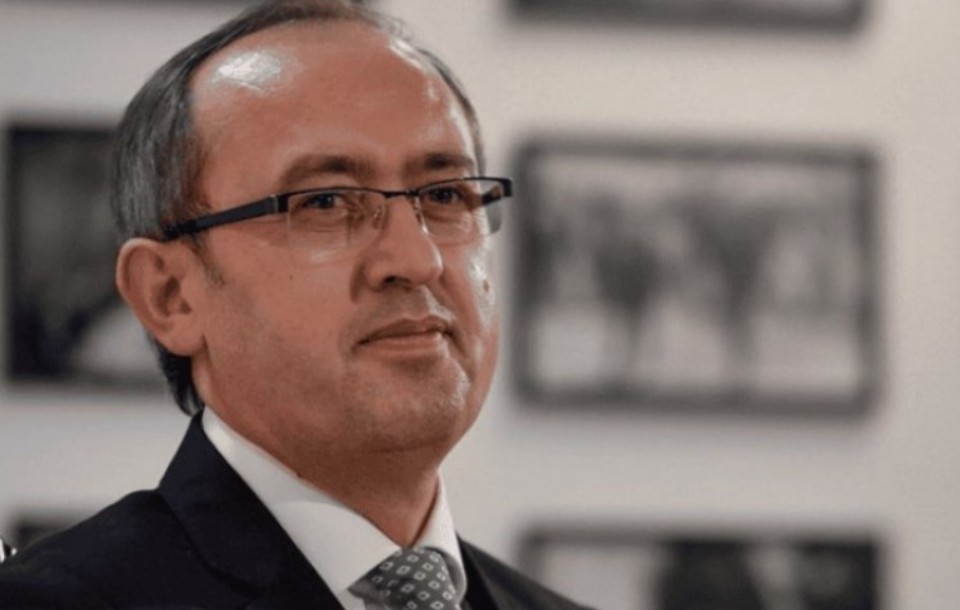
Former Kosovo Prime Minister and opposition lawmaker Avdullah Hoti said on Tuesday that the Constitutional Court should not be expected to resolve every political dispute, and urged lawmakers to restore majority rule in parliamentary procedures.
“The Court should, first and foremost, address political problems it created itself,” said Hoti, a member of the Democratic League of Kosovo (LDK), referring to the court’s 2014 ruling on the appointment of the speaker of parliament.
The ruling, which he said was cited again in the Court’s decision of June 26, 2025, granted the party that won the most votes in an election the exclusive right to nominate the speaker. According to Hoti, this interpretation effectively blocked the parliamentary majority from electing a speaker if the leading party lacked sufficient support.
“This violates the core principle of majority rule in parliamentary democracies,” Hoti said in a written statement. “Eighty MPs—enough to change the Constitution—could back a single candidate, yet remain unable to vote without the consent of a minority to make that nomination.”
He also argued the 2014 decision infringed on the constitutional principle of a free and unconditional parliamentary mandate, as it limited MPs to voting only for candidates proposed by the largest party.
“The MP is not free to exercise their mandate if they are restricted to voting on only one proposal,” he wrote.
Hoti said the ongoing political impasse, which he attributes to the Court’s interpretation, must be resolved to avoid similar crises in the future.
“The solution is clear,” he said. “As with the process of forming a government, the election winner—known as the relative winner—should have the initial right to propose a speaker and later a prime minister. However, that right should be time-bound. After a reasonable deadline, the right should pass to whoever can form a parliamentary majority.”
Such an approach, Hoti argued, would align with Kosovo’s constitutional spirit, uphold basic principles of parliamentary democracy, and reflect practices in many European countries.
“Even if, as some legal experts suggest, the Constitutional Court annuls the initial parliamentary session on procedural grounds due to an unconstitutional change to the agenda, the principle remains: the majority decides,” he said.
“The relative winner of the election should exercise its right within a reasonable time. After that, the right passes to any group capable of forming a majority in parliament. Only such a solution respects both majority rule and the free, unconditional mandate of each MP,” Hoti concluded.