


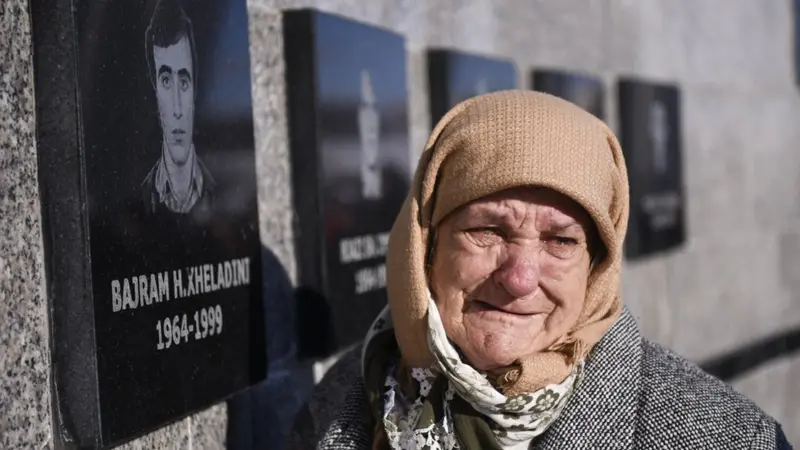
Kosovo on Thursday honored the victims of the Reçak massacre, a 1999 atrocity in which Serbian forces killed 45 ethnic Albanian civilians in the village of Shtime, an event that prompted NATO intervention and helped pave the way for the end of the Kosovo war and the country’s eventual independence.
President Vjosa Osmani, acting Prime Minister Albin Kurti, and parliamentary speaker Glauk Konjufca joined citizens and political leaders at the Reçak memorial to pay tribute to those killed. William Walker, former head of the OSCE Verification Mission who documented the killings at the time, also attended the ceremony.
“Pain from the Reçak crimes remains fresh for the families and all citizens of Kosovo because justice has yet to be delivered. Serbia continues to deny these crimes, perpetuating the same mentality and policies of the past,” Osmani said, adding that Kosovo remains committed to defending the truth and seeking justice internationally.
Kurti emphasized that Reçak remains central to Kosovo’s pursuit of justice, noting that the crimes cannot be erased from history and that truth and accountability are enduring moral and historical obligations.
The Reçak massacre, which included the death of a 12-year-old boy, became a turning point that prompted NATO’s 78-day bombing campaign in 1999, ending on June 10 following the United Nations Security Council’s Resolution 1244. NATO’s intervention also enabled the return of more than 800,000 refugees and displaced persons.
Walker recalled that his reporting on Reçak helped the world understand the scale of atrocities in Kosovo and galvanized international support for Kosovo’s independence.
During the 1998–1999 conflict, over 13,000 civilians were killed, thousands went missing, and around 1,500 remain unaccounted for.