By Enver Robelli
The young Albanian state, in terms of transport, was an underdeveloped country lacking adequate infrastructure, and even the progressive expansion of railways across Southeastern Europe had largely bypassed Albania, writes linguist Joachim Matzinger in a short essay published in the Austrian newspaper Der Standard.
It was only amid the turmoil of the First World War, when the country’s north was occupied by Austro-Hungarian troops, that field railways with narrow-gauge tracks were constructed. Initially drawn by horses and later by steam or battery-powered locomotives, these lines were used for troop transport. Named after their inventor Paul Decauville, they became known simply as Decauville railways.
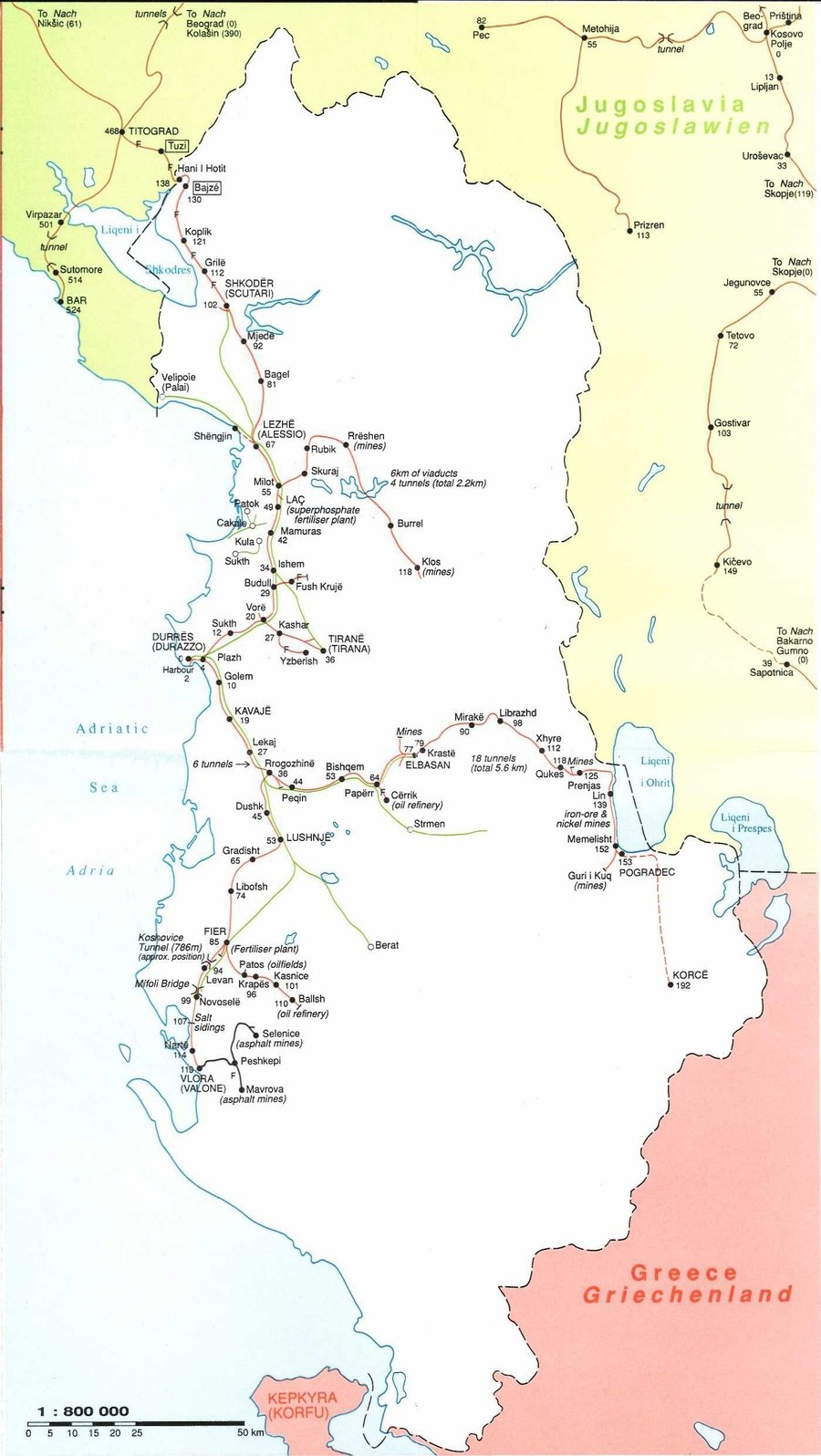
In the south of the country, partly occupied by Italian forces, a similar narrow-gauge railway was built from the port city of Vlora to the bitumen mines of Selenica, Matzinger notes. At the end of the war, during the Austro-Hungarian withdrawal from Albania, most of these field railways were dismantled. What remained of the network—such as the Vlora–Selenica line—continued to be used for industrial purposes in the interwar period.
It was not until 1947, after the Communist Party had taken power in 1944, that Albania inaugurated its first regular railway with standard gauge tracks (1,435 mm). This project was carried out with Yugoslav assistance. The first line, about 43 kilometers long, connected the port city of Durrës with the small central Albanian town of Peqin.
Until the mid-1980s, the railway network for both passenger and freight transport expanded gradually—built largely through the labor of “volunteers” (such as students) and prisoners—reaching a total length of 677 kilometers of main and secondary lines.
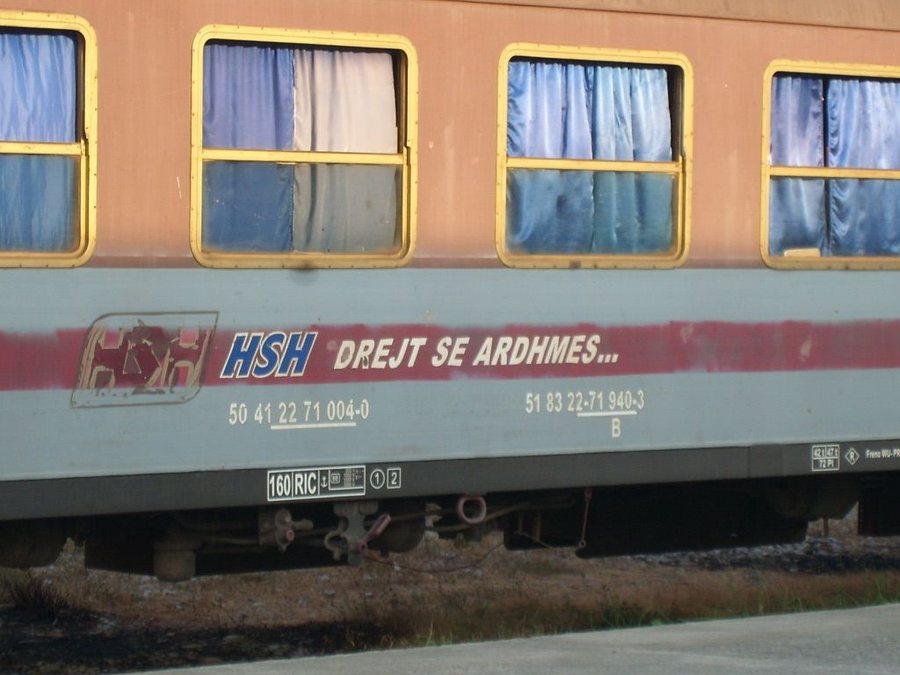
Rolling stock (locomotives and wagons) came from fellow socialist countries—especially Czechoslovakia—but also from China and, after the fall of the regime, from Italy, reflecting Albania’s shifting political alliances over time, Matzinger writes.
With the political turning point of 1990, which opened the country’s borders for the first time, and the chaotic conditions following the collapse of fraudulent pyramid schemes, Albania’s railway system entered a decisive decline.