


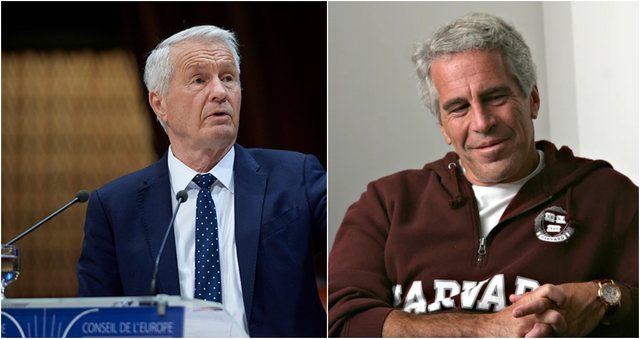
Newly released U.S. Justice Department documents tied to the Jeffrey Epstein investigation have drawn wider international scrutiny this week, extending political and ethical questions into the Western Balkans as the latest tranche of the Epstein Files — comprising millions of pages of previously sealed material — continues to be examined by journalists and political analysts.
The files, made public under the Epstein Files Transparency Act, include a trove of emails, correspondence and ancillary documents originally collected through civil and criminal proceedings against the late financier, who died in custody in 2019 after federal sex trafficking charges. The records detail Epstein’s interactions with a broad network of political, business and academic figures, and underscore the controversy over how far the fallout from the U.S. release might reach internationally.
Macedonia’s Role in Research Controversy
One of the more unusual strands to surface involves North Macedonia. Leaked material refers to the transport of human brain samples from the Balkan state to the United States for scientific research linked to suicide and psychiatric disorders, a connection that has been seized upon by online commentators as evidence of broader involvement in Epstein-associated networks. The documents suggest that up to about 1,000 post-mortem brain samples — including those from people who died by suicide — were shipped from North Macedonia to U.S. research institutions, under protocols described as controlled and legally authorised at the time. Former Macedonian forensic medicine director Aleksej Duma confirmed Macedonia’s participation in the project but stressed it was conducted under strict oversight and ethical approvals, and that only a small minority of those samples originated in Macedonia.
Public coverage in the region has dubbed the narrative “transported in suitcases,” but local scientists say this misrepresents well-regulated scientific collaboration and have pushed back against characterisations of illegal organ trafficking.
Balkan Leaders Deny Ties
The released documents have also compelled public responses from politicians in the Western Balkans after their names or offices were referenced — directly or indirectly — in certain emails.
In Kosovo, former President Atifete Jahjaga issued a statement calling reports linking her to Epstein “completely ungrounded and untrue.” Jahjaga said she had never met or interacted with Epstein, and that vague email mentions of “the President of Kosovo” did not refer to her personally.
Similarly, Milo Djukanovic, former president and prime minister of Montenegro, denied any contact or acquaintance with Epstein. Djukanovic’s name appears in the files as part of a message thread involving Slovak politician Miroslav Lajčák, but he said he had neither known nor communicated with Epstein and questioned the authenticity of the cited conversations.
Former Kosovo political figure Behgjet Pacolli has also been referenced in some media reporting, though details of his listing in the files have been described without substantiated allegations, and Pacolli’s own response emphasised personal betrayal by associates rather than links to Epstein.
Albania and Council of Europe References
Epstein’s sprawling cache has also intersected with regional political history involving Albania. An email from 2012 by Thorbjørn Jagland, then Secretary General of the Council of Europe, mentions a recent official visit to Tirana and remarks on “extraordinary girls” in the Albanian capital, according to copies of the correspondence published in local reports. There is no indication of misconduct associated with official duties, but the tone of the message has raised ethical questions about the private language of high-ranking officials who corresponded with Epstein.
A separate strand of correspondence involves an Albanian woman’s email application in 2017 to work for contacts linked to Epstein. The files show that a job inquiry was forwarded along with photos and video of the applicant, illustrating how formal recruitment channels could be repurposed within Epstein’s network of contacts.
Broader International Context
Beyond the Balkans, the broader document release has already fueled political repercussions in Europe, including the resignation of Slovak diplomat Miroslav Lajčák from an advisory position after emails highlighted his exchanges with Epstein. Lajčák’s interactions were described as professional and social, but they reignited debate over the appropriateness of relationships between Epstein and international public figures.
U.S. officials say the millions of pages released represent the final tranche of material under the transparency law, but many files remain heavily redacted or difficult to interpret, and researchers warn that establishing context or proving wrongdoing from isolated mentions remains challenging.
As analysts in the Balkans continue to sift through references in the files, the revelations have sparked fresh discussion about governance, international scientific collaboration and the limits of accountability when global scandals intersect with local actors and institutions.