


Now before us stands a higher task — to help the public more clearly understand the meaning of organ donation.
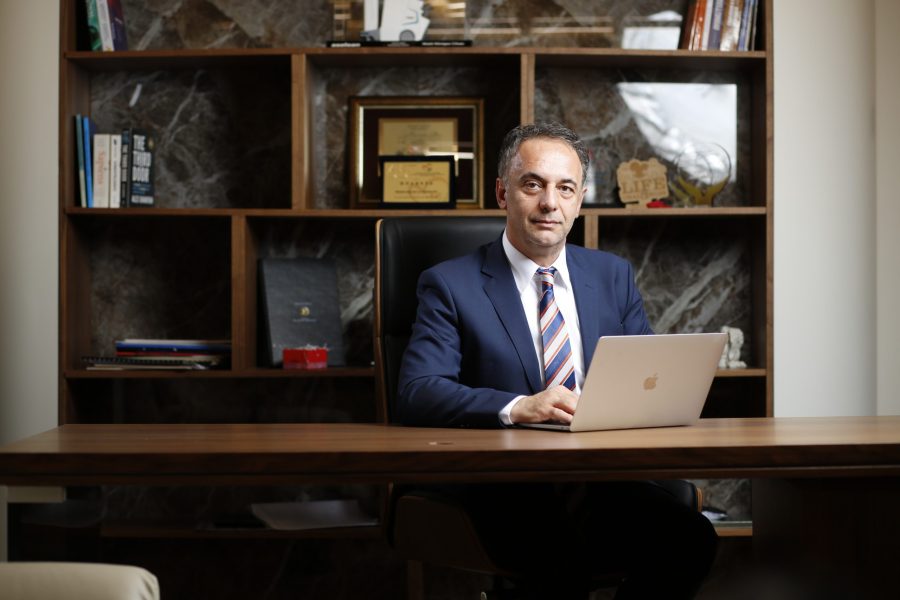
By Azir Aliu
In the world of medicine, there are fields that demonstrate the technical and scientific power of modern healthcare. But transplantation reveals something even more important — the moral maturity of a society. In 2024, a record 173,727 organ transplants were performed globally, and 44,021 in Europe. Despite this progress, by the end of the same year, 94,644 patients in Council of Europe countries were still waiting for an organ, and 8,591 people died while on waiting lists. This means that transplantation today is not only the “queen” or pinnacle of medicine, but also a measure of how well a society can organize hope for a second chance at life.
North Macedonia today does not face the question of whether it knows how. North Macedonia knows. We have prepared and trained medical teams, professionals with knowledge, experience, and readiness to carry out the most complex procedures that transplantation requires. Our system already has experience with kidney, heart, liver, and bone tissue transplants, and this week the public was informed of 16 successfully performed corneal transplants, some using modern minimally invasive techniques with micron-level precision. The Government’s Transplantation Program for 2026 confirms this institutionally, setting as priorities the increase of kidney, heart, liver, bone, and bone tissue transplants from deceased donors, expansion to vascular tissues, and the initiation of preparations for lung transplantation, alongside national lists, registries, coordinators, and software upgrades within “My Term.” In other words, the Macedonian healthcare system has a solid medical, human, and organizational foundation.
Therefore, today the most important question is not surgical, but societal. The issue is not whether we have operating rooms, teams, or equipment. The question is whether we have enough trust, clearly expressed personal will, and a mature public conversation on organ donation. A professional study published in 2025 shows that 74.4% of respondents fully support transplantation, and 70% support transplantation from deceased donors. Yet the same study reveals something essential — the most common reason for hesitation is not rejection of the idea of donation, but insufficient information about the entire process. The authors clearly point out that trust in the system and overcoming cultural and religious reservations are necessary for increasing organ donation.
It is precisely here that our Republic must speak with the utmost care. In a country like North Macedonia, whose spiritual and value landscape is deeply shaped by Islam and Orthodox Christianity, organ donation must not become either a cold administrative topic or an aggressive campaign that distances people from the issue. It must be discussed with respect — for grief, for the body, for conscience, and for faith. At the same time, it is important to note that in our public space it has already been stated that traditional religious communities support voluntary donation of organs and tissues as an act of humanity and personal choice. Both Islamic and Orthodox representatives have spoken publicly this year about organ donation as an act that saves and prolongs life. This does not mean the Republic should interpret religion. It means the Republic should honestly show that humanity and spirituality do not stand opposed, but can stand together on the side of life.
For this reason, the legal amendments we are preparing carry a much deeper meaning than a simple legal intervention. Their essence is to allow individuals, during their lifetime, through their chosen primary care physician, to voluntarily and clearly express their will on whether they wish to be donors after death, to have that will recorded in the healthcare system, and for its legal and moral weight to finally become visible. The goal is for the citizen’s will to be primary, and for the system to become more transparent, more trustworthy, and more efficient, with fewer administrative barriers and a broader framework for potential donors. These legal changes are not intended to “force,” but to return personal decision-making to where it belongs — to the citizen.
The world, through its examples, shows us that this is where the most important battle is won. Today, the most successful transplantation systems differ not only in advanced surgical skills, but also in central coordination, clear registries, fair criteria, strong hospital coordinators, ethical rigor, and public trust. In 2024, nearly 30% of deceased donors globally were within the framework of donation after circulatory death, showing that medicine is advancing even in how organs are procured. At the same time, European and international standards increasingly emphasize that transplantation can only endure if it is transparent, fair, and free from any shadow of abuse. Modern guidelines for developing transplant programs underline the same truth — that a successful program is built not only on equipment and knowledge, but also on public trust, engagement, and a clear ethical framework.
For this reason, the Ministry of Health’s focus in the period ahead will be twofold. First, to strengthen the system where institutions must deliver — law, registries, coordination, transparency, traceability, patient protection, and strong support for transplant teams. And second, to open a calm, dignified, and honest public conversation with citizens, family doctors, patient associations, the media, and religious communities. Not to persuade through pressure, but to explain with respect. Not to push aside pain, but to give it a higher meaning when a person freely and dignifiedly decides to donate.
Donation is the most personal decision possible. But our Republic has an obligation to create conditions for that decision to be informed, protected, and respected. When we achieve this, transplantation will no longer be a topic raised only in moments of tragedy or in medical reports. It will become part of our healthcare culture, part of our societal maturity, and part of our understanding that even after the end of one life, a new light can begin for someone else.
This week, with the 16 corneal transplants, we saw that medicine can restore sight. Now before us stands a higher task — to help the public more clearly see the meaning of organ donation. Because where there is knowledge, ethics, and trust, transplantation is the purest proof that a society can create life from pain.
The author is Minister of Health of North Macedonia