


Regional Cooperation Council urges EU to turn enlargement commitments into concrete action amid growing geopolitical uncertainty
DUBROVNIK, Croatia (BalkanView) — The European Union’s engagement with the Western Balkans is no longer merely a question of enlargement policy but a strategic necessity for the continent’s security and stability, the head of the Regional Cooperation Council (RCC) said on Friday, as the bloc seeks to regain momentum in its expansion agenda.
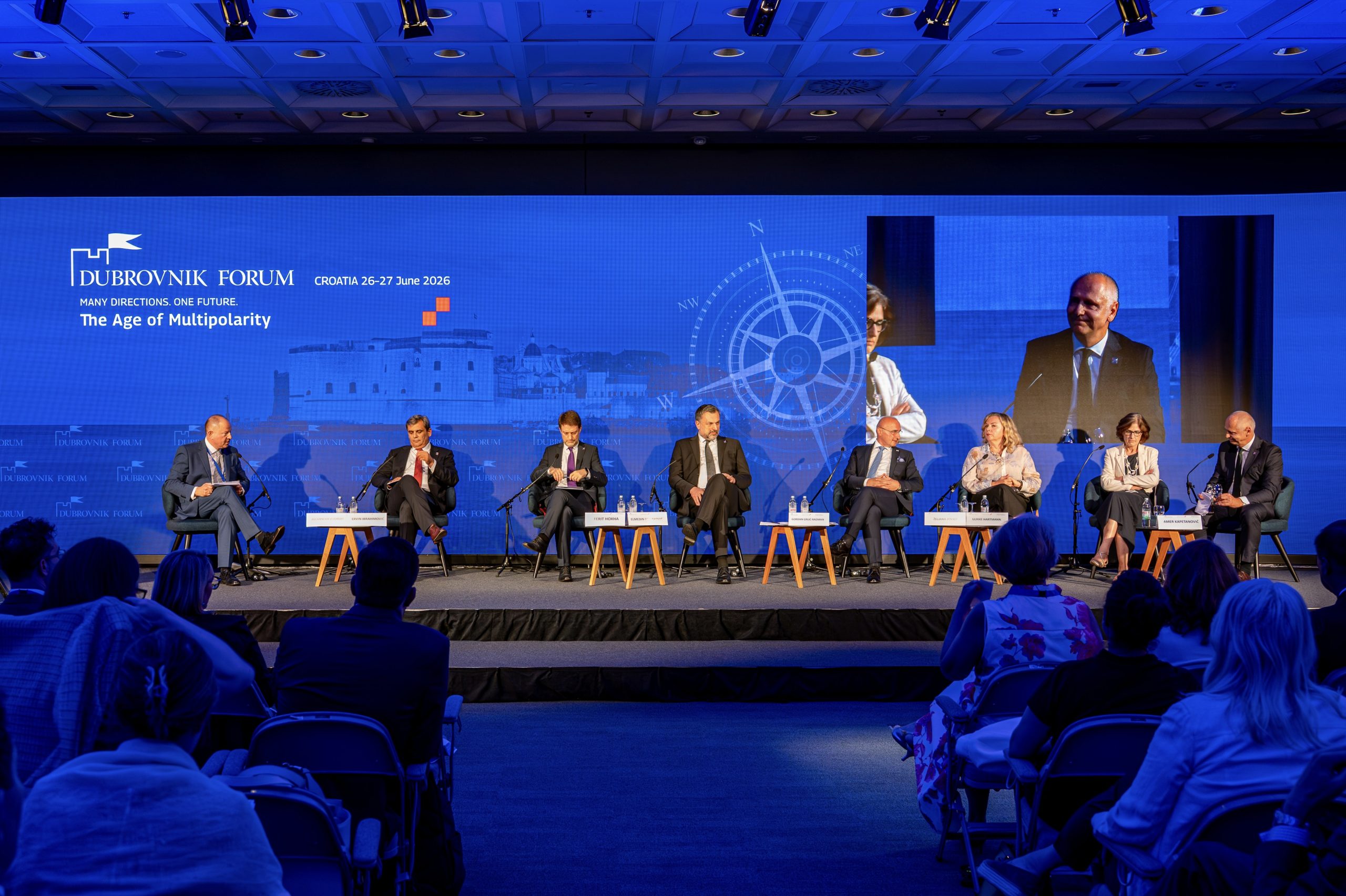
Speaking at the 19th Dubrovnik Forum, RCC Secretary General Amer Kapetanović said the European Union and the Western Balkans Six must move beyond political declarations and deliver concrete results if the enlargement process is to retain its credibility.
“The European Union’s engagement with the Western Balkans Six is no longer only a question of enlargement policy; it is a strategic necessity for Europe as a whole,” Kapetanović told participants at a panel titled “The EU and the Western Balkans: Resolving Unfinished Business Together.”
“The region needs a credible, fair and merit-based path towards membership, but credibility must be matched by delivery. Political commitments must translate into reforms, investment, stronger regional cooperation and tangible benefits for citizens,” he added.
The remarks come at a time when the European Union is facing renewed pressure to accelerate enlargement amid Russia’s war in Ukraine, rising geopolitical competition and growing concerns over external influence in Southeast Europe.
Held under the theme “The Age of Multipolarity: Many Directions, One Future,” this year’s Dubrovnik Forum brought together political leaders, diplomats and policymakers to discuss Europe’s strategic position in an increasingly fragmented international environment.
The discussion reflected a broader shift in Brussels, where enlargement is increasingly viewed not only as a technical accession process but also as a geopolitical instrument aimed at consolidating European security and stability.
Participants discussed how to preserve the EU’s merit-based accession process while responding to mounting geopolitical challenges, uneven reform progress across the region and calls for faster integration.
The panel included Croatian Foreign Minister Gordan Grlić Radman, Montenegro’s Deputy Prime Minister and Foreign Minister Ervin Ibrahimović, Albanian Foreign Minister Ferit Hoxha, Bosnia and Herzegovina’s Foreign Minister Elmedin Konaković, European Parliament member Željana Zovko and Austria’s Special Envoy for Southeast Europe and EU Enlargement, Ulrike Hartmann.
The discussion comes as the Western Balkans remain on different trajectories toward EU membership. Montenegro has emerged as the frontrunner in accession negotiations, while Albania has accelerated reforms and opened new negotiating chapters. North Macedonia continues to face political obstacles linked to constitutional amendments required under the EU-mediated agreement with Bulgaria, while Bosnia and Herzegovina and Kosovo remain constrained by internal political divisions and unresolved regional disputes.
Kapetanović warned that in a world increasingly shaped by geopolitical fragmentation, Europe’s strategic consolidation cannot remain incomplete.
“In a more fragmented and uncertain world, completing Europe means bringing the Western Balkans Six firmly into the European family,” he said.
On the margins of the forum, Kapetanović also met Slovenia’s Foreign Minister Tone Kajzer to discuss regional cooperation and the European perspective of the Western Balkans.