


Photo: Reuters
Rising ethnic tensions, the suspension of visa-free travel for Turkish citizens and a series of violent incidents have shaken Montenegro, exposing the country’s social fragility and testing its ability to manage migration and interethnic relations as it seeks to advance toward European Union membership.
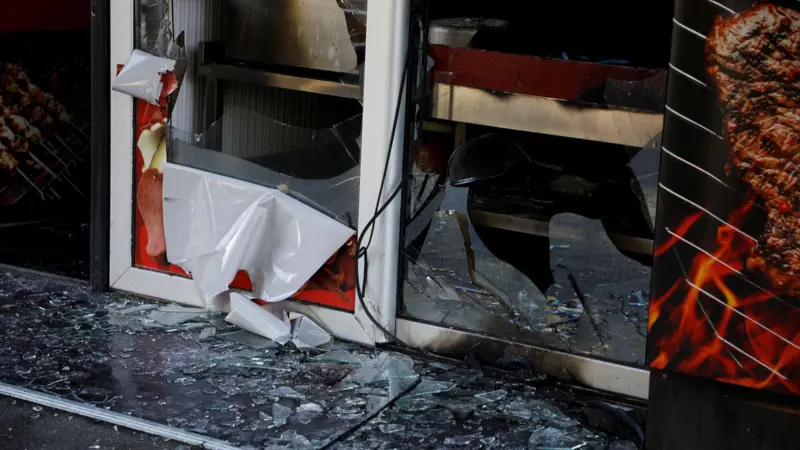
The unrest began on Oct. 25, when a man from Podgorica was stabbed, prompting the arrest of two suspects — citizens of Türkiye and Azerbaijan — on charges of violent behaviour. The motive remains unclear, but the attack triggered anger among locals. The following day, protesters in the capital burned a car with Turkish license plates and vandalized a restaurant owned by a Turkish national.
Witnesses said hate slogans were heard during police operations that followed. Authorities later detained 45 Turkish and Azerbaijani citizens for lacking valid residence documents.
“Chants such as ‘Kill the Turk’ clearly constitute hate speech under both domestic and international standards,” said the Podgorica-based NGO Center for Civic Education (CGO). “The state must respond decisively, as silence fuels further violence.”
President Jakov Milatović condemned the attack and the ensuing xenophobic outbursts, urging calm. “There must be no place for collective blame or the stigmatization of an entire people,” he wrote on social media platform X.
Montenegro’s Higher State Prosecutor’s Office said it had opened an investigation into whether any of the incidents involved elements of “inciting national, racial or religious hatred.” Police also detained several Montenegrin citizens found carrying baseball bats after they allegedly posted online calls for violence.
Visa regime suspended
In response to the unrest, Montenegro’s government on Monday temporarily suspended its visa-free regime for Turkish citizens — a move it said was intended to “review and improve mechanisms for monitoring the movement and stay of foreign nationals.”
Prime Minister Milojko Spajić said the decision was not directed against Türkiye but was aimed at “preserving public order and security.” He added that Podgorica would soon start talks with Ankara “to find a model that best serves our mutual interests.”
Türkiye’s Foreign Ministry described the incidents as “regrettable,” saying it was in contact with Montenegrin authorities to ensure the safety of Turkish nationals.
Montenegro’s government said it would take into account the situation of the estimated 14,000 Turkish citizens residing in the country and would introduce an accelerated visa procedure to minimize disruptions for those planning to visit or transit through Montenegro.
‘Hostile climate’ in Podgorica neighbourhood
Tensions remained high over the weekend in Zabjelo, a working-class district of Podgorica, where dozens of residents reportedly attacked vehicles with Turkish plates. Several Turkish nationals took shelter inside a nearby casino. Police detained dozens of Turkish and Azerbaijani nationals, saying eight would be deported and seven fined.
Among the affected was Kirad, a Turkish restaurant owner whose business was torched. “I’ve lived here six years and never had problems. Now one idiot acts violently, and suddenly all Turks are blamed,” he told local media.
Some locals said they were alarmed by the rise in anti-foreigner sentiment. “People have a right to protest, but not to behave xenophobically,” said Ivan Mijanović, a resident of Zabjelo. “Such hostility toward foreigners, especially Turks, can easily turn into open violence.”
EU alignment and migration concerns
The suspension of visa-free travel drew criticism from civil society groups, who accused the government of making a hasty political move rather than addressing systemic weaknesses.
“The temporary suspension shows a lack of maturity in handling migration challenges in line with EU standards,” said the CGO. “Montenegro is obliged to align its visa policy with the European Union, particularly concerning countries posing irregular migration or security risks.”
Montenegro, an EU candidate since 2010, has opened all accession negotiation chapters and closed seven of them — more than any other Western Balkan state.
Complex relations with Türkiye
Türkiye was among the first countries to recognize Montenegro’s independence in 2006. Official data show that out of about 100,000 foreigners with temporary or permanent residence in Montenegro, around 13,000 are Turkish citizens.
Bilateral economic ties have grown rapidly in recent years. According to TurkCham Montenegro, some 9,500 Turkish businesses operate in the country, mainly in construction, hospitality and real estate.
However, the relationship has also faced scrutiny. Turkish and Montenegrin media have periodically reported on alleged links between Montenegrin criminal networks and Turkish counterparts, though officials from both sides insist cooperation on law enforcement remains strong.
A fragile test
For now, authorities in both Podgorica and Ankara are trying to calm tensions. But analysts warn that the violence, coupled with rising nationalism and economic pressures, could deepen divisions in a country still balancing between EU ambitions and Balkan realities.
“Montenegro needs a responsible migration policy — firm against abuse and crime, but fair to all who respect our laws,” President Milatović said.