


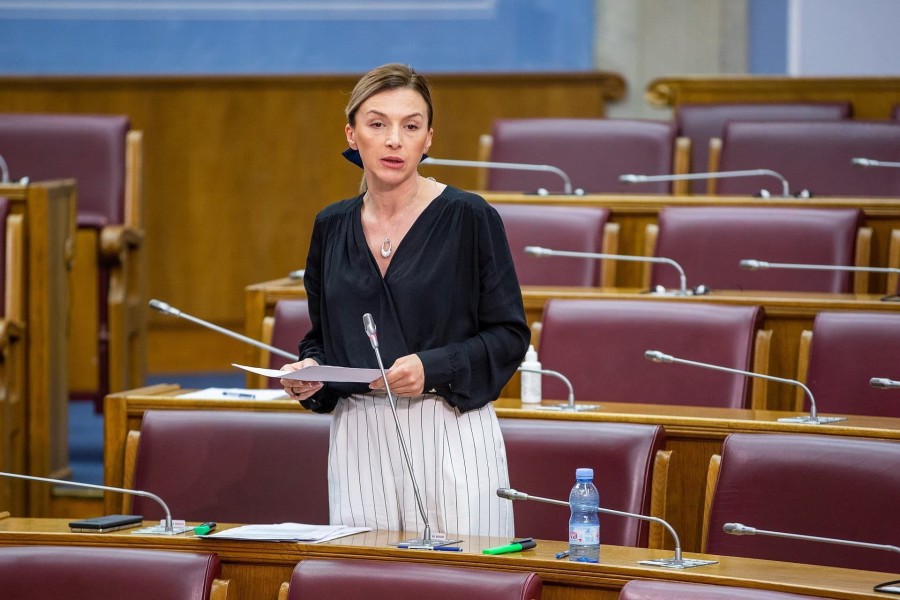
Bosniaks in Montenegro regard Bosnia and Herzegovina as their cultural and national homeland, while Montenegro remains their state and country of residence, a leading Montenegrin Bosniak politician said.
Kenana Strujić-Harbić, a member of the Bosniak Party in Montenegro’s parliament, made the comments during a conference in Sarajevo on Sunday titled “Geopolitical Changes and the Position of Bosniaks in the Western Balkans.” Her remarks, highlighting the distinct cultural and political ties of Bosniaks in the region, drew criticism from some Montenegrin political figures.
“Serbs in Montenegro have Serbia behind them, Albanians have two countries, Croats maintain 24/7 communication with their homeland, yet Bosniaks lack even monthly contact with Bosnia and Herzegovina,” Strujić-Harbić said, emphasizing that her community sees Bosnia as their motherland.
In an interview with local media following the conference, she clarified that while Bosnia and Herzegovina represents the cultural and national center for all Bosniaks, Montenegro is the state of Bošniaks living there. “We are an indigenous people who have lived here for centuries. We belong to this country, and that is a fact,” she said.
Strujić-Harbić also stressed that Bosniaks in Montenegro integrate their dual identity, seeing both Bosnia and Herzegovina and Montenegro as part of their cultural, traditional, and intellectual heritage. “Bosniaks have contributed much to Montenegro, just as Montenegro has supported Bosniaks. Our community has never taken without giving back,” she said, citing the 2006 independence referendum, in which over 90% of Bosniaks supported Montenegrin sovereignty and NATO membership.
She added that the Bosniak Party has consistently led European integration efforts in Montenegro and intends to continue fostering cooperation across Europe for Bosniaks, arguing that the European framework offers the only avenue for connecting communities without territorial disputes or conflict.
Strujić-Harbić’s remarks come amid ongoing debates in Montenegro over the identity and political representation of minority communities, with critics warning that emphasizing external national ties could undermine local cohesion.