



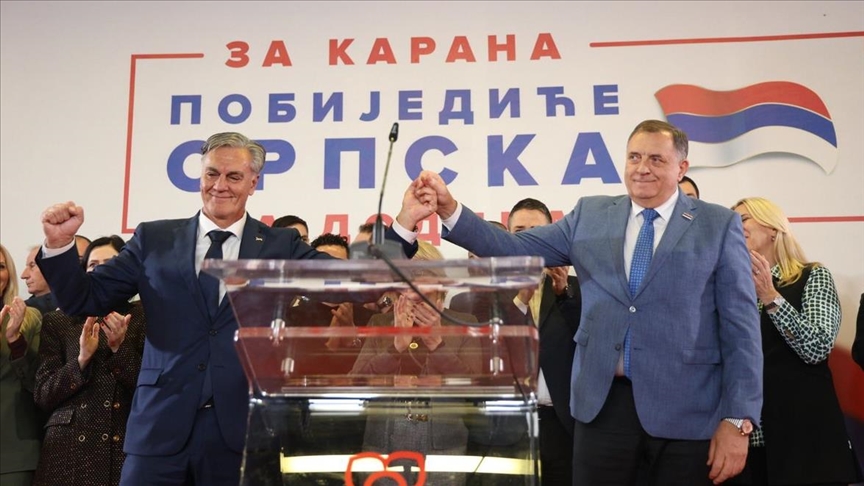
The narrow victory of the ruling Alliance of Independent Social Democrats (SNSD) candidate in Republika Srpska’s snap presidential election should be read as a warning sign for the authorities rather than a confirmation of strength, says Elvir Padalovic, journalist and editor of BUKA magazine, a media based in Banja Luka, Bosnia and Herzegovina.
Republika Srpska, one of the two entities of Bosnia and Herzegovina, held snap presidential elections in December 2025 amid widespread public skepticism and low voter turnout. The ruling Alliance of Independent Social Democrats (SNSD), led by Milorad Dodik, narrowly retained power with candidate Siniša Karan securing the presidency. The election was closely watched as a barometer of political stability in the entity, which has long been dominated by the SNSD’s organisational strength and control over local institutions. Opposition parties struggled with coordination and internal rivalries, while allegations of irregularities in key strongholds such as Doboj and Zvornik have raised questions about the integrity of the process.
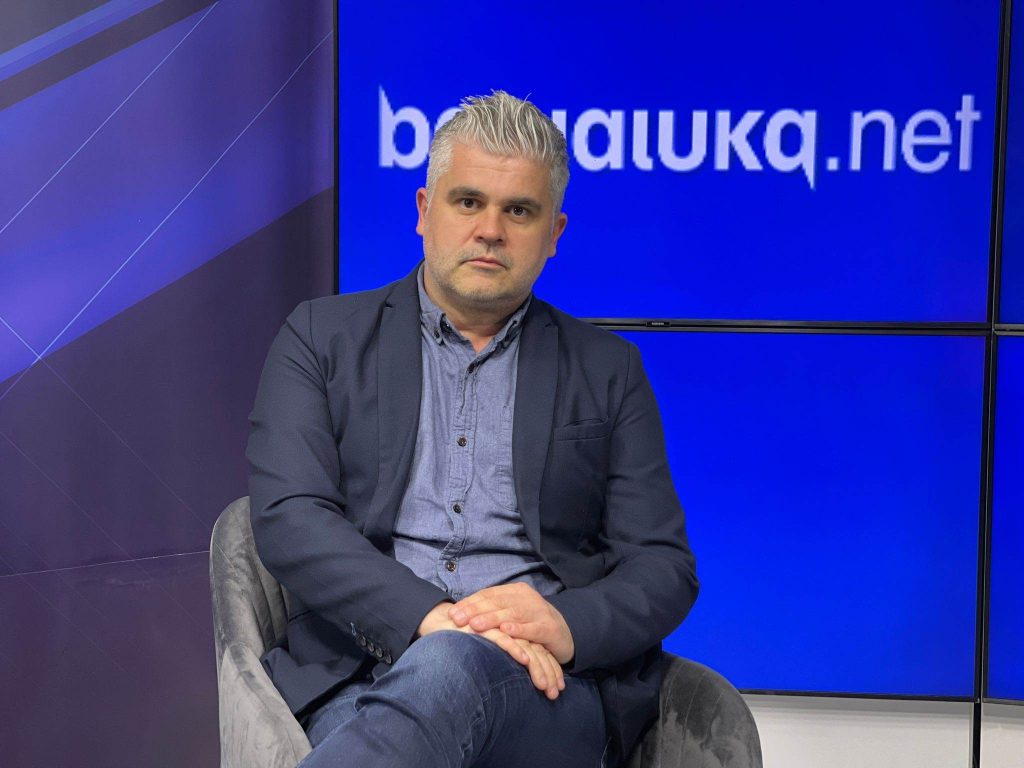
In an interview with Balkanview, Padalovic said low voter turnout, opposition disunity and alleged irregularities masked deeper erosion of support for the long-dominant party led by Milorad Dodik, ahead of general elections due in 2026.
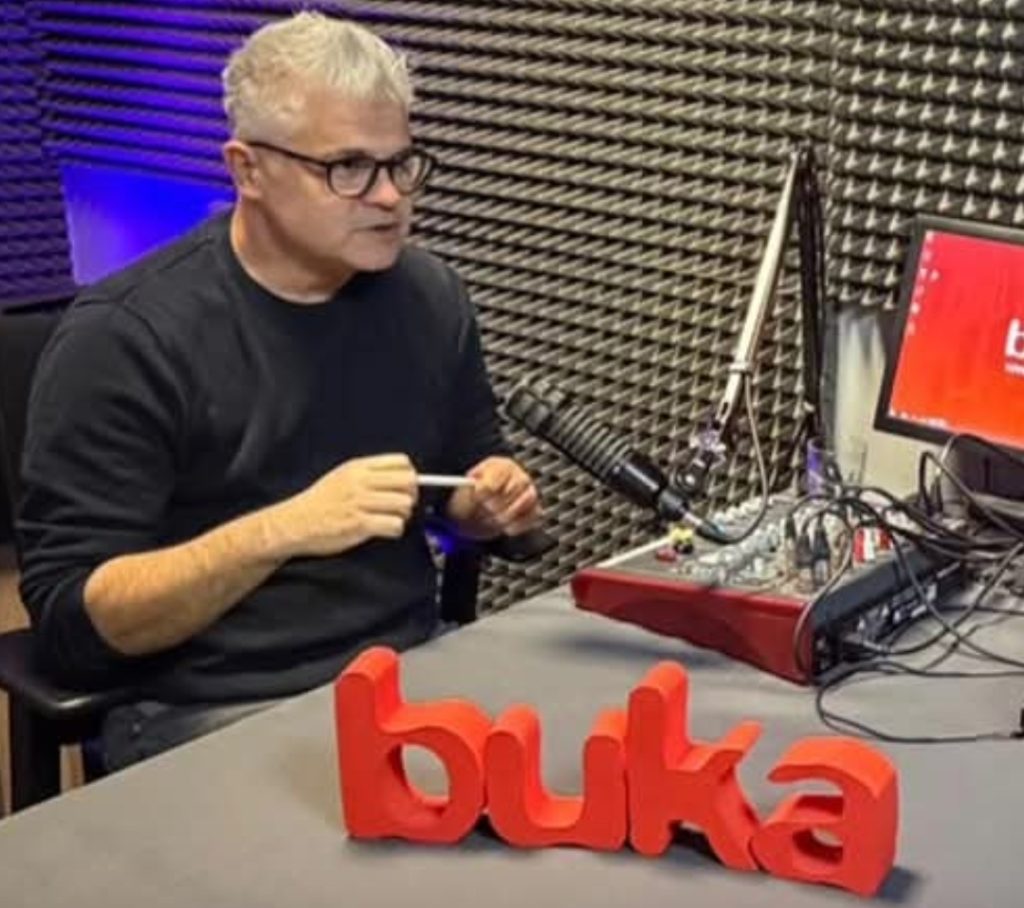
BV: How should the low turnout in the election be interpreted?
Padalovic: Now, one could debate whether this should even be considered low turnout or not. Secondly, throughout the entire period people were being told that these elections were forced, unnecessary, imposed, and so on. All political actors entered the campaign hoping that as few people as possible would vote, so the elections could later be dismissed as meaningless. And in such circumstances, I believe the elections revealed a trend that should worry the government in Republika Srpska above all.
BV: What explains the SNSD candidate’s victory?
Padalovic: Karan won by a very narrow margin thanks to a combination of the party apparatus and infrastructure, a poorly coordinated opposition, and so-called “safe” strongholds such as Doboj and Zvornik. Even when its popularity declines, the SNSD still remains the strongest organisational machinery on the ground—from local party committees to public institutions—and this was evident in the mobilisation across smaller communities and traditional party bastions.
BV: Why are places like Doboj and Zvornik under scrutiny again?
Padalovic: Doboj, Zvornik, and Laktaši have been problematic in previous election cycles as well, and they are once again under scrutiny—ranging from local analyses to the recent decision of the Central Election Commission to review dozens of polling stations. If the suspicions prove justified, this would not only mean potential repeat voting, but also confirm a pattern that results in RS are being “adjusted” at critical points to keep the ruling party in power.
BV: How did the opposition perform?
Padalovic: The SDS candidate Branko Blanuša was formally supported by key opposition parties and leaders, but without a unified field strategy or a clear division of roles. Nothing about their activities was coordinated, and it was obvious that there were a lot of calculations—especially from PDP leader and Sigurna Srpska leader Draško Stanivuković. There was no coordination on the ground: different egos, partial interests, and internal rivalries continued to undermine any semblance of unity. Still, the very fact that the opposition candidate came so close shows that if they take things more seriously and organise properly, the SNSD could realistically be threatened for the first time in the 2026 general elections.
BV: What role did the media play?
Padalovic: The media always play a significant role. The public broadcaster did not allocate airtime equally among the candidates for President of RS. Its programmes were dominated by Siniša Karan, who appeared frequently not only on the public broadcaster but also on other media as a government minister—giving him far greater visibility than the other candidates.
BV: Why are voters increasingly disillusioned?
Padalovic: Voter disappointment stems from the growing gap between rhetoric and reality. The narrative of “defending Republika Srpska” and constant crises has gone on for years, yet the average citizen is not living better—in fact, they are facing low wages, emigration, deteriorating public services, and party control over nearly every job. At the same time, scandals, sanctions, and even the lifting of sanctions create the impression that the government is fighting for personal rather than public interests. It also became clear that the ruling coalition is quite fragile; there is no real mutual trust—only competition for personal and party gain.
BV: What does such a narrow win mean for the SNSD internally?
Padalovic: A narrow victory is formally still a victory, but politically it is a warning sign for the SNSD. The leadership will now have to ask itself: how is it possible that after such extensive use of resources, media dominance, and Dodik’s personal involvement (controversial due to the use of public resources), the result ended up so tight? This opens space for internal tensions, blame-shifting, and the gradual strengthening of party factions arguing for “new blood” or a change in style. The SNSD still appears monolithic on the outside, but this trend could easily mark the beginning of internal erosion. The dismissal of one of the party’s key figures in Banja Luka, Vlado Đajić—after the cocaine-bag scandal, which is still under investigation—was especially notable, given how conveniently it occurred just days before the snap presidential election.
BV: What are the implications for 2026?
Padalovic: These elections serve as a dress rehearsal and prelude to 2026. They show that the SNSD is not untouchable, and that the opposition can come within “one lap of difference”—but only if it is united, coordinated, and free of internal games. In fact, the SNSD may draw more lessons from these results than the opposition, and I believe they will seriously analyse why the outcome turned out as it did. Electoral integrity is a crucial issue that can determine the final result. Electoral technologies are a necessary precondition for free and fair elections. For next year’s general elections, this means an intensified battle over electoral rules, the role of the CEC, observers, and new technologies. If the opposition learns from this election and strengthens control over polling stations—while dissatisfaction with the economic situation continues to grow—we could witness the most uncertain elections in Bosnia and Herzegovina in the last decade.
BV: Does this open space for real political change?
Padalovic: The erosion of support for Dodik and the SNSD opens space for change, but it is also a lesson for both sides. A credible alternative must emerge—one that does not repeat the same patterns of governance.