


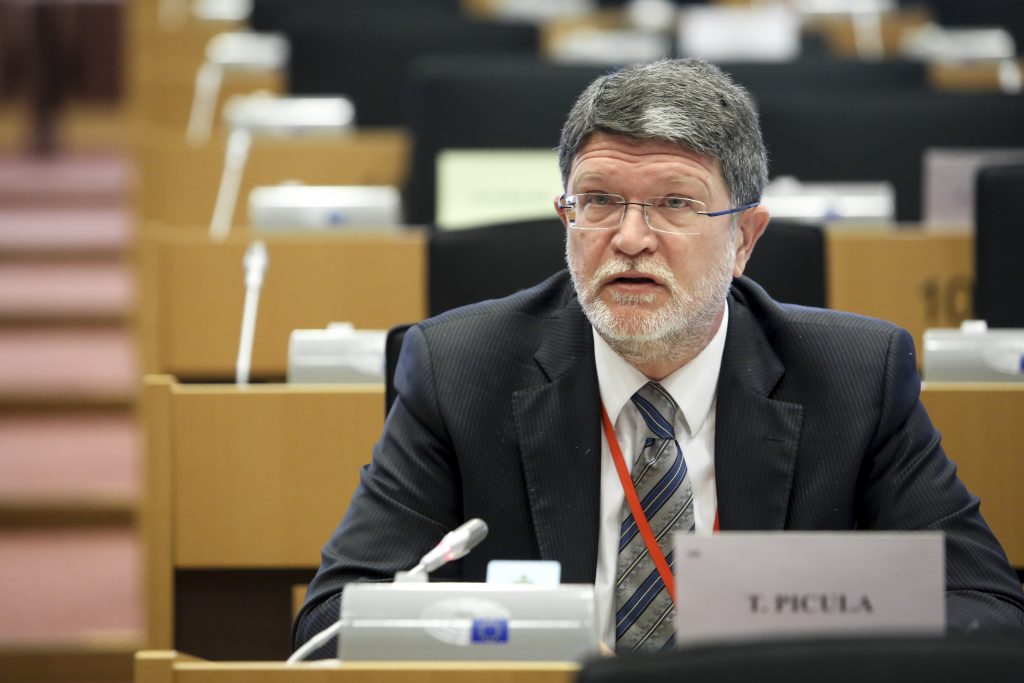
Croatian member of the European Parliament Tonino Picula said Bosnia and Herzegovina, if it joined the European Union in its current state, could obstruct decision-making within the bloc, urging political leaders to overcome internal divisions and advance reforms.
In an interview with Sarajevo-based daily Dnevni Avaz published on Saturday, Picula said Bosnia had made no progress since the European Council conditionally approved the opening of accession talks two years ago.
“Bosnia and Herzegovina is currently sending a very negative message,” Picula said. “If it were an EU member today, it would constantly block both itself and others,” he added, pointing to recent instances where member states such as Hungary and Slovakia have delayed joint EU decisions.
Picula, a member of the European Parliament’s Foreign Affairs Committee, said Bosnia’s internal divisions risk turning it into a “crisis point” for the EU if admitted without substantial reforms.
He urged Bosnian politicians to adopt a new approach to internal negotiations to enable the passage of key legislation and the appointment of a chief negotiator, noting that EU enlargement criteria are evolving.
While external influences, including Russia, are often cited as destabilising factors, Picula said domestic political dynamics posed an equal or greater risk.
“It seems that the Dayton framework has, in some ways, become a continuation of conflict through political means,” he said, adding that many politicians benefit from the system’s structure, which allows them to remain in power without pursuing meaningful reforms.
He also criticised leaders who publicly support EU integration but fail to implement reforms, while others openly reject the bloc yet continue to operate politically despite court rulings.
Picula said it remained uncertain whether Bosnia’s political leadership would take advantage of potential geopolitical opportunities to advance its EU path, though he suggested a window for progress could emerge by late this year or early next year.