


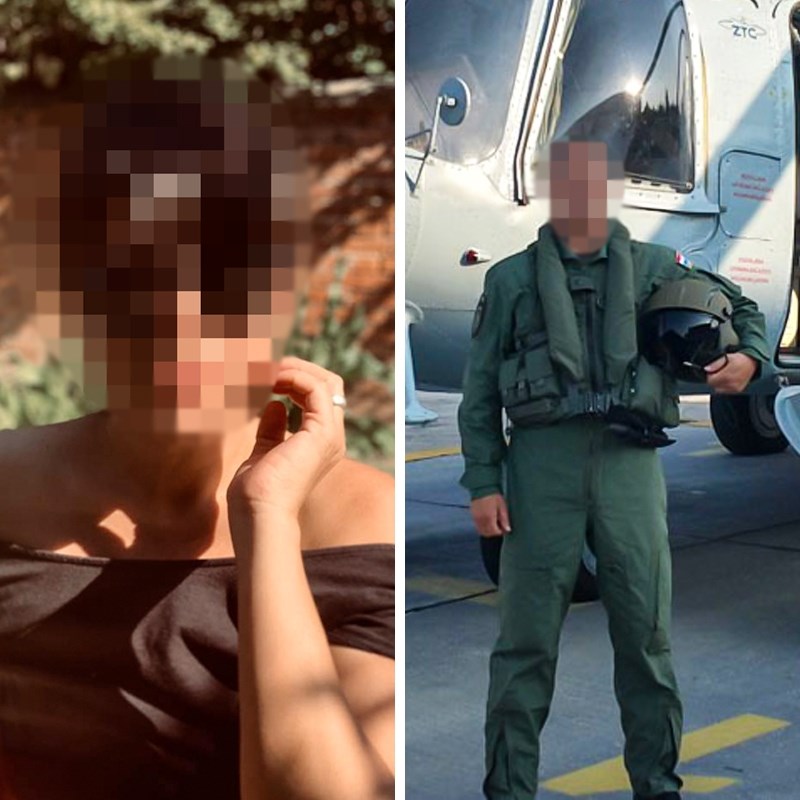
A Croatian military pilot has been arrested on suspicion of spying for Serbia through his partner from northern Kosovo, in a case that prosecutors and security experts say could pose a significant risk to the country’s national security.
The officer, a member of the Croatian Air Force who had served in NATO’s KFOR mission in Kosovo, was detained in Split earlier this week. Prosecutors allege he provided sensitive operational details to his partner, a Serbian citizen from Kosovska Mitrovica, who then passed the information further.
The Defence Ministry confirmed the arrest, saying civilian and military police are jointly handling the case under the supervision of the state attorney’s office. A county court in Split is expected to decide whether the pilot will remain in custody while the investigation continues.
If convicted of espionage, the pilot could face up to five years in prison.
“Irreparable damage”
Croatian security officials have described the case as serious but have declined to disclose the nature of the information allegedly passed on.
“Depending on its classification, such data can cause irreparable damage to national security,” said Tonći Prodan, a former intelligence officer. “The system will determine whether this case involved information at the highest level, but even lower-level details can be highly sensitive when combined.”
According to preliminary findings, the pilot had access to information about the deployment of NATO and EU forces in Kosovo while serving in KFOR. Local media have reported that prosecutors believe he shared details about troop movements, incidents in northern Kosovo, and the 2022 transfer of former Kosovo police officer Dejan Pantić, whose arrest triggered violent protests and roadblocks.
Partner under scrutiny
Investigators say the pilot’s partner, identified as A.M., had frequent travel to Croatia, including extended stays on the island of Vis, where the couple was first detained earlier this year. At that time, she was placed in a migrant detention centre pending expulsion, while he was released.
A forensic examination of their mobile phones later uncovered what prosecutors describe as “compromising communication,” leading to both being re-arrested.
Military analyst Ivica Mandić said A.M. had contacts with the office of Serbian President Aleksandar Vučić and with officials in the Kosovo prime minister’s office. He added there were indications she might also have cooperated with the intelligence service of a NATO member state.
“This raises the question of whether the agent was truly loyal to one service, or whether she was operating within multiple networks,” Mandić said.
People close to the pilot have expressed surprise at the allegations, describing him as a disciplined professional. He has denied any wrongdoing, telling prosecutors that he is being framed and that his partner is a “collateral victim.”
Political reaction
The case has triggered concern among Croatian lawmakers. Members of parliament’s national security committee called the allegations “extremely serious” and said they would discuss the matter at their next session.
“In these times, regardless of political differences, the safety of our citizens and our international missions is our common goal,” said opposition MP Sandra Benčić.
Other lawmakers criticised possible gaps in security vetting. “This shows the state of our armed forces and security – and it is questionable,” said Igor Peternel of the conservative DOMiNO party. Social Democrat Mišel Jakšić said the case highlighted the need for a more “responsible and rational” approach to security checks.
Liberal MP Dario Hrebak added: “This can happen in any country, given the global context. But it is a security breach, and I trust the services will respond appropriately.”
Sensitive timing
The affair comes at a time of heightened regional tensions, with NATO troops still maintaining a fragile peace in Kosovo more than two decades after the end of the 1999 conflict.
Croatia, a member of both NATO and the European Union, contributes troops to several international missions, including KFOR. Analysts say even minor leaks of operational information could compromise both alliance security and Croatia’s standing within NATO.
Government officials have declined to comment publicly, while President Zoran Milanović has not yet responded.
Mandić, the military analyst, warned against overreaction. “The system is functioning – it detected and is processing the case. Incidents like this can happen anywhere, but it shows our mechanisms are working,” he said.