


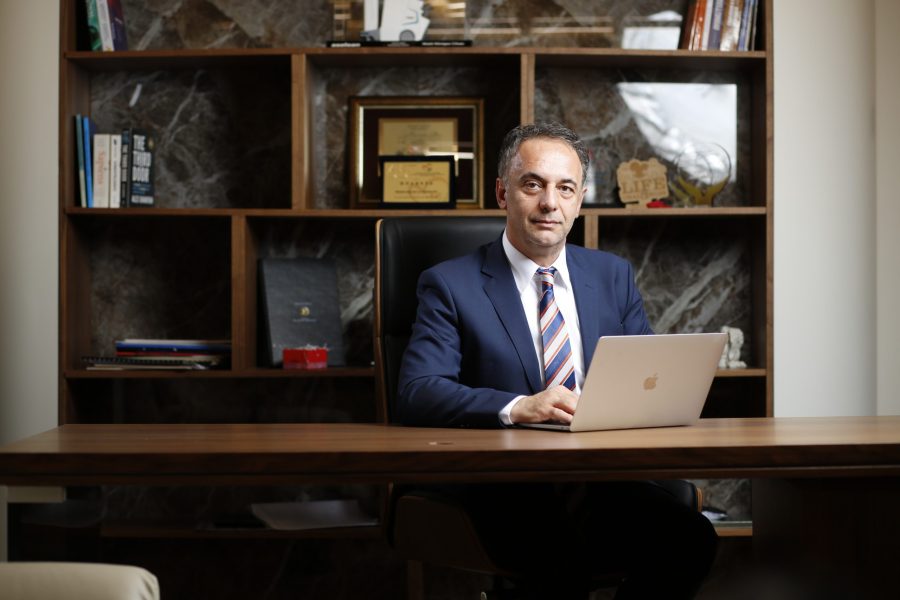
By Azir Aliu
The study published a few days ago by the Association for Emancipation, Solidarity and Equality of Women (ESE) presents figures that we cannot afford to treat as mere statistics. Conducted on a sample of 1,040 adult respondents, it shows that 37 percent of citizens have little confidence that they can receive equal treatment in public healthcare without connections, payments or other forms of corrupt practice, while 20.4 percent have no confidence at all.
For 33.4 percent, corruption is most often associated with obtaining a hospital bed or surgery without waiting, while for 26.8 percent it is linked to access to, or an urgent appointment with, a specialist, and for 21 percent to better treatment by a specialist. These are data that cannot be reduced to isolated deviations, as they point to a generalized perception that fairness in access to healthcare services has been compromised.
When distrust becomes so widespread, the problem can no longer be viewed solely through the prism of individual corrupt acts; its contours are also shaped by pre-formed expectations. The citizen already believes that without mediation, connections or informal favors, they cannot obtain what rightfully belongs to them. We find ourselves at a moment when the erosion of trust in equal treatment undermines confidence in the institution itself and, more worryingly, in the social moral fabric — that the sick person will be treated as a human being, not as someone’s influence, acquaintance or “arranged case.”
As minister, my obligation is first to respond institutionally and systemically. From day one, I have publicly and consistently maintained that digitalization and transparency will not remain mere technical embellishments of the healthcare system, but will become instruments of fairness. Early on, we introduced the possibility of electronically reporting irregularities through a digital module, implemented a system for electronic monitoring of elective surgical procedures, made waiting lists visible and their order verifiable, and enabled patients to see when their turn genuinely arrives.
At the same time, we have prepared legal amendments for the electronic management of medical documentation, referrals, prescriptions and reports, which through the “My Appointment” system aim to narrow the grey zones where abuse has long flourished. In recent days, I have reiterated publicly that the fight against corruption must be pursued through transparency with citizens, system digitalization, strict rules and the possibility of anonymous reporting of abuses.
All these institutional improvements and expressions of strong political will to advance the system are necessary, but not sufficient. It would be a mistake to believe that even the most well-designed system can accomplish everything on its own. Even in the most advanced healthcare system, there remains a space that cannot be fully regulated by law, algorithm or protocol. This space is inherently intimate — it exists between doctor and patient. The system can set the framework, but it cannot fully enter it. There, it is ethics that defines the relationship — or, more precisely, its presence or absence.
It is precisely in this intimate space that medicine has always sought its highest reference point in ethics. The Hippocratic Oath, as a historical ethical code of the medical profession, has endured through the centuries as a reminder that medical knowledge fulfills its true purpose only when placed in the service of the sick. It is no coincidence that it obliges the physician to protect patients from “any harm and injustice.” In this brief yet powerful commitment lies the essence of medical ethics: the doctor is called not only to treat, but also to ensure that the patient’s vulnerability is not turned into injustice, inequality or personal gain.
Its modern echo in the Declaration of Geneva of the World Medical Association states that the health and well-being of the patient are the physician’s first concern and that the profession must be practiced with conscience and dignity. It binds the physician with the words: “The health of my patient will be my first consideration.” In this sense, ethics is the internal boundary that safeguards the dignity of the profession and protects the patient’s trust. Where this boundary is alive, healthcare remains a humane vocation. Where it weakens, even the most organized healthcare system begins to lose its human meaning.
Our Code of Medical Deontology is equally explicit: the physician is accountable to their own conscience, to the patient and to society. It emphasizes that doctors must respect patients’ rights and safeguard their trust, and that their relationship with the patient must not be conditioned by self-interest, personal ambition or the pursuit of personal gain. These ethical and professional commitments form the moral foundation upon which medicine preserves and develops its humane dimension.
For this reason, this should not become an unfair condemnation of a profession that carries a heavy burden and enormous responsibility every day. On the contrary, it should be a call to protect the dignity of the profession from practices that are fundamentally alien to it from an ethical standpoint. Every abuse not only humiliates the patient; it also compromises the honest doctor, the dedicated healthcare worker and the overall reputation of the profession, built over decades.
Therefore, the response must be twofold. As institutions, we must further reduce the space for abuse through digital traceability, rules, oversight, sanctions and depoliticized processes. The ESE study itself shows that this is precisely what citizens expect: greater control by the Ministry, stricter sanctions, more transparency and the elimination of political influence and nepotism.
But responsibility does not end with institutional design; it continues in the daily professional decisions of every doctor and healthcare worker. They must defend the inner domain of medicine, where no system can replace conscience and no application can substitute personal integrity. Only when both system and conscience stand on the same side, under a shared moral vertical, will we have a healthcare system in which the patient knows that before them stands not only an institution, but also a person who understands the moral weight of their professional duty.
The author is the Minister of Health of North Macedonian