



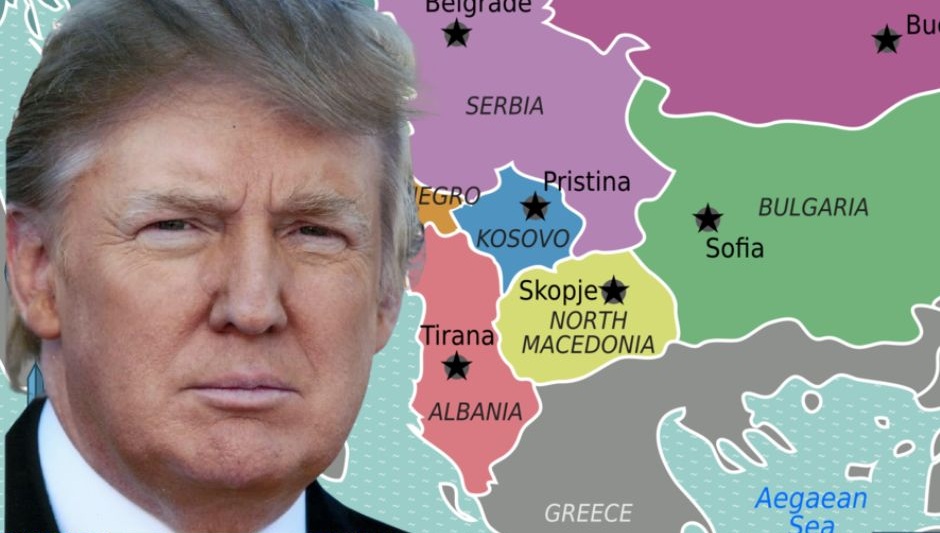
Several Balkan countries have taken differing positions on participation in U.S. President Donald Trump’s newly announced “Board of Peace,” a diplomatic initiative aimed at conflict prevention and crisis management, according to government statements and diplomatic sources.
Kosovo, Albania, Bulgaria and Turkey have confirmed their participation in the board, signaling early support for the U.S.-led initiative, which Washington says is designed to bring together selected allies and partners to address regional and global security challenges.
Two European Union members in the region, Slovenia and Greece, have declined to join. Greek officials said Athens would align its position with the broader European Union approach, underscoring ongoing coordination among EU member states on foreign and security policy matters.
Croatia and Romania have not yet taken a final decision. Officials in both countries said they are still assessing the scope and mandate of the initiative before committing, according to statements from their foreign ministries.
Several Western Balkan countries have not publicly received invitations to join the board. North Macedonia, Montenegro, Serbia and Bosnia and Herzegovina have not announced any formal communication from Washington regarding participation.
The selective nature of the invitations and the mixed responses reflect existing geopolitical alignments in the Balkans, a region where U.S., EU and other international actors continue to compete for influence. Analysts say the initiative could test regional cohesion, particularly among EU member states and aspirants, if participation begins to diverge along political or strategic lines.
The White House has not released a full list of participating countries or detailed criteria for membership, saying further announcements would be made in the coming weeks.
Trump announced the creation of a “Board of Peace” for Gaza, describing it as a U.S.-led diplomatic initiative bringing together selected partner countries to support conflict mediation, reconstruction coordination and post-war stabilization efforts outside existing multilateral frameworks.