


A security alert issued by the U.S. Embassy in Tirana should be taken seriously but without alarmism, according to security expert Ardian Shtuni, who said such warnings are based on credible intelligence rather than conjecture.
In a post on social media, Shtuni said it was “surprising” to see the warning described as speculation, noting that U.S. institutions do not typically issue security advisories without rigorous assessment.
“These types of alerts, which are not uncommon, rely on reporting from reliable sources and careful evaluation of multiple factors,” he said. “They are not based on rumours or assumptions.”
Shtuni said the advisory should be treated with the seriousness it warrants, but without causing unnecessary public alarm.
He noted that, in a televised appearance three weeks earlier, he had warned of a potential increase in asymmetric and terrorist-style threats in Albania and the wider Balkans, particularly from groups linked to Tehran.
According to Shtuni, as Iran’s conventional military capabilities come under strain, the country may be more inclined to rely on asymmetric tactics, including cyberattacks and proxy operations.
He pointed to recent incidents, including a cyberattack on Albania’s parliament and a separate attack targeting the Albanian postal service, as indicators of evolving hybrid threats.
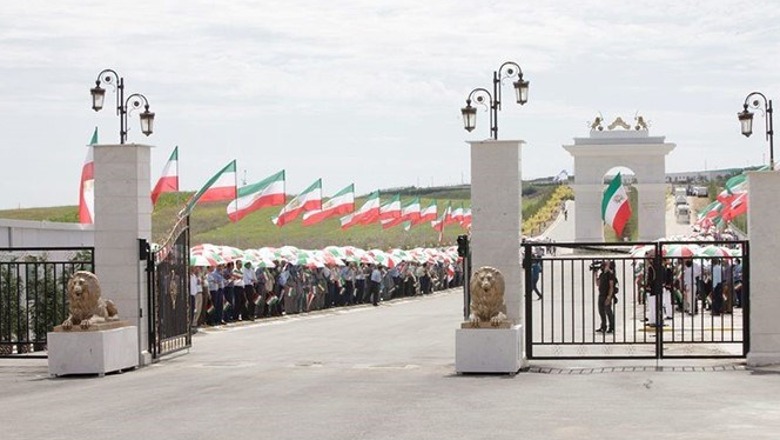
Potential targets, he said, could include the presence of the Iranian opposition group MEK in Albania, U.S. interests and military presence in the region, as well as “soft targets” such as public spaces with high foot traffic and limited security.
Shtuni said his assessment is based on Iran’s historical use of proxy networks and criminal groups, recent intelligence on hybrid activities in Europe, and the broader geopolitical dynamics between Iran, Albania and regional actors.
He also cited a series of incidents across Europe attributed to groups linked to Tehran, including explosive attacks in countries such as the Netherlands, the United Kingdom and Belgium, as well as a foiled attack in Paris targeting a U.S.-linked financial institution.
In addition, Bulgaria has reported receiving a direct warning from Iran regarding the use of its airports by U.S. forces, he said.
Shtuni said the risk environment is “real and escalating,” pointing to a global security advisory issued by the U.S. Department of State on March 22 warning that Iran-backed groups could target U.S. interests abroad.
He stressed that the alert concerning Albania appears more detailed than broader global warnings, suggesting it reflects specific intelligence assessments rather than general risk trends.
However, he added that such warnings do not necessarily mean incidents will occur.
“The objective is to raise vigilance, preparedness and the operational readiness of law enforcement agencies tasked with protecting potentially vulnerable sites,” he said.
These include diplomatic missions, businesses, NATO-related facilities, commercial centres and nightlife areas in Tirana, as well as locations associated with the MEK.
Shtuni said Albanian authorities have established mechanisms and protocols to manage such risks, including coordination and intelligence-sharing with the United States, the European Union and NATO partners.
“At this stage, what is required is calm professionalism, close cooperation and heightened vigilance,” he said.