


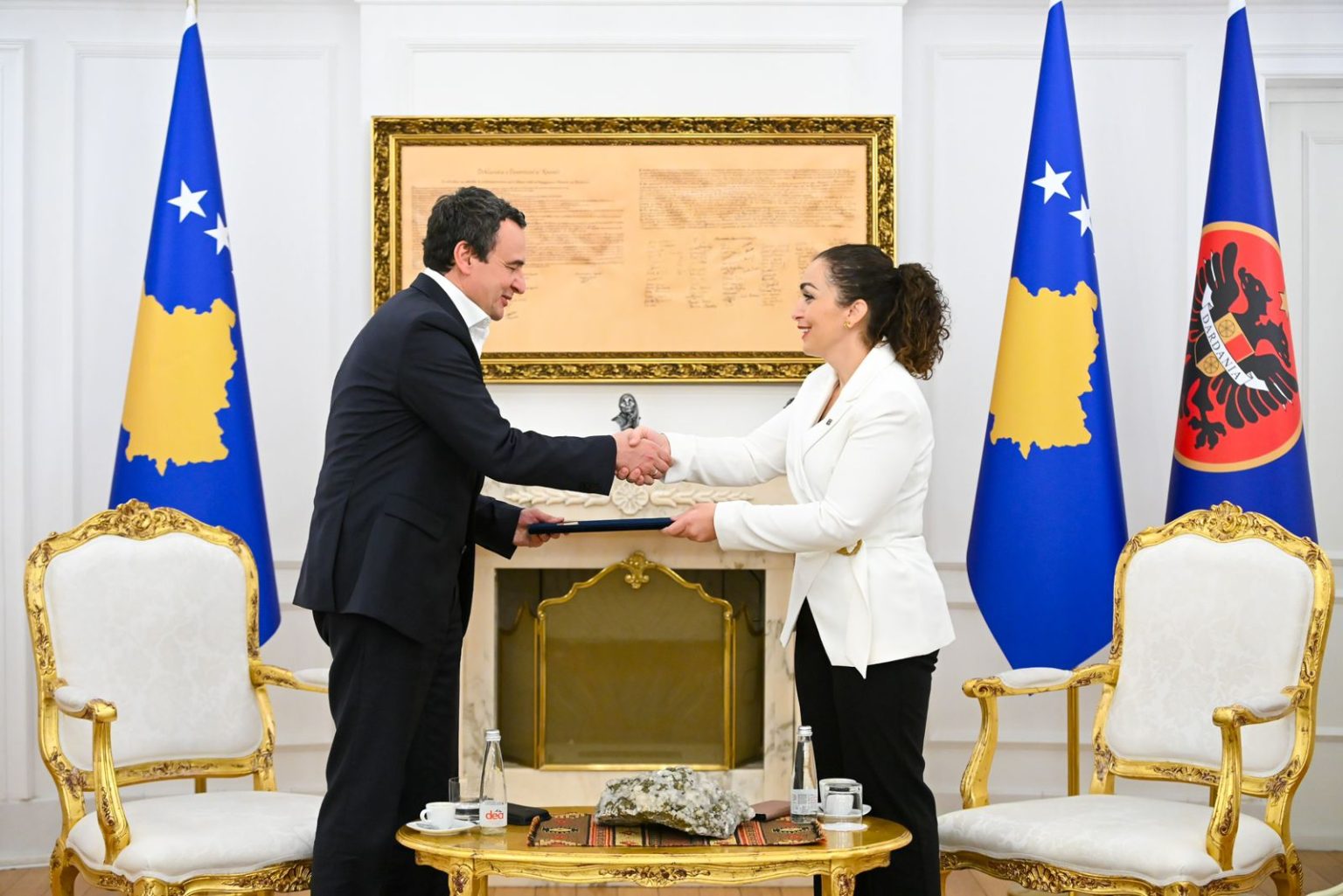

The United States’ decision to suspend its Strategic Dialogue with Kosovo has laid bare Washington’s growing impatience with acting Prime Minister Albin Kurti, raising questions about Pristina’s ability to maintain its most important foreign partnership at a time of heightened regional volatility.
The U.S. embassy in Pristina announced the pause earlier this week, citing actions and statements by Kurti that it said had “increased tensions and instability.” Among them were his criticism of Kosovo’s Constitutional Court, his refusal to advance the long-delayed association of Serb-majority municipalities, and measures such as banning Serbia’s dinar currency in Kosovo’s north.
“This is a serious matter, because the region needs more U.S. engagement, not less,” Charles Kupchan, a senior fellow at the Council on Foreign Relations and former White House official, told Radio Free Europe/Radio Liberty. “The suspension is a direct result of accumulated frustration with Kurti’s decisions.”
Political vacuum in Pristina
Kosovo has been in political limbo since elections earlier this year left Kurti heading a caretaker government. Months of wrangling delayed the election of a parliament speaker, while coalition talks have stalled amid disputes over power-sharing.
Analysts say the deadlock has strained U.S. patience. “We are in mid-September and there is still no functional government. This is a problem,” Kupchan said. “In Washington and Europe, the perception is broad that the government in Pristina is not helping to improve the situation.”
Kurti, who built his career on challenging Kosovo’s political establishment and adopting a nationalist stance toward Serbia, has often clashed with Western partners. He insists that recognition of Kosovo’s independence must precede concessions to Belgrade, while U.S. and EU mediators have pressed him to compromise.
Strategic signals
The suspension of the Strategic Dialogue comes as Washington prepares to launch a parallel process with Serbia, a move observers say increases pressure on Pristina.
“This is primarily about sending a message,” Kupchan said. “By advancing dialogue with Belgrade, the U.S. is telling Kurti he must form a government and re-engage in talks if he wants to remain a serious partner.”
The announcement also follows Kurti’s public attack on Kosovo’s Constitutional Court, which he accused of acting as a “political shadow of the opposition.” U.S. diplomats described the remarks as damaging to the rule of law.
Kupchan said such statements echoed tactics by leaders in Hungary, Poland and Turkey who have sought to intimidate courts. “This kind of discourse raises concerns about efforts to override constitutional checks on executive power,” he said.
Isolation risk
For Kosovo, the suspension underscores the fragility of its international position. President Vjosa Osmani expressed regret over the U.S. move, while Western diplomats warned that continued institutional paralysis would deepen the country’s isolation.
“Kosovo finds itself more isolated,” Kupchan said. “It would be irresponsible and self-defeating if the government continued to damage relations with a country that has been its strongest supporter since independence.”
He said the United States was unlikely to withdraw NATO troops or other security guarantees, but would hold Kosovo at arm’s length until a new government was in place. “The message is clear: form a functional government, act in line with the rule of law, and then we are ready to restore a productive relationship.”
Trump factor
The suspension comes as U.S. President Donald Trump signals a renewed interest in the Kosovo-Serbia dispute, raising the issue’s profile in Washington. During his first term, Trump backed a deal negotiated by envoy Richard Grenell and has since spoken of wanting to achieve a breakthrough that could bolster his credentials as a peacemaker.
“Trump sees himself as a negotiator, even a candidate for a Nobel Peace Prize,” Kupchan said. “This issue is on his radar, and he would like to make progress.”
Analysts say that gives Kosovo added incentive to repair ties with Washington and resume constructive engagement. “In the end, U.S. and European involvement will be essential to concluding the normalization process with Serbia,” Kupchan said.
Fragile stability
The Western Balkans remain one of Europe’s most fragile regions, with tensions between Kosovo and Serbia flaring repeatedly. Last year, armed Serb groups attacked police in Banjska, northern Kosovo, killing one officer – an incident Pristina blamed on Belgrade, which denied involvement.
With wars raging in Ukraine and the Middle East and U.S.-China tensions rising, Western policymakers say the Balkans cannot afford fresh instability. “The last thing we need is growing instability in the Balkans,” Kupchan said. “That is why Washington is stepping in now, to prevent a crisis before it erupts.”