



Bulgarian members of the European Parliament (MEPs) are pressing for the inclusion of a suspended sentence handed to Ljupcho Georgievski, former president of the “Vancho Mihailov” club in Bitola, in the upcoming EU progress report on North Macedonia.
The report, which assesses Skopje’s alignment with EU accession criteria, is due for a vote in the European Parliament’s Foreign Affairs Committee on June 24. Bulgarian MEPs submitted amendments condemning the sentence and calling it an example of what they described as ongoing “anti-Bulgarian policy” in North Macedonia.
“We proposed an amendment calling for an immediate halt to all legal proceedings against Ljupcho Georgievski,” said MEP Andrey Kovatchev (EPP/GERB), according to Bulgarian National Television. “This is a politically motivated case driven by judicial arbitrariness,” he added.
The sentencing, which was handed down after the draft report was completed, has become a flashpoint for Bulgarian MEPs who have repeatedly raised concerns over what they see as systemic discrimination against the Bulgarian community in North Macedonia.
Tonin: Report Already Balanced and Pro-Bulgarian
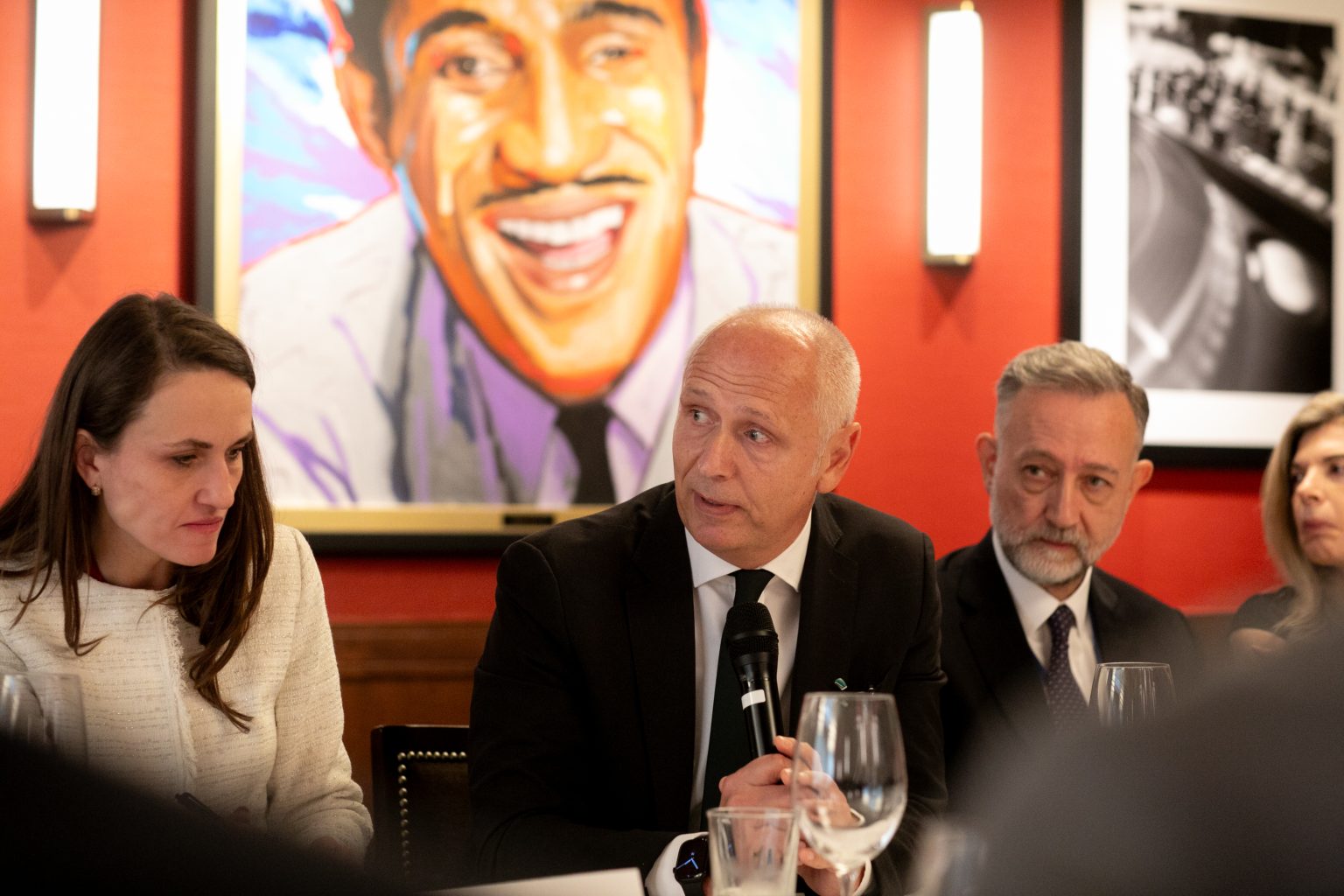
Slovenian MEP Matej Tonin, a shadow rapporteur on the report, pushed back against calls for changes, saying the sentence cannot be included retroactively. He emphasized the report already reflects Bulgarian concerns.
“This is a very balanced report, even pro-Bulgarian in many aspects,” Tonin said. “It clearly calls for constitutional changes in North Macedonia to include the Bulgarian minority and condemns hate speech and intimidation against Bulgarians.”
Tonin also addressed criticism of the report’s references to Macedonian language and identity, which Bulgarian MEPs have disputed.
“I’ve heard from colleagues that Macedonian is just a Bulgarian dialect, but such questions are for linguists and historians, not politicians,” he said. “We assess the current situation in North Macedonia, and we speak of its present-day language and identity.”
Debate Reflects Broader EU Enlargement Tensions
The Georgievski case has come to symbolize broader disputes over identity and historical interpretation between North Macedonia and Bulgaria. These disputes have repeatedly threatened to derail Skopje’s EU accession process.
The issue resurfaced during a European Parliament debate this week on the future of EU enlargement, particularly in the context of geopolitical tensions sparked by Russia’s invasion of Ukraine.
Speaking on behalf of the European Commission, EU Commissioner Ekaterina Zaharieva reiterated the need to consider member states’ individual concerns, while also advocating for more decisions to be made by qualified majority rather than unanimity.
“The Russian attack on Ukraine reminds us of the importance of EU enlargement,” Zaharieva said. “We must reduce the number of issues requiring unanimous approval if we want a stronger Union.”
Bulgarian MEPs Warn Against Compromise
During the debate, Bulgarian MEPs again raised concerns over North Macedonia’s commitment to its bilateral agreements with Sofia. Kovatchev criticized North Macedonia’s Prime Minister Hristijan Mickoski for remarks about the draft report, saying such rhetoric undermines EU unity.
“There should be no compromise on our values,” Kovatchev said. “We must focus on the negotiation framework and mutual respect.”
Another Bulgarian MEP, Ivaylo Valtchev (ECR/ITN), said there is no reason to believe Skopje will change its policies or rhetoric toward Bulgaria. “North Macedonia is in its current situation because of its own actions—or inaction,” he said. “Bulgaria has made enough concessions and will not budge further.”
Political Groups Divided Over Enlargement Path
The debate exposed differing views among political groups on how to manage future enlargement. The European People’s Party (EPP) said countries in the Western Balkans had become victims of EU bureaucracy and called for greater political will to support them.
Socialists and Democrats backed qualified majority voting and urged the EU to respond to Serbia’s actions, while conservatives and nationalists rejected further enlargement on geopolitical grounds. The Greens and Renew Europe supported majority voting and treaty changes, while the Left warned against treating enlargement purely as a strategic tool.
The “Europe of Sovereign Nations” group claimed the EU is facing an irreversible crisis and should prioritize border protection.
As the June 24 vote nears, the report on North Macedonia remains a litmus test for the EU’s ability to navigate competing national interests while maintaining momentum on enlargement in the Western Balkans.