


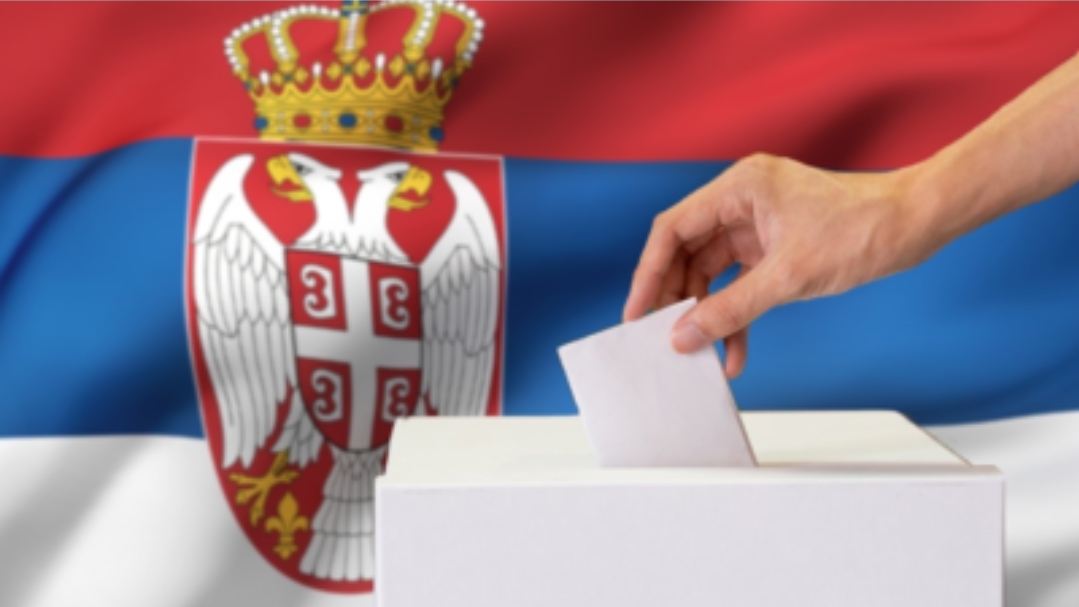
With Serbia heading to the polls on October 25, media experts warn that pro-government outlets are intensifying attacks on student-backed candidates while some of the country’s remaining independent broadcasters face growing pressure from their owners.
BELGRADE, Oct. 18 (BalkanView) — Serbia’s election campaign has descended into an increasingly hostile media battle, with pro-government outlets accused of spreading disinformation and targeting student-backed candidates ahead of the October 25 vote, according to media experts interviewed by Deutsche Welle.
Journalists’ representatives and media scholars say the campaign has exposed the extent of political influence over Serbia’s information landscape, raising concerns about electoral fairness and the future of independent journalism.
Željko Bodrožić, president of the Independent Journalists’ Association of Serbia (NUNS), described the campaign as one of the most serious examples of alleged violations of media-related election rules.
He said government-aligned television stations and newspapers were acting in an increasingly coordinated manner, while journalists at some independent outlets were facing pressure from their own management.
“We have enormous government control over the media, and we see how synchronised they are in that propaganda,” Bodrožić told Deutsche Welle.
He said unequal media conditions had become a recurring feature of Serbian elections, but the situation was deteriorating further.
Student-backed candidates become the main target
Much of the hostile coverage has focused on the Student List, an electoral movement emerging from the broader wave of student-led protests and public discontent that has shaped Serbian politics over the past two years.
According to Deutsche Welle, pro-government tabloids have increasingly competed to publish aggressive attacks, insults and allegations directed at the student-backed candidates.
By contrast, some established opposition parties participating in the election have faced comparatively less criticism.
Former President Aleksandar Vučić has even praised opposition groups that resisted pressure from Student List supporters and decided to contest the election.
Rade Veljanovski, a retired professor at Belgrade’s Faculty of Political Sciences and an expert involved in drafting Serbian media legislation, described the campaign as exceptionally hostile.
“We have not had normal media campaigns before, but this is probably the dirtiest of them all,” he told Deutsche Welle.
Veljanovski warned that inflammatory rhetoric, particularly in government-friendly media, was becoming normalised in Serbian public life.
Independent broadcasters face pressure
The controversy extends beyond election coverage to the future of N1 and Nova S, two broadcasters known for their critical reporting.
Deutsche Welle reported that employees at Nova S had been informed of a new editor-in-chief and given 48 hours to decide whether to remain with the company.
The developments have prompted concerns among media professionals that ownership changes could lead to editorial restructuring and weaken independent reporting.
Veljanovski compared the potential outcome with the transformation of Serbia’s B92 television channel, which retained its brand but underwent a substantial change in editorial direction.
Bodrožić questioned the commercial logic of weakening broadcasters with established audiences.
He said the actions of new owners raised concerns that editorial considerations were being subordinated to other interests.
Both experts drew parallels with changes in Hungary’s media sector under Prime Minister Viktor Orbán.
The allegations of political coordination involving media owners remain unproven, and Deutsche Welle’s report did not establish direct government involvement in the management decisions.
Public broadcaster RTS also criticised
Serbia’s public broadcaster, Radio Television of Serbia (RTS), has also come under criticism for what media experts describe as disproportionate coverage favouring the authorities.
Bodrožić accused RTS of departing from its public-service obligations and journalistic standards.
He also identified Blic, traditionally viewed as less confrontational than some pro-government tabloids, as an outlet whose coverage had become increasingly aligned with the government’s messaging.
Veljanovski argued that RTS provided limited opportunities for opposition voices while continuing to give extensive prominence to government officials and policies.
The criticism raises broader questions about whether Serbian voters have access to sufficiently diverse and balanced information before casting their ballots.
Can the media campaign influence the election?
Despite the intensity of the media battle, both experts questioned whether it would significantly change voting preferences.
Veljanovski suggested that many voters had already made up their minds during the political upheaval of the previous two years.
He said the campaign might influence a relatively small number of undecided voters but was unlikely to fundamentally reshape public opinion.
Bodrožić went further, suggesting that relentless government-friendly messaging could be losing its effectiveness.
He argued that voters frustrated by heavily partisan coverage were increasingly seeking alternative sources of information.
The assessments suggest that Serbia’s October 25 election will test not only the political strength of competing electoral movements but also the influence of a deeply polarised media environment.
For the country’s journalists, the stakes extend beyond the election itself: whether independent reporting can retain a meaningful place in Serbia’s increasingly contested information landscape.