


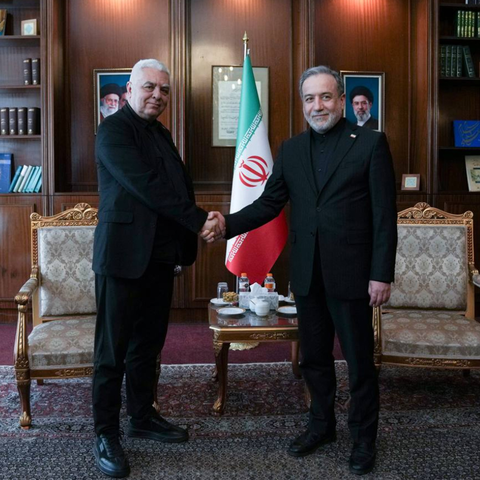
Serbia’s Information and Telecommunications Minister Boris Bratina traveled to Tehran to attend the funeral of Iran’s Supreme Leader Ayatollah Ali Khamenei, triggering sharp criticism from the Serbian opposition and reigniting debate over Belgrade’s foreign policy direction.
According to Iran’s Ministry of Information and Communications Technology, Bratina was received at Tehran airport by Deputy Minister for Technology, Innovation and International Affairs Mohammad Hafez Hakami. In addition to attending the funeral ceremony for Khamenei, who was killed in an Israeli-American airstrike on June 28, the Serbian minister is expected to hold talks on strengthening bilateral cooperation between the two countries.
The visit comes amid growing ties between Serbia and Iran. In March 2025, Iran’s Minister of Information and Communications Technology, Seyed Sattar Hashemi, visited Belgrade, where the two countries signed a memorandum of understanding aimed at expanding cooperation in information technology and telecommunications.
However, Bratina’s visit to Tehran has drawn strong criticism from Serbia’s opposition. Branko Miljuš, a senior official of the opposition Freedom and Justice Party (SSP), accused President Aleksandar Vučić’s administration of aligning itself with authoritarian governments and abandoning Serbia’s European path.
“Vučić’s regime respects every dictator who oppresses, persecutes and kills its own people when they protest against electoral fraud or rising living costs,” Miljuš said in a statement.
He also questioned whether President Vučić had informed the administration of U.S. President Donald Trump about the decision to send a Serbian minister to the funeral of Iran’s supreme leader, while criticizing plans for cooperation with Iran in areas such as artificial intelligence and e-learning.
According to Miljuš, Bratina’s statement that “developing cooperation with Iran is a goal of Serbia” represents a departure from Serbia’s commitment to align its foreign policy with the European Union, one of the key conditions for the country’s EU accession process.
Meanwhile, Iran has begun a multi-day funeral ceremony for Ali Khamenei. His body has been placed at the Grand Mosalla in Tehran, where authorities expect millions of mourners to attend. International observers have compared the scenes to the funeral of Ayatollah Ruhollah Khomeini in 1989.