


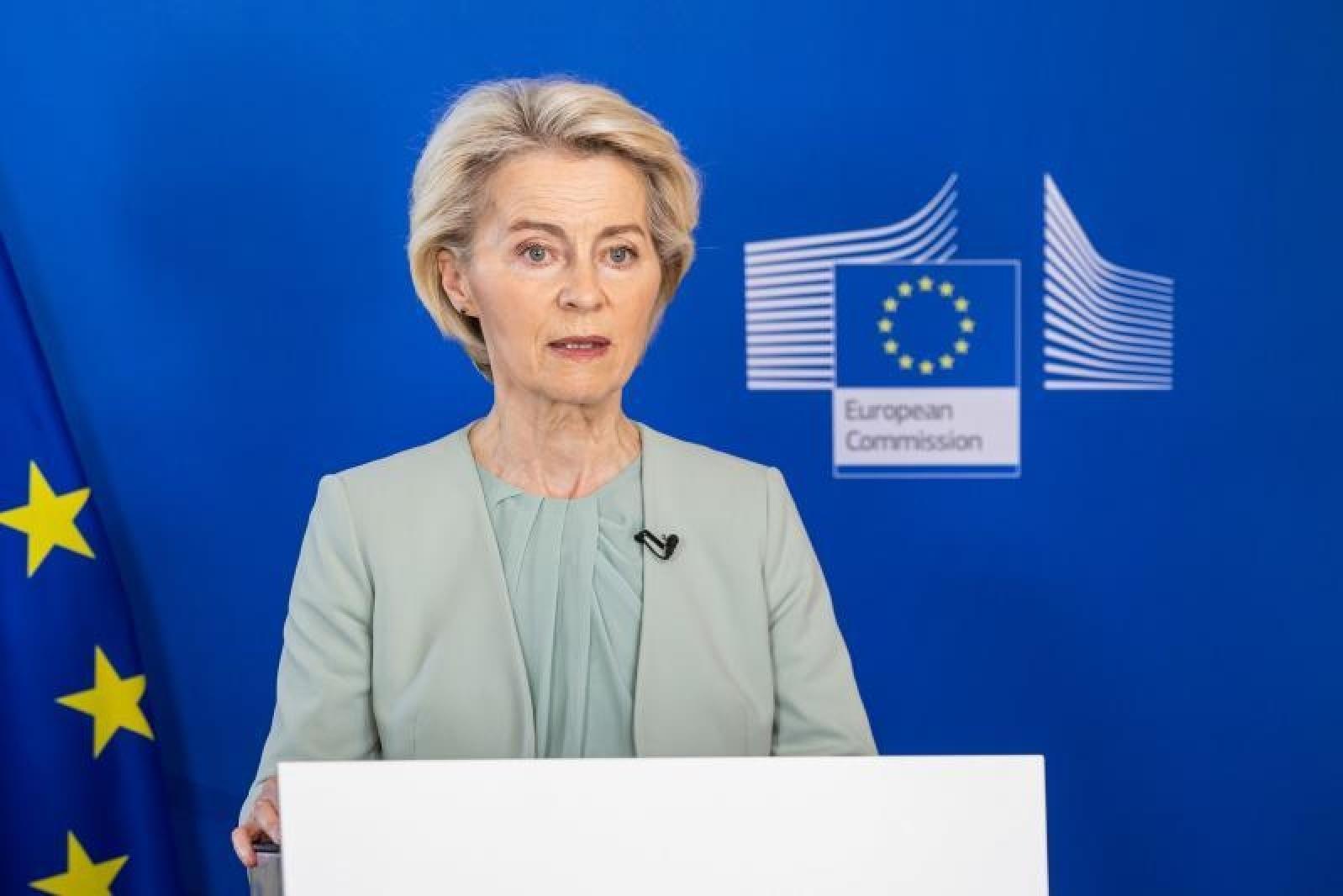
Remarks by European Commission President Ursula von der Leyen linking Turkey with Russia and China have triggered diplomatic friction, highlighting the sensitivity surrounding Ankara’s growing role in the Balkans and wider European security landscape.
The comments, delivered at an event in Hamburg, were intended to underline the strategic necessity of European Union enlargement. However, von der Leyen’s reference to preventing the continent from falling under “Russian, Turkish or Chinese influence” was widely interpreted in Turkey as equating Ankara with geopolitical rivals.
The European Commission later moved to contain the fallout, saying the remarks had been taken out of context and did not aim to compare Turkey with other powers.
A Commission spokesperson said the reference was meant to acknowledge Turkey’s geopolitical weight and regional ambitions, particularly in the Western Balkans, rather than to frame it as a threat.
A partner and a competitor
The episode reflects the EU’s increasingly complex positioning toward Turkey — simultaneously a candidate country, NATO ally and an assertive regional actor with independent ambitions.
Brussels has repeatedly stressed that Turkey remains an important partner in areas such as migration, trade and regional stability. At the same time, concerns persist within the EU about Ankara’s strategic autonomy and its expanding influence in neighbouring regions.
The balancing act is becoming more visible as geopolitical competition intensifies, particularly in the Balkans, where multiple actors are seeking to shape political and economic trajectories.
Timing amid global instability
The controversy comes at a moment of heightened global uncertainty, with conflicts and shifting alliances reshaping Europe’s security environment. Turkey’s strategic relevance has grown in parallel, underpinned by its military capacity, geographic position and role in energy and trade corridors.
As NATO’s second-largest military power, Turkey is increasingly seen as indispensable in any future security architecture, including potential arrangements linked to the war in Ukraine and stability in the Black Sea region.
Balkan dimension
The Western Balkans remains a focal point of this geopolitical contest. While the EU continues to promote enlargement as the primary pathway to stability, slow progress has opened space for other actors to expand their presence.
Turkey has leveraged historical ties, economic engagement and diplomatic outreach to maintain influence across the region, positioning itself as a pragmatic interlocutor with all sides.
The EU, for its part, insists that regional engagement — including by candidate countries — should align with European values, underscoring an ongoing tension between normative frameworks and realpolitik.
Managing narratives
The Commission’s clarification suggests an effort to avoid alienating Turkey at a time when cooperation is seen as strategically necessary.
Yet the incident illustrates how easily messaging can expose deeper uncertainties within Europe about how to reconcile enlargement policy, strategic autonomy and external partnerships.
As geopolitical competition sharpens, the Balkans is likely to remain a key arena where these competing approaches — integration-led stability versus influence-based engagement — continue to intersect.