


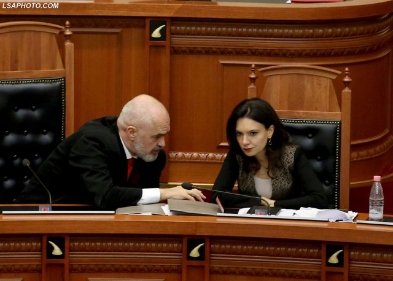
Elisa Spiropali, a senior official in Albania’s ruling Socialist Party and former minister, has publicly criticized what she described as a growing concentration of power and erosion of institutional independence in the country.
In a strongly worded statement, Spiropali said she had been advised to remain silent to avoid political backlash, but argued that such silence had contributed to the current situation in which institutions no longer function as independent decision-making bodies.
She warned that decision-making was increasingly concentrated in a narrow circle, while laws were being interpreted based on immediate political needs rather than established principles.
“This is not about individuals, but about a model that is becoming the norm,” Spiropali said, adding that the divide was “not between people, but between functional institutions and abused structures.”
According to her, the current system evolved gradually through compromises, silence and seemingly minor interventions that over time became central to how institutions operate.
Spiropali also suggested that some state bodies no longer act in accordance with legal procedures, but rather follow informal directives, creating a perception among citizens and businesses that they are dealing with centralized power rather than a functioning state.
Her remarks have triggered comparisons in Albanian public discourse to Hungarian opposition figure Peter Magyar, whose break with the ruling establishment turned him into a symbol of internal dissent against concentrated political authority.
Analysts say the significance of Spiropali’s comments lies in the fact that the criticism comes from within the ruling structure, potentially signaling deeper internal tensions and increasing pressure for reforms and accountability.
Observers note that such public dissent from high-ranking officials could point to growing fractures within the governing camp at a time of heightened scrutiny over governance standards.