


Delays in North Macedonia’s European Union accession process are imposing mounting economic, institutional, and social costs, with the impact extending well beyond lost investment, according to academic Abdylmenaf Bexheti.
North Macedonia’s EU path has been repeatedly blocked over the past two decades. In 2008, Greece vetoed Skopje’s NATO and EU integration over the country’s name, a dispute resolved in 2018 with the signing of the Prespa Agreement, under which the country adopted the name North Macedonia.
Further obstacles followed. In 2019, France conditioned EU enlargement on a revised negotiation methodology. In 2020, Bulgaria blocked the start of accession talks, demanding implementation of a 2017 bilateral friendship treaty. A compromise, known as the French proposal and formalised in 2022, allowed the process to advance, but required constitutional amendments to include ethnic Bulgarians in the preamble. With no two-thirds majority secured in parliament, negotiations have yet to formally open.
Meanwhile, Albania, which until 2024 advanced alongside North Macedonia, moved ahead independently, intensifying debate in Skopje over the economic consequences of delay.
Foreign investment gap widens
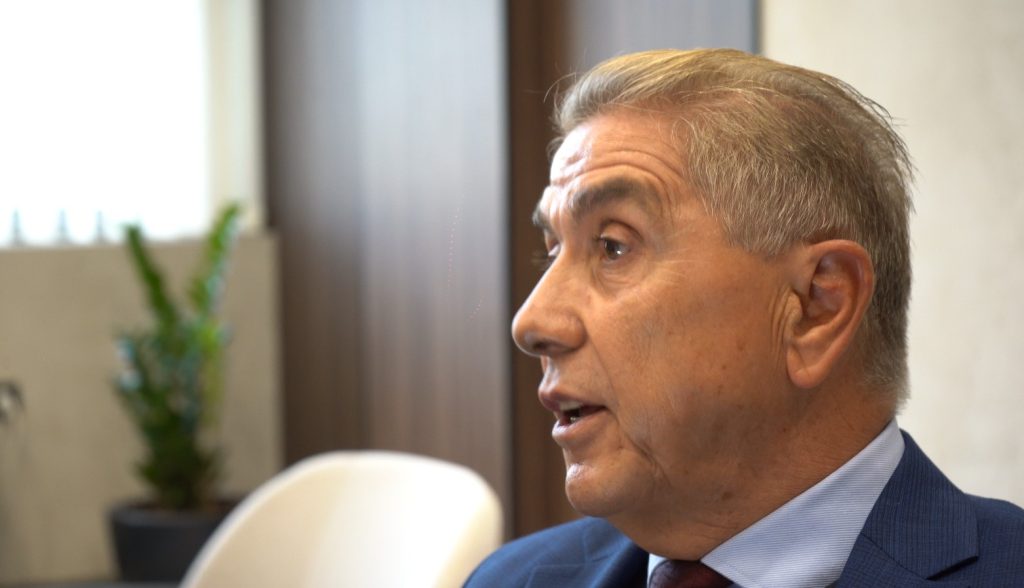
In an interview with Balkanview, Bexheti said EU uncertainty has weighed heavily on foreign direct investment (FDI) and economic growth, though he cautioned that headline FDI data should be interpreted carefully due to differing reporting methodologies.
North Macedonia often records reinvested profits and subordinated loans from parent companies as FDI, which can inflate annual figures, he said. A more comparable measure is annual FDI inflows relative to gross domestic product.
While North Macedonia saw a rebound in 2024, Bexheti said Albania’s inflows have shown a steadier upward trend.
“The negative impact is clear, but it is not limited to investment alone,” he said.
Hidden and indirect costs
Bexheti argued that the most significant losses may be indirect and non-material, including lost opportunities, regulatory disadvantages and diminished credibility.
He cited recent stricter enforcement of EU stay rules for non-member country truck drivers, which led to logistical disruptions and financial losses for transport operators. Such regulatory frictions, he said, are part of a broader pattern affecting non-EU states.
“Material damage is measurable and predictable. Indirect and non-material costs are often invisible and more painful,” he said.
Environmental standards and export risks
Failure to align with EU environmental standards poses fiscal and trade risks, particularly given North Macedonia’s export structure, Bexheti said.
The country’s exports are heavily concentrated in the EU, especially in Germany, and in the automotive components industry, where environmental and carbon standards are stringent.
Non-compliance could result in additional environmental taxes and reduced competitiveness, he said, potentially hitting North Macedonia harder than Albania due to its export concentration.
Public health is also an economic factor, he added, noting that development is measured not only by GDP but also by education and life expectancy, as reflected in the Human Development Index used by the United Nations and the World Bank.
“A healthy population is a precondition for productivity and competitiveness,” he said, arguing that air and water pollution directly affect long-term growth potential.
Reform divergence with Albania
Two decades ago, North Macedonia outperformed Albania on most macroeconomic indicators, including GDP per capita, infrastructure and budget size, Bexheti said. At the time, North Macedonia’s state budget was roughly double that of Albania despite having a population around 60% smaller.
Today, he said, the situation has reversed. Albania’s budget now exceeds North Macedonia’s by about 30%, and Tirana has advanced further in EU-related reforms.
Albania implemented a comprehensive judicial vetting reform nearly a decade ago with unanimous parliamentary support, while North Macedonia amended its criminal code in 2023 in a way critics said reduced liability for abuse of office.
“The only area where North Macedonia still surpasses Albania is public debt levels – and even that in a negative sense,” Bexheti said.
Risk of lost opportunities
Bexheti said Albania’s faster EU progress could eventually divert investment and EU cohesion funds away from North Macedonia, though the impact would vary by sector.
If Albania joins the EU before North Macedonia, some foreign investors could relocate, he said. The EU’s 2028–2034 fiscal framework, worth nearly 2 trillion euros, will for the first time prioritise territorial cohesion, increasing the opportunity cost for countries left behind.
Public trust and long-term outlook
Stalled reforms are closely linked to declining public trust in economic governance, Bexheti said, citing weaker institutions, rising costs, lower productivity, and increased economic uncertainty.
“If current delays persist, the medium-term consequences will include democratic stagnation, rising emigration, corruption and euroscepticism,” he said.
In the longer term, he warned of economic isolation, declining investment and remittances, population ageing and demographic imbalance.
“The current geopolitical momentum in Europe will not be repeated soon,” Bexheti said. “If Albania and Montenegro join by 2030, and North Macedonia remains grouped with Serbia and Kosovo, its membership perspective could become far more distant.” (BV)