


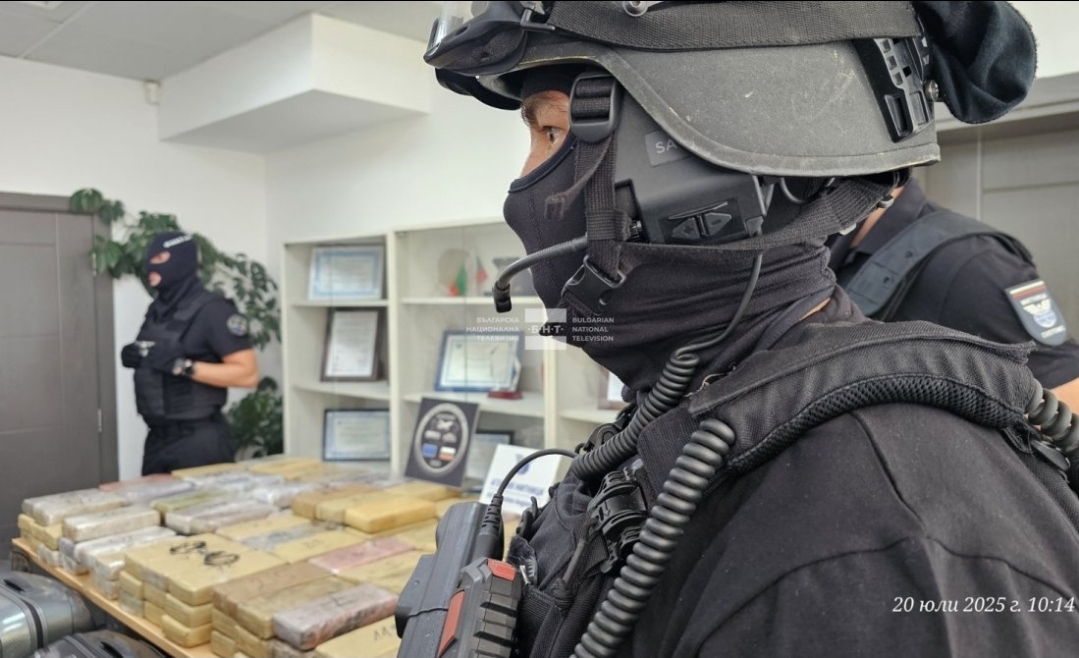
Authorities across the Western Balkans have carried out a series of major drug seizures in recent years, highlighting the region’s continued role as a transit hub for cannabis and cocaine trafficking between South America, Europe and beyond.
Serbian police said the seizure of five tonnes of marijuana in the village of Konjuh, near Kruševac, was the largest ever recorded in Serbia, Interior Minister Ivica Dačić said. The drugs, valued at between 7 million and 10 million euros ($7.5 million–$10.8 million), were believed to have arrived from North Macedonia.
Among those arrested was a local official from the ruling Serbian Progressive Party on whose property the cannabis was discovered on Jan. 29. Authorities rejected allegations of political links to organised crime.
Regional Pattern of Trafficking
The Konjuh case followed another major seizure in August 2025, when two tonnes of cannabis were confiscated in the Belgrade municipality of Zemun. Prosecutors said intelligence gathered during that investigation helped uncover the later operation.
In North Macedonia, police raided multiple locations in Skopje and Strumica, seizing tens of tonnes of cannabis presented as medical marijuana. While medical cannabis cultivation is legal in the country, officials have acknowledged regulatory weaknesses in monitoring licensed producers.
Earlier High-Profile Cases
One of Serbia’s most prominent cases dates back to November 2019, when police uncovered an illegal cannabis plantation at the Jovanjica organic farm near Stara Pazova, seizing about 1.6 tonnes of marijuana. Prosecutors accused the farm’s owner and associates of running a criminal group allegedly aided by members of security services. The trial, involving 18 defendants, is ongoing.
Separately, Serbian authorities arrested eight suspected members of the so-called “Balkan Cartel” in late 2024, accusing them of smuggling multi-tonne shipments of cocaine from Ecuador and Brazil into Europe. Investigators linked the group to a 505-kg cocaine seizure at Croatia’s Port of Ploče in 2021.
Cocaine Routes Run Through Montenegro
Drug enforcement agencies say cocaine trafficking in particular has been dominated by criminal networks from Montenegro. A 2023 report by the United Nations Office on Drugs and Crime said more than 30 tonnes of cocaine linked to Montenegrin groups were seized worldwide between 2017 and 2021.
The report identified the Adriatic port of Bar as a key transit point for shipments from South America, noting the prominent role of maritime crews in smuggling operations.
International Operations
In December 2025, a joint operation led by Serbian police resulted in arrests in Austria and Spain and the seizure of more than 80 kg of cocaine and 110 kg of marijuana. A Serbian national was detained in Vienna with cocaine worth several million euros, authorities said.
Earlier, in September 2021, Europol coordinated an eight-country crackdown that seized 2.6 tonnes of cocaine and led to 23 arrests across Spain, Croatia, Serbia, Germany, Slovenia, Bosnia, the United States and Colombia.
Kosovo Seizures and Local Trends
Police in Kosovo say marijuana has been the most commonly seized drug over the past decade, with more than 10 tonnes confiscated between 2015 and January 2026, alongside smaller quantities of hashish and synthetic drugs.
One of the region’s largest organised crime cases concluded in 2022, when Serbian courts sentenced trafficker Darko Šarić to 14 years in prison for smuggling 5.7 tonnes of cocaine from South America to Europe between 2006 and 2009. Prosecutors said his network operated globally, with seizures tied to Spain, Uruguay, Brazil and Italy.
Continuing Challenges
Law enforcement officials say the scale and geographic spread of the seizures illustrate how Balkan criminal networks remain deeply embedded in global supply chains, using the region’s transport corridors, ports and diaspora links to move narcotics into European markets.
Analysts warn that despite periodic high-profile arrests and confiscations, dismantling trafficking structures remains difficult due to their transnational nature, diversified logistics and ability to reconstitute quickly after major crackdowns.