


Aleksandar Vučić said late on Friday that Serbia would significantly boost investment in its defence industry and redirect a larger share of domestic arms production to its armed forces, citing what he described as a new military alignment between Croatia, Albania and Kosovo.
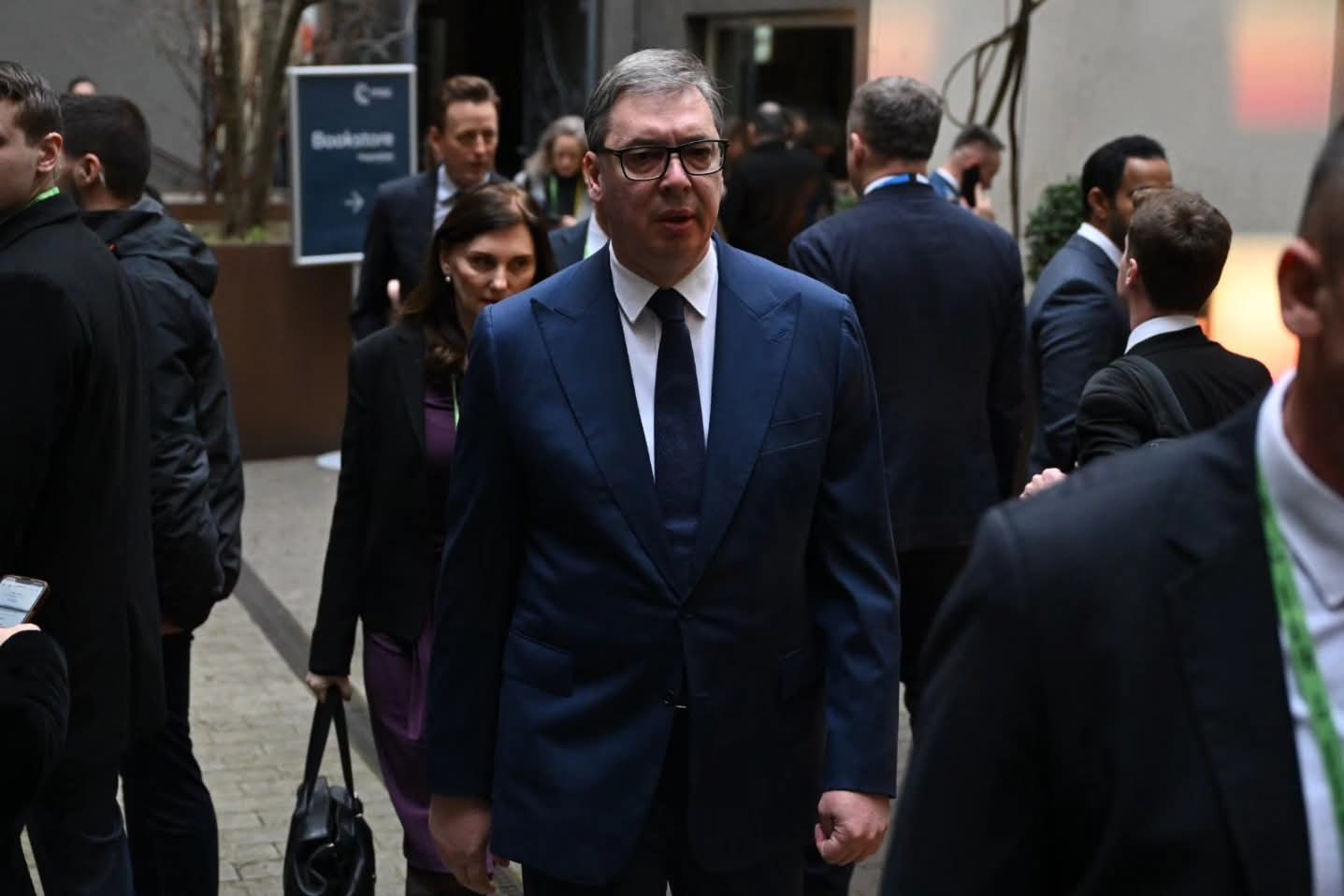
Speaking to reporters on the sidelines of the Munich Security Conference, Vučić said the formation of a defence cooperation format linking Zagreb, Tirana and Pristina posed a security challenge for Serbia.
“With the creation of a military alliance between Croatia, Pristina and Tirana, we are undoubtedly endangered and will address this very seriously,” Vučić said. “We will invest a huge additional amount of money in our defence industry.”
He said Serbia’s arms industry had so far supplied around 18% of its total output to the Serbian armed forces, but that the share would increase to between 30% and 40% in the coming period.
Regional reactions
Vučić’s remarks followed a series of meetings among defence officials from Croatia, Albania and Kosovo in recent months, including talks between defence ministers and chiefs of staff. Croatian Defence Minister Ivan Anušić has said the cooperation framework focuses on joint exercises, interoperability and strengthening security in Southeast Europe, adding that it is not directed against any country.
In March 2025, Albania, Croatia and Kosovo signed a memorandum on defence and security cooperation in Tirana, outlining plans for joint training, industrial collaboration and countering hybrid threats. The document also expressed support for Kosovo’s Euro-Atlantic aspirations.
Belgrade has sharply criticised the initiative, arguing it undermines regional arms control arrangements and United Nations Security Council Resolution 1244, which ended the 1998-99 Kosovo conflict and provides the framework for the international security presence in Kosovo.
Serbian officials maintain that NATO-led KFOR remains the only legitimate armed force in Kosovo under the resolution.
Balancing act in Munich
At the political level, Vučić held a series of bilateral meetings in Munich, including with European Council President António Costa and China’s Foreign Minister Wang Yi, in what analysts describe as Serbia’s continued balancing between the European Union and major global powers.
Serbian state broadcaster RTS reported that Vučić expressed satisfaction with his meeting with Costa and reiterated Serbia’s commitment to accelerating its EU accession process. However, other regional media cited European officials as raising concerns over recently adopted judicial legislation in Serbia.
Vučić is also scheduled to meet EU Enlargement Commissioner Marta Kos and Germany’s foreign minister during the conference.
Serbia is formally seeking EU membership while maintaining close ties with China and Russia and adhering to a policy of military neutrality.
Domestic messaging
Posting on Instagram late on Friday, Vučić shared a video from a Munich restaurant with Željka Cvijanović, a member of Bosnia’s tripartite presidency, describing it as a “Serb-Serb dialogue in a Bavarian tavern”.
Earlier in the day, he told journalists he had rarely seen so many uniformed personnel gathered in one place, adding that “everyone is talking about war”, in reference to the tense global security environment.
Serbian defence officials have said the country will continue modernising its armed forces but will not join military alliances. “Serbia will remain militarily neutral,” Vučić said, adding that the country “clearly understands the message being sent” by the trilateral cooperation among its neighbours.
The Western Balkans remain a region of unresolved disputes and competing geopolitical influences, more than two decades after the wars of the 1990s.